Stock Analysis · Brinker International Inc (EAT)
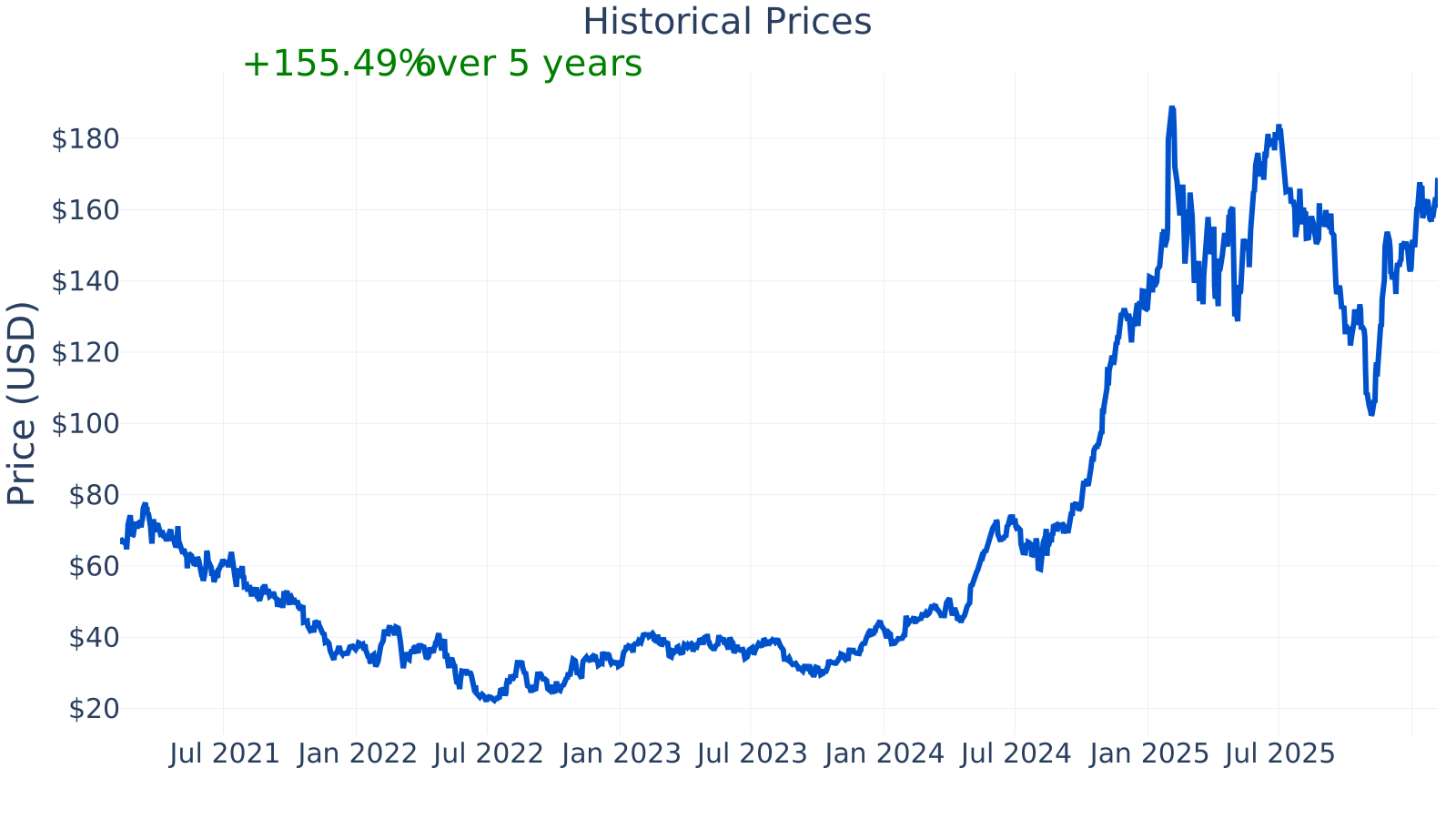
Overview
Brinker International Inc. is a restaurant company best known for operating two casual dining brands: Chili’s Grill & Bar and Maggiano’s Little Italy. It earns money by serving food and beverages in its company-owned restaurants and by collecting fees and royalties from franchised locations. As a casual dining operator, its results are closely tied to consumer spending, restaurant traffic, menu pricing, labor availability, food costs, and the overall competitive environment in dining.
Brinker’s revenue mainly comes from restaurant sales, with additional contributions from its franchise business. Based on how restaurant companies like Brinker report in their filings, the major sources typically include:
- Company-owned restaurant sales (food and beverage)
- Franchise revenues (royalties and fees)
- Other revenues (smaller items such as gift card breakage and related income)
In broad terms, the company’s operating model depends on keeping restaurants busy, managing costs (especially labor and food), and using brand strength and marketing to defend traffic and pricing power.
Across the periods shown, total revenue trends upward, and operating income and net income rise meaningfully in the most recent year displayed. At the same time, the cost of revenue remains the largest expense line, which is typical in restaurants, making cost control a central driver of profitability.
Key Figures
| Metric | Value | Industry ⓘ |
|---|---|---|
| Date | Feb 07, 2026 | |
| Context | ||
| Sector | Consumer Cyclical | |
| Industry | Restaurants | |
| Market Cap ⓘ | $7.51B | |
| Beta ⓘ | 1.34 | |
| Fundamental | ||
| P/E Ratio ⓘ | 16.21 | 29.16 |
| Profit Margin ⓘ | 7.98% | 7.98% |
| Revenue Growth ⓘ | 6.90% | 6.90% |
| Debt to Equity ⓘ | 464.88% | 69.29% |
| PEG ⓘ | 1.11 | |
| Free Cash Flow ⓘ | $455.90M | |
Brinker’s market capitalization is about $7.5B, and its beta (~1.34) suggests the stock has tended to move more than the broader market. The current P/E ratio (~16.2) is below the industry median shown (~29.2), while the profit margin (~8.0%) and revenue growth (~6.9% year over year) are in line with the industry median values provided. One item that stands out is leverage: debt-to-equity (~465%) is substantially higher than the industry median (~69%), indicating a more debt-heavy capital structure. Trailing twelve-month free cash flow is about $456M, which can be an important source of flexibility for debt service, reinvestment, and other corporate needs.
Growth (Medium)
Brinker operates in the U.S. casual dining segment, a mature part of the restaurant industry where long-term growth is often driven more by: (1) gaining market share, (2) menu and pricing strategy, (3) improving restaurant-level margins, (4) disciplined new-unit development, and (5) expanding off-premise demand (takeout and delivery). Because the category is competitive and consumer-driven, growth can be uneven from year to year, especially when inflation, wages, and household budgets shift.
A key way to judge momentum in a mature restaurant category is whether sales are expanding steadily and whether profitability is improving at the same time.
The year-over-year revenue growth shown is positive in most periods, with several stronger quarters in 2024–2025 before moderating to around 6.9% most recently. That pattern can be consistent with a business benefiting from a mix of traffic, pricing, and operational execution, followed by a return toward more typical growth rates.
Free cash flow rises materially in the latest period shown (to about $456M), after being much lower in 2023. For restaurant companies, stronger free cash flow can act as a practical “engine” for longer-term plans—supporting remodels, technology investments, and balance-sheet needs—though it can fluctuate due to operating performance and spending levels.
Possible catalysts in a restaurant business like Brinker’s generally include sustained same-restaurant sales improvement, stronger restaurant-level margins from better labor/food cost management, successful marketing and menu innovation, and a stable consumer environment. However, the durability of these factors typically needs to be monitored over multiple quarters because the category can change quickly.
Risks (High)
This article is for informational purposes only and does not constitute financial advice. Some content is AI-generated. See Disclaimer


