Stock Analysis · Bright Horizons Family Solutions Inc (BFAM)
Overview
Bright Horizons Family Solutions Inc. (BFAM) provides employer-sponsored services that help working families manage care and education needs. Its core offering is child care (including operating early education and child care centers) that employers can sponsor as a benefit for their employees. The company also provides back-up care solutions when regular care arrangements fall through, and education advisory services that support adult learners (for example, helping employees navigate higher education programs). The business model is largely business-to-business: many services are sold to employers who then make them available to their workforce.
Based on the company’s segment reporting in its SEC filings, revenue is generally organized into three main categories:
- Full Service Center-Based Child Care (typically the largest): operating child care and early education centers for employers and communities
- Back-Up Care: network-based and in-home care options used when primary arrangements are unavailable
- Educational Advisory Services: education-related support for employers and employees (often including tuition and program navigation services)
The company’s cost structure tends to be labor-intensive (staffing for centers and care services), with additional spending on occupancy, program delivery, and corporate overhead. Over time, changes in enrollment, pricing, utilization, and labor availability can significantly affect profitability.
Over the period shown, total revenue rises from about $1.76B (2021) to about $2.93B (2025). Operating income and net income also improve meaningfully by 2024–2025, suggesting that growth and operating leverage (or a normalization after earlier disruptions) contributed to stronger bottom-line results. Interest expense remains a recurring cost, which matters when assessing how much of operating profit ultimately turns into net income.
Key Figures
| Metric | Value | Industry ⓘ |
|---|---|---|
| Date | Feb 16, 2026 | |
| Context | ||
| Sector | Consumer Cyclical | |
| Industry | Personal Services | |
| Market Cap ⓘ | $3.80B | |
| Beta ⓘ | 1.39 | |
| Fundamental | ||
| P/E Ratio ⓘ | 19.91 | 19.91 |
| Profit Margin ⓘ | 6.58% | 12.83% |
| Revenue Growth ⓘ | 8.80% | 9.70% |
| Debt to Equity ⓘ | 183.91% | 183.91% |
| PEG ⓘ | 1.76 | |
| Free Cash Flow ⓘ | $256.36M | |
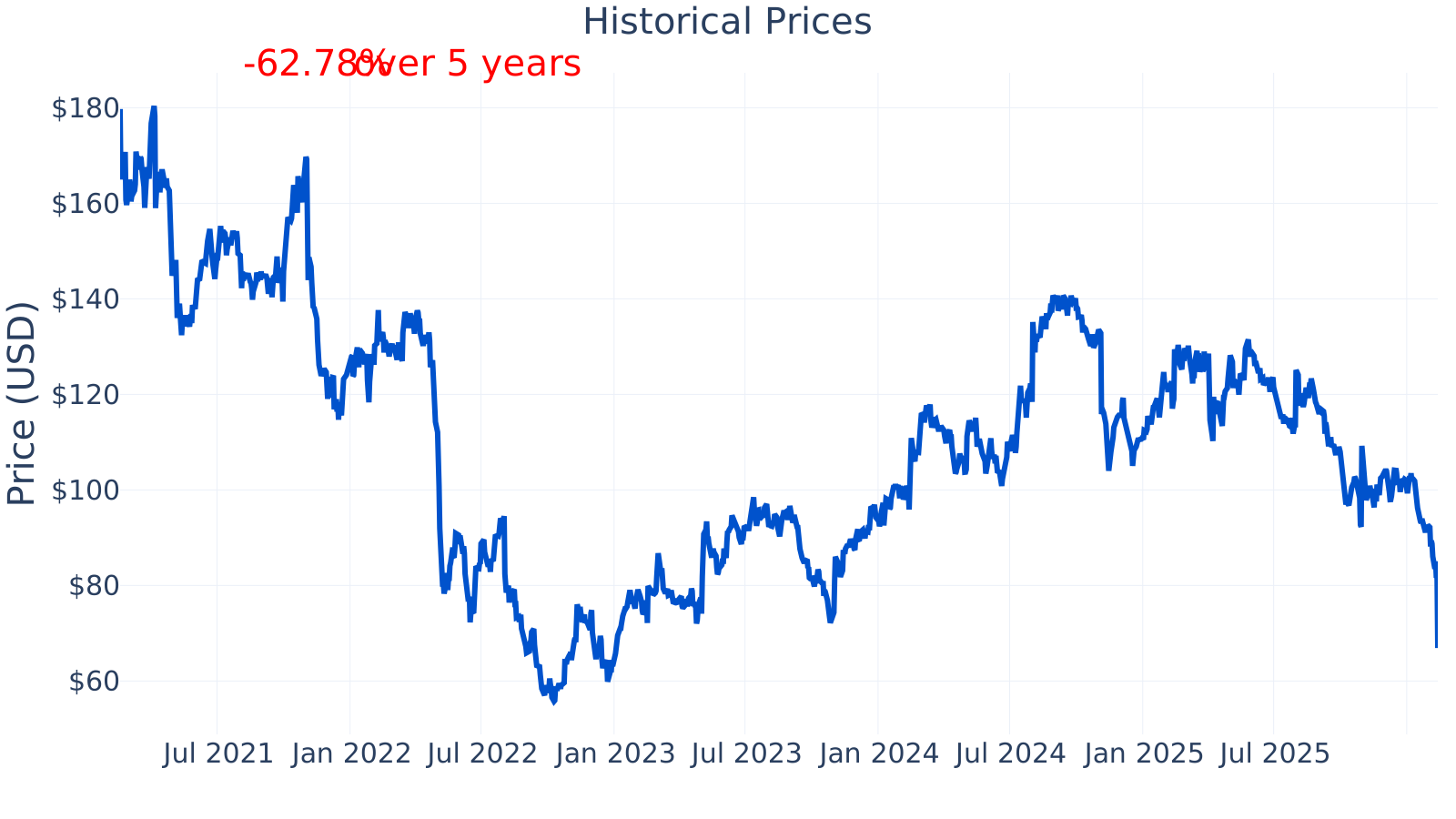
Bright Horizons has a market capitalization of about $3.8B and a beta of ~1.39, which indicates the share price has historically moved more than the broader market on average (higher volatility). The latest P/E ratio is ~19.9, shown as in line with the industry median in the table. The latest profit margin is ~6.6% versus an industry median of about 12.8%, indicating thinner profitability than the median peer group. Latest year-over-year revenue growth is ~8.8% (industry median ~9.7%), and debt-to-equity is ~184%, which signals meaningful leverage. The PEG ratio of ~1.76 implies the valuation is not only about today’s earnings but also depends on delivering future growth. Trailing twelve-month free cash flow is about $256M, which is an important support for reinvestment, debt service, and flexibility.
Growth (medium)
Bright Horizons operates in markets tied to long-term social and economic patterns: workforce participation, the need for reliable child care, and employers using benefits to attract and retain employees. In that sense, the underlying demand drivers can be durable. At the same time, child care supply is often constrained by licensing rules, real estate, and staffing availability, which can limit how fast capacity can expand.
The company’s strategy—serving employers with integrated child care, back-up care, and education support—can make sense in a future where competition for talent remains important. Employer-sponsored programs can also be “sticky” because they are embedded in benefits platforms and involve operational coordination, although contract renewals and budget cycles still create sensitivity to corporate spending decisions.
Revenue growth was exceptionally high in parts of 2021 (consistent with recovery dynamics), then gradually cooled to high single digits by 2025 (about 8.8% most recently). This pattern often signals a shift from rebound growth toward a more normalized pace where performance depends more on pricing, utilization, new center openings, and contract wins.
Free cash flow trends upward overall across the period shown, reaching roughly $256M on a trailing basis. Consistent cash generation can be a helpful indicator of business resilience because it reflects cash left after operating needs and capital spending. For a provider that runs physical centers, ongoing investment (maintenance, expansion, technology) can matter, so free cash flow can fluctuate with expansion plans and working capital changes.
Risks (high)
This article is for informational purposes only and does not constitute financial advice. Some content is AI-generated. See Disclaimer


