Stock Analysis · Braze Inc (BRZE)
Overview
Braze, Inc. (BRZE) is a software company that helps brands communicate with their customers in a more personalized way. In practical terms, its platform is used to design, send, and optimize messages such as push notifications, in-app messages, emails, and other customer engagement campaigns. Companies use these tools to improve customer experience, increase retention, and drive repeat purchases.
Braze operates a subscription-based software model (often described as “software-as-a-service”). That typically means customers pay recurring fees to access the platform, and usage can expand as those customers send more messages or activate more features. This kind of model tends to create recurring revenue and can scale efficiently when customer relationships are long-lasting.
From a business model perspective, Braze’s revenue is primarily generated from subscriptions to its platform and related services. In its filings, the company presents revenue mainly as subscription revenue and professional services/other revenue; subscription revenue is the majority, while services are smaller and often support onboarding and ongoing customer success.
Over the last several fiscal years shown, total revenue has grown materially (from about $238.0M in fiscal year 2022 to about $593.4M in fiscal year 2025). At the same time, operating losses have narrowed compared with the pace of revenue growth, suggesting operating efficiency has been improving even though the company is still not profitable on a net income basis.
Key Figures
| Metric | Value | Industry ⓘ |
|---|---|---|
| Date | Feb 08, 2026 | |
| Context | ||
| Sector | Technology | |
| Industry | Software - Application | |
| Market Cap ⓘ | $2.18B | |
| Beta ⓘ | 1.06 | |
| Fundamental | ||
| P/E Ratio ⓘ | N/A | 27.79 |
| Profit Margin ⓘ | -16.86% | 6.02% |
| Revenue Growth ⓘ | 25.50% | 15.80% |
| Debt to Equity ⓘ | 13.94% | 25.15% |
| PEG ⓘ | 0.91 | |
| Free Cash Flow ⓘ | $62.50M | |
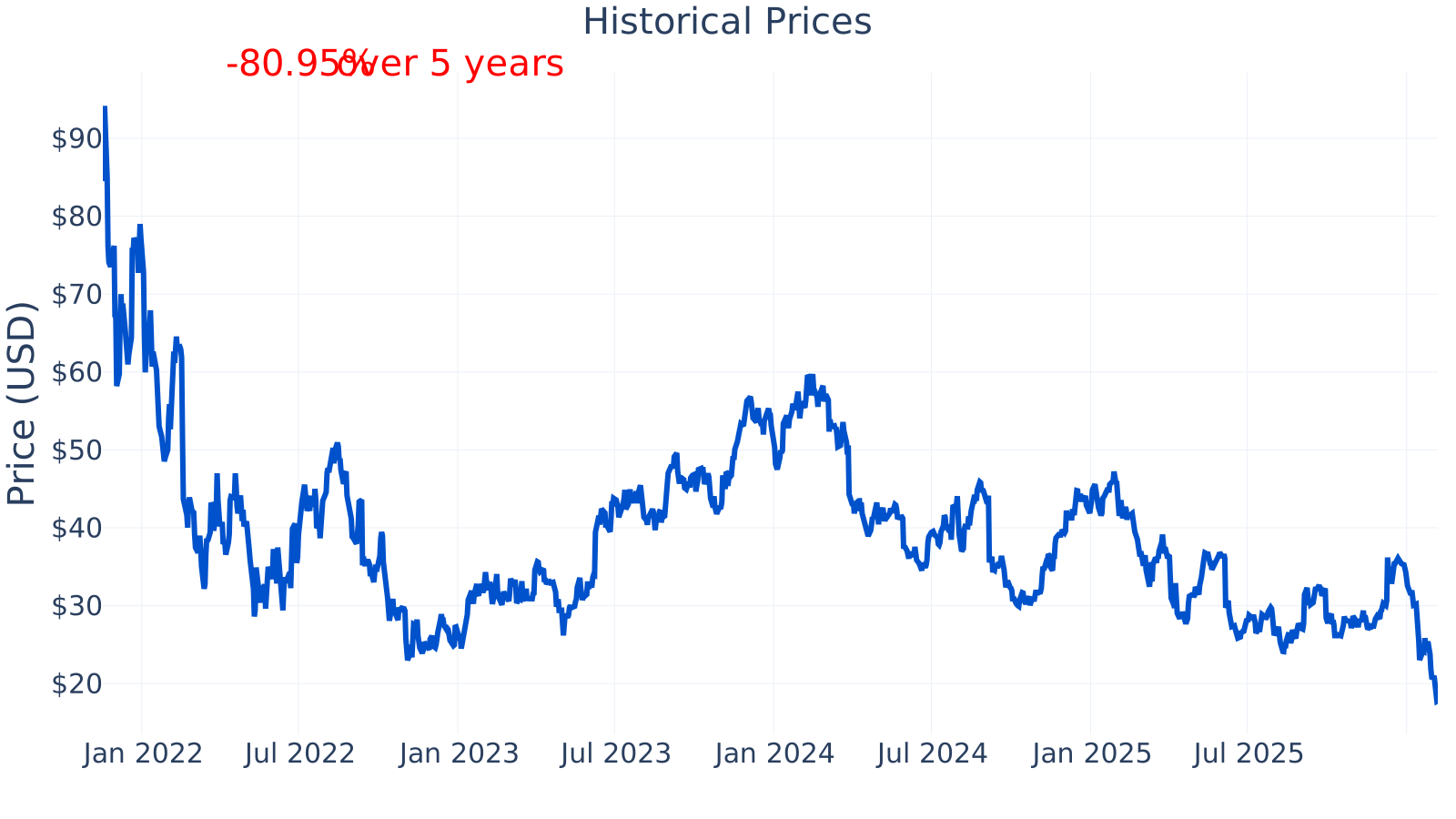
Braze’s market capitalization is about $2.18B, placing it in the small-to-mid cap range. The stock’s beta is about 1.06, which suggests its price has tended to move roughly in line with the broader market (though any single stock can still be volatile).
On operations, the company’s year-over-year revenue growth is about 25.5%, above the listed industry median of about 15.8%. Profit margin is about -16.9% versus an industry median around +6.0%, meaning Braze is still operating at a loss while many peers are profitable. Free cash flow over the trailing twelve months is positive at about $62.5M, which can matter because it indicates the business has recently generated cash after operating costs and capital spending.
Growth (Medium)
Braze participates in the broader application software market and, more specifically, the customer engagement/customer relationship tooling ecosystem. This area can benefit from long-term trends such as digital commerce growth, more customer interactions occurring through mobile apps, and increased emphasis on first-party customer data and personalization (as privacy and platform rules evolve). In general, companies that help brands improve retention and lifetime value can remain relevant even when advertising costs rise or marketing budgets fluctuate.
The revenue growth trend shows a clear slowdown from very high rates earlier in the timeline (above 60% year-over-year) to the mid-20% range more recently. Even with this deceleration, mid-20% growth is still meaningfully above the industry median shown. For long-term business compounding, the key question becomes whether Braze can maintain solid growth while improving margins as it scales.
Cash generation has improved notably over time, moving from negative free cash flow in earlier periods to positive in the most recent trailing period. For a subscription software business, that shift can reflect improving operating discipline, better economics in acquiring and retaining customers, and scale benefits—though it does not eliminate the possibility of future cash usage if the company increases investment.
Potential catalysts that can influence longer-term growth (in a neutral, business-sense) include: expanding within existing customers (more products, more channels, higher usage), continued adoption by larger enterprises, and product evolution that keeps pace with how consumers prefer to interact with brands.
Risks (High)
This article is for informational purposes only and does not constitute financial advice. Some content is AI-generated. See Disclaimer


