Stock Analysis · Booking Holdings Inc (BKNG)
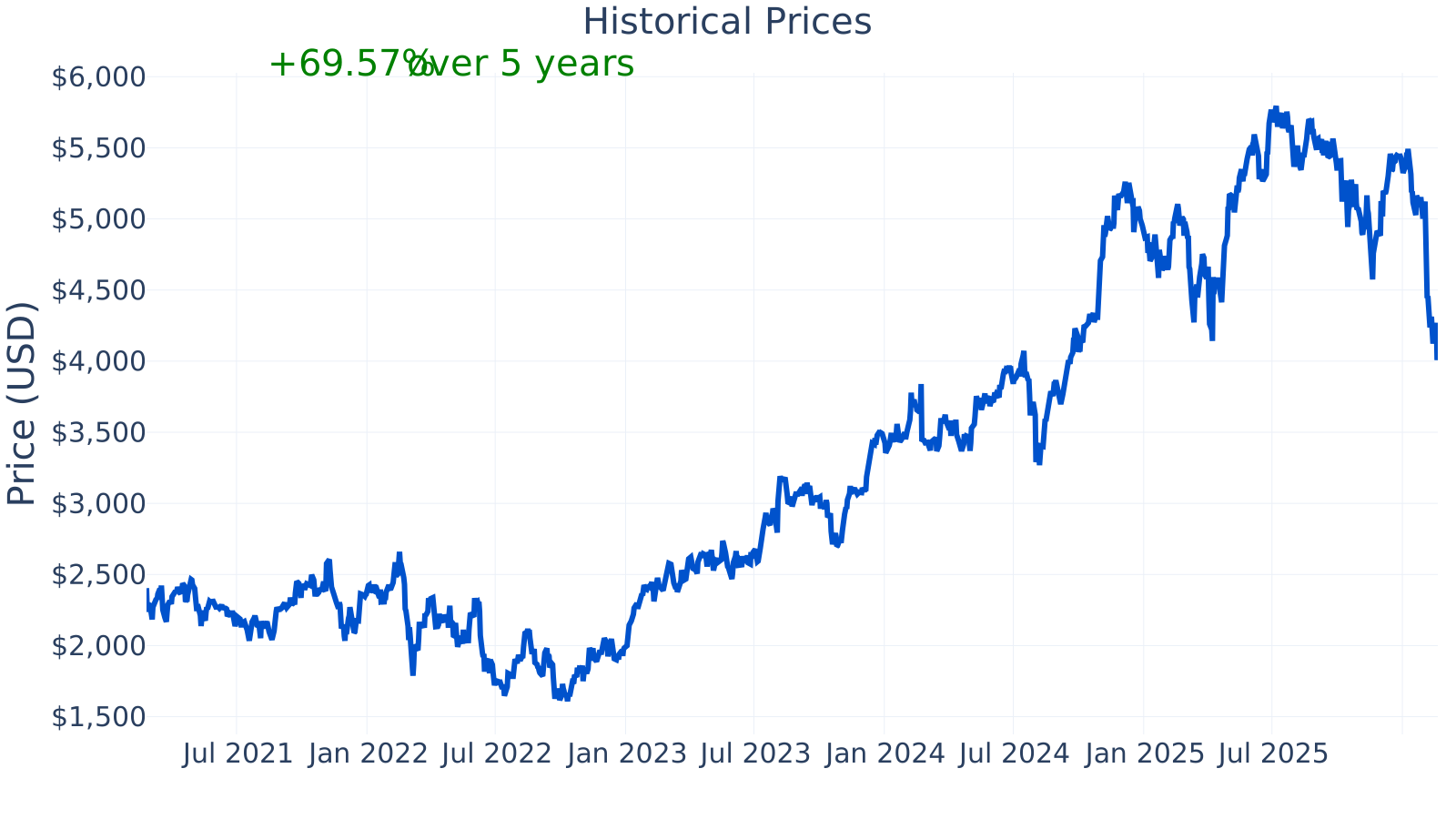
Overview
Booking Holdings Inc. (BKNG) is a global online travel company. It operates well-known consumer travel brands that help people search, compare, and book travel services such as accommodations, flights, rental cars, and other travel-related offerings. The business model is primarily “asset-light,” meaning the company does not usually own hotels or airlines; instead, it connects travelers with travel service providers and earns fees for enabling reservations.
In its SEC filings, Booking Holdings describes revenues mainly coming from fees tied to travel transactions (for example, commissions, agency fees, and merchant revenues depending on how a booking is processed). While the exact split can vary by period, the main revenue drivers are typically concentrated around lodging-related transactions, supported by other travel verticals.
Main sources of revenue (high-level):
- Accommodations-related transactions (largest contributor): fees tied to hotel, alternative accommodation, and other lodging reservations.
- Air tickets: fees and related revenues from flight bookings.
- Rental cars and other travel services: transaction revenues from car rentals and other trip-related products.
- Advertising and other: smaller streams that can include marketing/partner-related revenues.
The chart below summarizes how revenue turns into profit over time, highlighting the scale of revenue, operating expenses, interest, taxes, and net income.
Across the years shown, total revenue and operating income expanded meaningfully from 2021 through 2025, while interest expense increased as well. Net income grew strongly into 2024, then was lower in 2025 despite higher revenue—showing how profitability can move with costs, taxes, and financing structure.
Key Figures
| Metric | Value | Industry ⓘ |
|---|---|---|
| Date | Feb 23, 2026 | |
| Context | ||
| Sector | Consumer Cyclical | |
| Industry | Travel Services | |
| Market Cap ⓘ | $132.13B | |
| Beta ⓘ | 1.19 | |
| Fundamental | ||
| P/E Ratio ⓘ | 26.53 | 20.46 |
| Profit Margin ⓘ | 20.08% | 10.37% |
| Revenue Growth ⓘ | 16.00% | 12.00% |
| Debt to Equity ⓘ | -345.88% | 96.47% |
| PEG ⓘ | 1.16 | |
| Free Cash Flow ⓘ | $9.09B | |
Booking Holdings is a large company with a market capitalization of about $132B. The stock’s beta of ~1.19 indicates it has tended to move somewhat more than the overall market. Profitability has been strong: the latest profit margin is ~20.1%, above the travel services industry median shown (~10.4%). Recent top-line momentum is also solid, with year-over-year revenue growth of ~16% versus an industry median of ~12%. Free cash flow over the last twelve months is about $9.1B, indicating substantial cash generation after operating costs and capital spending.
Growth (Medium)
Booking operates in the travel services industry, which is closely linked to consumer spending and broader economic conditions. Over the long run, demand for travel has historically grown with rising incomes, expanding global tourism, and the continued shift to digital booking. Online travel agencies and metasearch platforms benefit when travelers increasingly compare options online and when suppliers (hotels, airlines, property owners) rely on platforms to reach demand efficiently.
A key part of Booking’s growth strategy, as described in its public filings, is to increase the value it provides on both sides of the marketplace: more travelers using its platforms and more supply (especially accommodations) available to book. Scale matters in travel: larger platforms can invest more in technology, payments, customer service, and marketing, and can often offer broader selection—factors that can support repeat usage.
Revenue growth was exceptionally volatile around 2021–2022 (a period affected by pandemic comparisons) and then settled into more moderate rates. In the most recent period shown, growth is around the mid-teens (~16%), which is above the industry median displayed.
Free cash flow has risen substantially from near break-even in 2021 to about $8.5B–$9.1B in the later periods shown. This matters for long-term business resilience because free cash flow can be used for reinvestment, debt servicing, and returning capital to shareholders (depending on management decisions and board authorization).
Risks (Medium-High)
Booking’s results are exposed to the travel cycle. Demand can fall quickly in recessions, during geopolitical disruptions, or when public health events change consumer behavior. Because travel is often discretionary, booking volumes, pricing, and cancellation patterns can shift rapidly, impacting revenue and profitability.
Competition is a central ongoing risk. Booking competes with other large online travel agencies and travel platforms, and also with suppliers that push direct bookings (for example, hotel chains and airlines through their own websites and loyalty programs). Key competitors commonly cited in company filings and industry discussions include Expedia Group and Trip.com Group, as well as metasearch and large consumer internet platforms that influence travel discovery. Competitive pressure can show up through higher marketing costs, pricing pressure, or the need to invest more in product and customer experience.
Booking also faces regulatory and legal risks across many jurisdictions. These can include consumer protection rules, competition/antitrust scrutiny, data privacy requirements, taxes, and evolving regulations affecting short-term rentals and online platforms. Changes in rules or enforcement can affect how platforms display offers, use data, or negotiate with suppliers.
The debt-to-equity metric is unusual here because equity is negative in the periods shown, which can produce a negative debt-to-equity ratio (latest shown around -346%). This does not automatically mean “no debt” or “low risk”; instead, it means the traditional ratio becomes harder to interpret. For readers, the practical takeaway is that balance-sheet structure should be reviewed using the company’s filings (for example, total debt, lease obligations, cash levels, and maturity schedules) rather than relying on this single ratio.
Profit margins improved significantly from 2021 into 2023–2024 and remain high versus the industry median shown. Strong margins can be a competitive advantage when they reflect durable scale, brand strength, and efficient customer acquisition. However, margins can also be sensitive to marketing intensity (especially online advertising), shifts in mix (lodging vs. air), customer service costs, and broader travel demand trends.
On competitive advantages, Booking’s position has historically been associated with a large global accommodations network, strong brand recognition, and significant scale in technology and marketing. These characteristics can strengthen the platform over time, but they do not remove competitive threats from rivals, direct suppliers, or changes in how travelers search and book trips.
Valuation
One simple way to describe valuation is the price-to-earnings (P/E) ratio. The latest P/E shown is about 26.5, which is above the industry median provided (about 20.5). Over the time series shown, Booking’s P/E moved widely—very high in earlier periods and mostly in the 20–40 range more recently—while the industry median also fluctuated. A higher-than-median P/E can indicate that the market is assigning a premium based on expectations such as stronger profitability, resilience, or growth prospects, but it can also mean the stock is more sensitive to disappointments in earnings or growth.
The company’s strong profit margin (about 20%) and substantial free cash flow (about $9B over the last twelve months) help explain why the market may value its earnings at a higher multiple than parts of the industry. At the same time, the combination of cyclical demand and competitive intensity means that valuation can change materially if travel demand, marketing efficiency, or cost structure shifts.
Conclusion
Booking Holdings is a scaled online travel platform with a global presence and a business model centered on earning transaction-based fees from travel bookings. The company shows strong profitability relative to the industry median and substantial free cash flow generation, alongside solid recent year-over-year revenue growth.
The long-term outlook is tied to the durability of online travel demand and Booking’s ability to defend and extend its platform advantages amid intense competition and meaningful regulatory complexity. Key uncertainties include the cyclicality of travel spending, changes in customer acquisition economics, and the evolving competitive landscape that includes both large online travel peers and direct supplier channels.
Sources:
- U.S. Securities and Exchange Commission (SEC EDGAR) — Booking Holdings Inc. Form 10-K (Annual Report)
- U.S. Securities and Exchange Commission (SEC EDGAR) — Booking Holdings Inc. Form 10-Q (Quarterly Reports)
- Booking Holdings Inc. Investor Relations — SEC Filings and shareholder materials (company-hosted)
- Wikipedia — “Booking Holdings” (basic company background)
This article is for informational purposes only and does not constitute financial advice. Some content is AI-generated. See Disclaimer


