Stock Analysis · BigBearai Holdings Inc (BBAI)
Overview
BigBear.ai Holdings, Inc. (BBAI) is a technology services company focused on applying analytics and artificial intelligence (AI) to help organizations make decisions from large, complex information sets. Based on its public filings, its work is often tied to mission-oriented use cases such as national security, defense, and other government-related operational needs, along with select commercial projects.
In practice, BigBear.ai typically delivers a mix of software-enabled solutions and professional services. That can include building or integrating AI models, decision-support tools, and data/analytics systems, then operating and supporting them over time. This tends to make the business more “project and contract” driven than purely subscription based, which can influence how smooth (or uneven) revenue growth looks from one period to the next.
Public filings generally describe revenue as coming primarily from contracts for services and solutions delivery (often including professional services and related support). More granular percentage breakdowns can vary by filing period and contract mix and are not included in the numerical inputs provided here.
Over the years shown, total revenue stayed in a similar range through 2024 before dropping in 2025. At the same time, operating expenses can be large relative to gross profit, which helps explain why operating income and net income were negative in multiple years.
Key Figures
| Metric | Value | Industry ⓘ |
|---|---|---|
| Date | Mar 23, 2026 | |
| Context | ||
| Sector | Technology | |
| Industry | Information Technology Services | |
| Market Cap ⓘ | $1.70B | |
| Beta ⓘ | 3.25 | |
| Fundamental | ||
| P/E Ratio ⓘ | N/A | 16.95 |
| Profit Margin ⓘ | -230.21% | 4.84% |
| Revenue Growth ⓘ | -37.70% | 7.00% |
| Debt to Equity ⓘ | 3.98% | 60.43% |
| PEG ⓘ | N/A | |
| Free Cash Flow ⓘ | -$46.32M | |
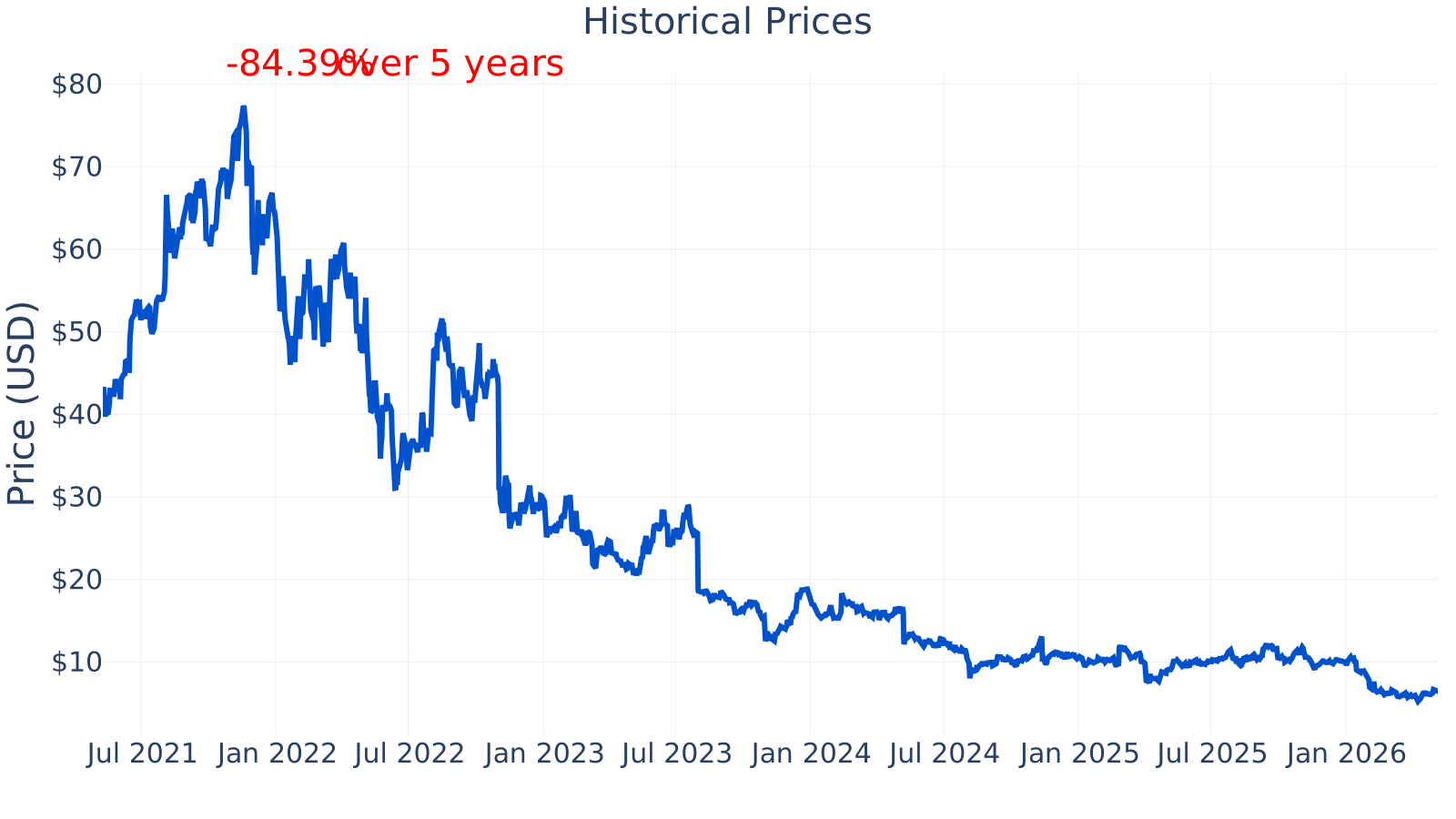
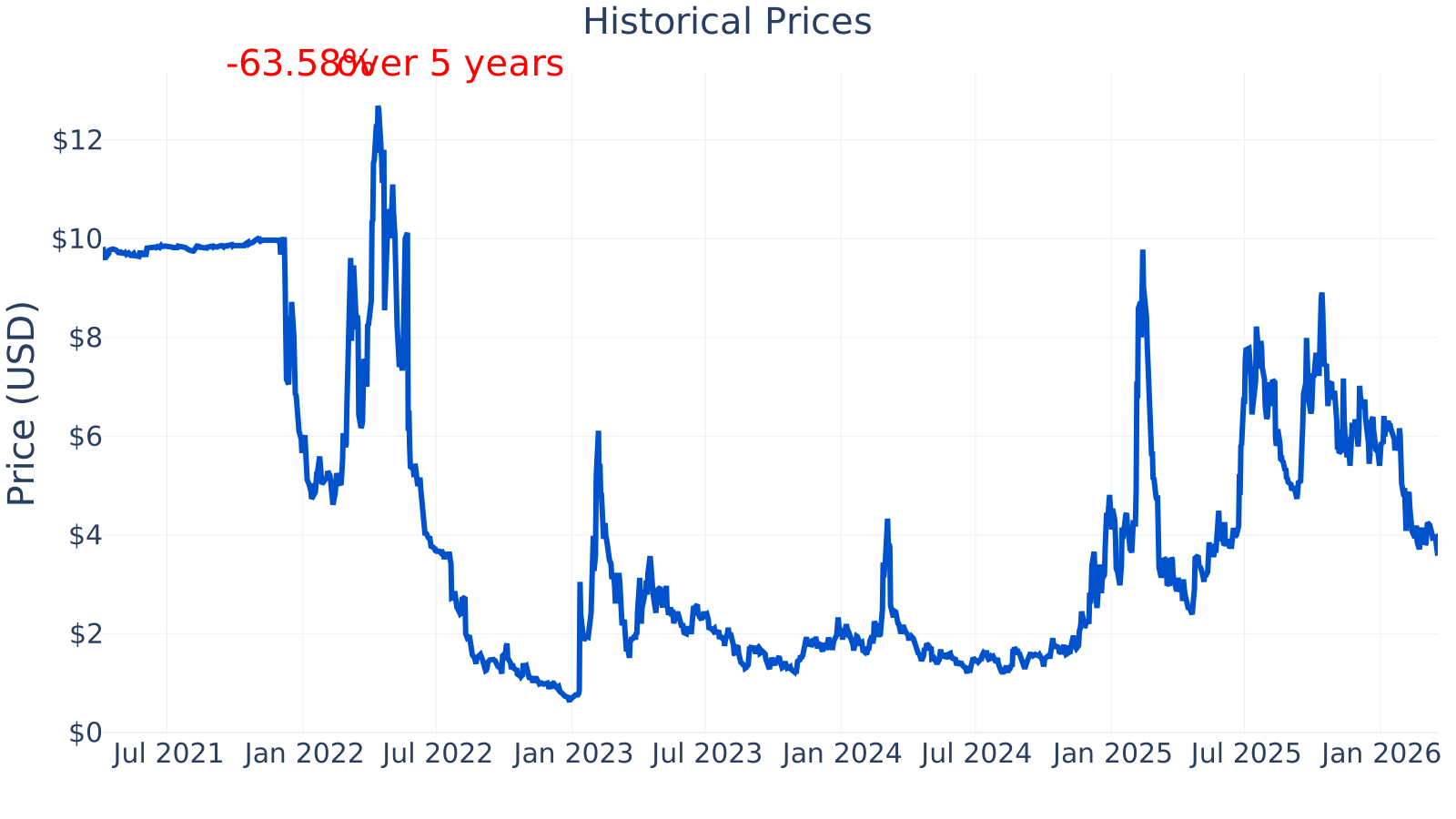
The latest snapshot shows a market capitalization of about $1.70B and a very high beta (3.25), which is a sign the stock has historically moved much more than the overall market. Profitability is a central weakness in the current profile: the profit margin is about -230% versus an industry median near +4.8%, meaning the company is losing money relative to revenue. Growth is also currently under pressure, with year-over-year revenue growth around -37.7% compared with an industry median near +7%. On leverage, the latest debt-to-equity is about 4%, well below the industry median (about 60%), although this ratio can move sharply over time depending on equity changes and financing. The free cash flow (TTM) is about -$46.3M, indicating cash outflows after operating needs and capital spending.
Growth (Medium)
The company operates in a part of the technology market that benefits from long-term adoption trends: organizations are steadily investing in AI-enabled analytics, automation, and decision tools. In general, demand can be supported by the rising complexity of operations (especially in government and regulated environments) and the need to combine many data sources into actionable outputs.
That said, BigBear.ai’s growth profile appears uneven. A key reason can be the nature of contract-based services work: revenue can depend on the timing of awards, renewals, funding cycles, and how quickly projects move from planning to implementation. When contract timing shifts, reported growth can swing.
The year-over-year pattern shows periods of positive growth followed by contractions, with the most recent point shown at roughly -37.7%. For long-term context, this kind of volatility can matter because it may signal dependence on a smaller number of large contracts or changes in customer spending patterns.
Free cash flow is negative across the periods shown, reaching about -$46.3M on a trailing basis in the latest metric snapshot. For a services-and-solutions company, sustained negative free cash flow can raise the importance of liquidity management (how operations are funded) and the company’s ability to move toward more consistently profitable work.
Potential catalysts in this type of business typically include: expansion of existing customer relationships, new contract wins, scaling higher-margin offerings, and improved cost discipline. Whether those translate into durable improvements depends on execution and the stability of demand from core customers.
Risks (High)
The biggest risk visible in the current fundamentals is profitability. The profit margin series remains deeply negative across the timeline shown, while the industry median stays positive. This gap suggests the company has not yet reached a cost structure that reliably converts revenue into profits, which can limit flexibility during slower periods.
The latest profit margin shown is about -230%, and the chart indicates the company has remained well below the industry median for an extended period. Even though margins improved at times earlier in the series, the overall picture is continued losses, which increases dependence on cost reductions, improved contract economics, or additional financing over time.
Another major risk is revenue concentration and customer funding dynamics, which are common in government-oriented contracting businesses. Results can be influenced by procurement timing, contract modifications, or changes in budget priorities. If a small number of large awards drive a meaningful share of revenue, delays or non-renewals can have an outsized impact.
From a balance-sheet risk perspective, the latest leverage reading looks low, but the trend has been volatile.
Debt-to-equity ends at roughly 4% in the most recent point, below the industry median near 60%. However, the historical series includes extreme values (including negative readings), which can occur when equity changes significantly. In other words, the ratio has not been stable, so it is most useful when reviewed alongside the underlying balance-sheet details in filings.
Competitive positioning is also a meaningful risk. BigBear.ai operates in a crowded market where many firms offer analytics, AI integration, and decision-support solutions. Competitors include:
- Large defense and government services contractors with deep contracting relationships and the ability to bundle AI capabilities with broader programs.
- Enterprise IT services and consulting firms that can provide AI strategy, implementation, and managed services at scale.
- Specialized AI/analytics vendors and platform providers that may compete on specific tools, speed of innovation, or pricing.
BigBear.ai’s potential advantages often relate to domain know-how in mission-focused use cases and experience working within government procurement and operational constraints. However, based on the financial profile shown (losses and uneven growth), the company does not appear to be demonstrating clear “industry-leader” economics at this time.
Valuation
A price-to-earnings (P/E) ratio is not shown as meaningful for the company across the periods displayed (values are effectively unavailable/zero in the chart), which commonly happens when earnings are negative. In these cases, P/E is not a helpful tool for comparing valuation to profitable peers, and investors often rely more on metrics like revenue multiples, gross margin trends, operating margin trajectory, and cash flow progress (not provided here).
For context, the industry median P/E shown in the chart stays in a typical range (roughly the low-20s to low-30s over time), highlighting a key point: profitable peers can be compared using earnings-based valuation, while a loss-making company generally cannot. As a result, whether the current stock price is “expensive” or “cheap” is harder to judge with standard ratios and depends heavily on forward expectations—especially the path to improved margins and cash generation.
Conclusion
BigBear.ai operates in a sector with long-term structural demand for AI-enabled analytics and decision-support systems, particularly where organizations face complex, high-stakes operational environments. The business model appears tied to contract-driven delivery work, which can support meaningful opportunities but also tends to create uneven growth patterns.
Based on the figures shown, the dominant issues are continued losses, negative free cash flow, and recent revenue contraction. Leverage appears low in the latest reading, but historical variability suggests the balance-sheet story should be reviewed carefully in filings. Overall, the long-term profile hinges on whether the company can convert its positioning and contract activity into more consistent revenue growth and materially better profitability.
Sources:
- SEC EDGAR — BigBear.ai Holdings, Inc. Form 10-K (Annual Report)
- SEC EDGAR — BigBear.ai Holdings, Inc. Form 10-Q (Quarterly Report)
- SEC EDGAR — BigBear.ai Holdings, Inc. Form 8-K (Current Report)
- BigBear.ai Investor Relations — Press Releases and Presentations (public company-hosted materials)
- Wikipedia — “BigBear.ai” (basic company background)
This article is for informational purposes only and does not constitute financial advice. Some content is AI-generated. See Disclaimer