Stock Analysis · Best Buy Co. Inc (BBY)
Overview
Best Buy Co., Inc. (BBY) is a specialty retailer focused on consumer electronics and related services. It sells products such as computing devices, mobile phones, TVs, appliances, and other electronics through a mix of physical stores and digital channels. Beyond product sales, Best Buy also generates revenue from services (for example, installation, repair, support plans, and other customer solutions) and from business-to-business activities through its Best Buy Health and Best Buy Ads initiatives described in its filings.
In simple terms, Best Buy’s business model depends on (1) selling technology and appliances at scale, and (2) attaching services and support that can deepen customer relationships and add recurring or higher-margin revenue streams.
Best Buy reports revenue by segment in its filings, primarily split between Domestic (U.S.) and International (Canada). Product categories and services are discussed in its annual report, but the exact category percentages can change by year and are best confirmed in the most recent Form 10‑K.
- Domestic segment (U.S.) — the company’s largest revenue source historically
- International segment (Canada) — smaller portion of total revenue
- Services and other revenue streams — part of segment revenue, including support, installation, repair, and other offerings discussed in filings
The company’s recent years show a lower overall revenue base compared with earlier periods, which highlights how sensitive electronics retail can be to consumer demand cycles.
Over the fiscal years shown, total revenue declines from about $51.8B (FY2022) to about $41.5B (FY2025). Over the same period, net income falls from about $2.45B to about $0.93B, illustrating how a softer sales environment can flow through to profitability even when operating expenses are managed.
Key Figures
| Metric | Value | Industry ⓘ |
|---|---|---|
| Date | Feb 07, 2026 | |
| Context | ||
| Sector | Consumer Cyclical | |
| Industry | Specialty Retail | |
| Market Cap ⓘ | $14.79B | |
| Beta ⓘ | 1.47 | |
| Fundamental | ||
| P/E Ratio ⓘ | 23.24 | 23.78 |
| Profit Margin ⓘ | 1.54% | 6.27% |
| Revenue Growth ⓘ | 2.40% | 5.20% |
| Debt to Equity ⓘ | 154.28% | 103.28% |
| PEG ⓘ | 1.28 | |
| Free Cash Flow ⓘ | $1.51B | |
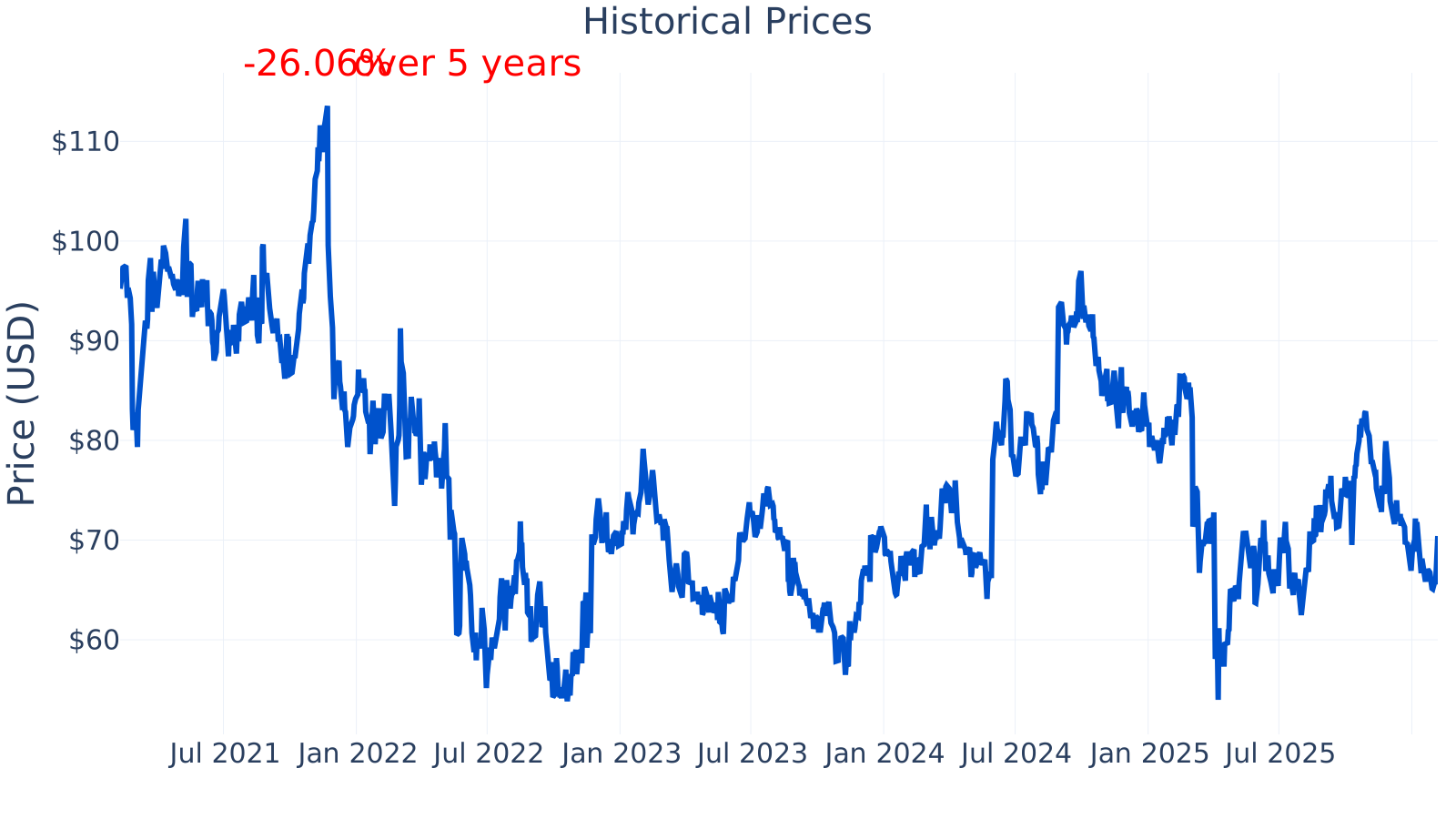
Best Buy’s market capitalization is about $14.8B, and the stock’s beta of ~1.47 indicates it has tended to move more than the broader market. The latest P/E ratio (~23.24) is close to the industry median (~23.78). Profitability and balance-sheet leverage stand out versus the industry median: Best Buy’s profit margin (~1.54%) is well below the industry median (~6.27%), while debt-to-equity (~154%) is above the industry median (~103%). On the cash side, trailing twelve-month free cash flow is about $1.51B, which indicates the business has continued to generate cash even with pressure on earnings. Revenue growth has recently turned slightly positive (~2.4% year over year) but remains below the industry median (~5.2%).
Growth (Low to Medium)
Best Buy operates in consumer electronics retail, an industry that tends to be mature and highly competitive. Demand is influenced by product replacement cycles (phones, PCs, TVs), innovation waves, and consumer purchasing power. This means growth often comes in bursts (for example, upgrade cycles) rather than steadily compounding every year.
In terms of strategy, Best Buy’s filings emphasize initiatives that can support longer-run resilience: strengthening its omnichannel approach (stores plus online), improving customer experience and membership-related engagement, and expanding service offerings (such as tech support, installation, and repair). Services can matter because they may be less dependent on one-time product purchases and can help differentiate Best Buy from sellers that compete mainly on price and delivery speed.
Revenue growth has been volatile. After strong growth in 2021 (likely reflecting an unusual demand period), the company experienced multiple years of negative year-over-year revenue comparisons, with improvement more recently into modest positive territory (about +2.4% in the most recent point shown).
Cash generation has also fluctuated: free cash flow is about $2.52B (FY2022), drops to under $1.0B in FY2023 and $0.68B in FY2024, then improves to about $1.39B by FY2025. This pattern is consistent with a business working through a demand downturn while maintaining the ability to generate cash, which can support reinvestment, debt service, and shareholder returns (as described in filings).
Potential catalysts for improved growth typically relate to the category cycle: stronger consumer demand, a major upgrade cycle (for example, PCs or mobile), improved product mix, and continued scaling of services and business-to-business initiatives. The timing and size of these catalysts are uncertain and can change quickly with consumer conditions.
Risks (High)
This article is for informational purposes only and does not constitute financial advice. Some content is AI-generated. See Disclaimer


