Stock Analysis · Bentley Systems Inc (BSY)
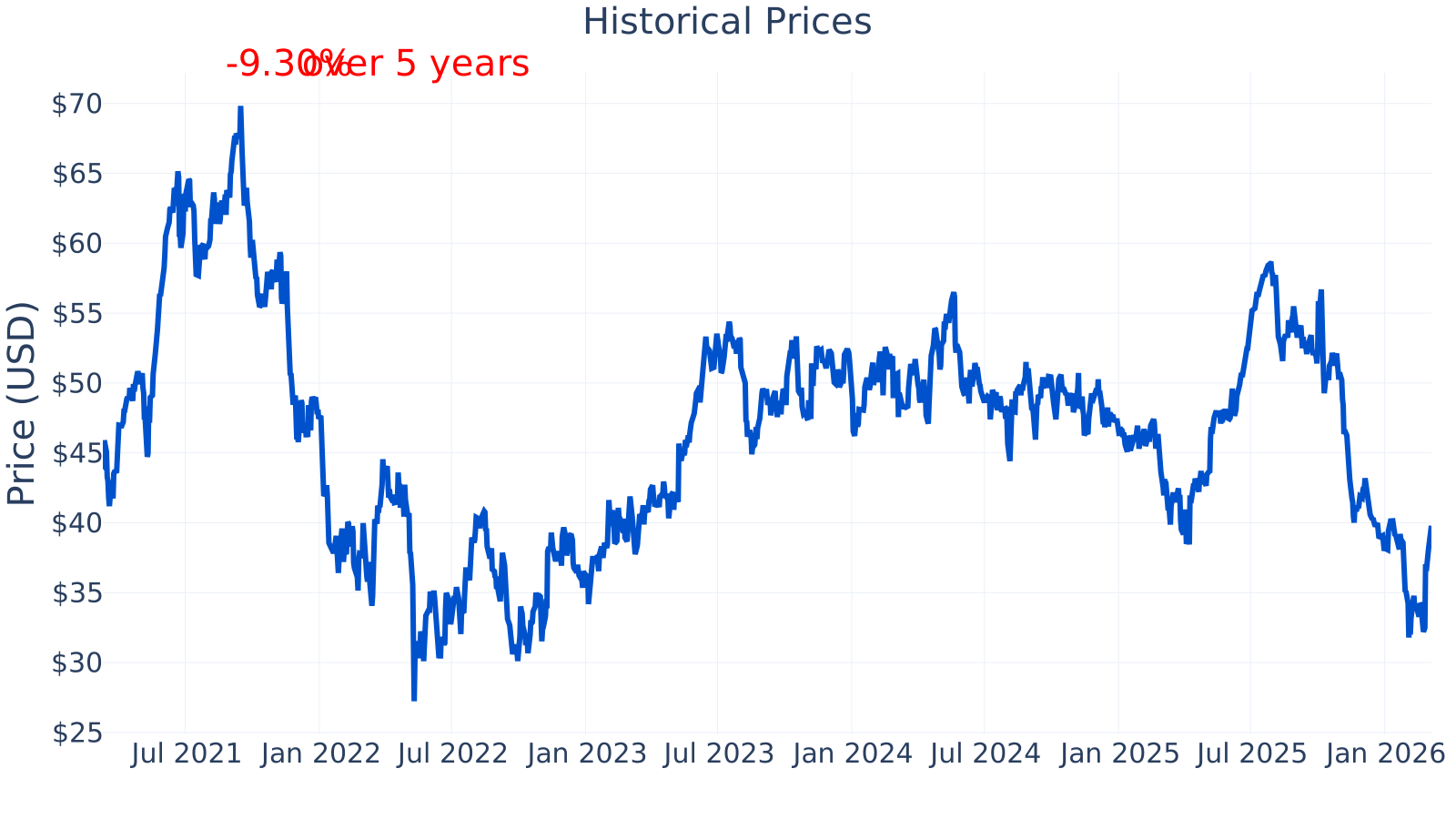
Overview
Bentley Systems Inc. (BSY) is a software company focused on the design, construction, and ongoing operation of large physical assets and networks—things like roads, bridges, rail, airports, water and wastewater systems, energy utilities, and industrial facilities. Its products are mainly used by engineers, architecture and construction firms, and asset owners (including many public-sector organizations) to model projects, manage engineering data, and monitor asset performance over long lifecycles.
A key part of Bentley’s approach is supporting “infrastructure digital twins,” which are living digital models that can be updated over time as an asset is built and operated. In practical terms, this aims to help organizations reduce rework, improve coordination across contractors and stakeholders, and make maintenance decisions based on better information over decades.
From a business model perspective, Bentley is primarily a recurring software company, with revenue largely tied to subscriptions and long-term customer relationships rather than one-time license sales. This generally makes results more predictable than project-based service businesses, although demand can still be influenced by construction and capital spending cycles.
Main sources of revenue (high-level, as typically described in company filings):
- Subscriptions (recurring software access, including term subscriptions and other recurring arrangements)
- Services (implementation, training, and other supporting services tied to software use)
Scale and recent direction (based on the income-flow view below): annual revenue rises from about $965M (2021) to about $1.50B (2025), while gross profit remains the largest component after cost of revenue, consistent with a software business model.
Key Figures
| Metric | Value | Industry ⓘ |
|---|---|---|
| Date | Mar 09, 2026 | |
| Context | ||
| Sector | Technology | |
| Industry | Software - Application | |
| Market Cap ⓘ | $12.08B | |
| Beta ⓘ | 1.18 | |
| Fundamental | ||
| P/E Ratio ⓘ | 46.81 | 27.00 |
| Profit Margin ⓘ | 18.50% | 7.87% |
| Revenue Growth ⓘ | 11.90% | 16.65% |
| Debt to Equity ⓘ | 108.01% | 25.51% |
| PEG ⓘ | 1.95 | |
| Free Cash Flow ⓘ | $520.21M | |
Bentley’s equity value is about $12.1B, placing it in the mid-cap range. The stock’s beta of ~1.18 suggests it has historically moved somewhat more than the overall market, though day-to-day price movement can differ from long-term business performance.
Profitability is a notable positive in the snapshot: profit margin ~18.5% versus an industry median around 7.9%. Revenue growth year over year is about 11.9%, below the industry median shown (~16.7%), which may indicate Bentley is growing steadily but not as fast as some software peers.
Leverage is a key item to watch: debt-to-equity ~108% compared with an industry median around 25.5%. That gap does not automatically imply financial stress, but it does mean the capital structure relies more on debt than many peers, which can matter when interest rates rise or if cash generation weakens.
Growth (medium)
Bentley operates in a part of the software market tied to long-term infrastructure needs. Roads, utilities, water systems, and energy networks require continuous investment and modernization, and many owners are attempting to improve productivity by moving from disconnected files and workflows to integrated digital processes. That “digitalization of infrastructure” trend supports ongoing demand for engineering and asset performance software, especially where assets must be maintained for decades and audited for safety and compliance.
Strategically, Bentley’s focus on recurring subscriptions and expanding usage across an asset’s lifecycle (design → build → operate) aligns with longer customer relationships and the potential to grow revenue per customer over time. Another growth lever is the adoption of digital twin workflows, which can increase the amount of Bentley software used after construction, not only during initial design.
The year-over-year growth rate appears to have normalized from the low-to-mid 20% range in 2021–2022 to mostly high single digits/low teens more recently, ending near ~11.9%. This pattern can be consistent with a business maturing to steadier expansion rather than hypergrowth.
Free cash flow over the trailing twelve months shows a generally rising trend over time (from roughly $304M in 2021 to roughly $436M in 2025, with the latest value shown at about $520M). For a subscription-heavy software company, sustained cash generation can provide flexibility for product investment, acquisitions, and debt management.
Potential catalysts (described at a high level, without forecasting): continued migration of customers toward subscription and enterprise agreements, increased adoption of digital twin and asset performance workflows, and ongoing infrastructure modernization needs across transportation, water, and energy.
Risks (medium)
Spending-cycle exposure is an important risk. Even though Bentley sells software subscriptions, its end markets are closely linked to capital projects and public budgets. Delays in infrastructure programs, permitting slowdowns, or reduced industrial capital spending can affect new bookings and expansions.
Competitive pressure is another key factor. Bentley competes in multiple layers of the engineering software stack, and customers often mix tools from several vendors. Large and well-funded competitors can pressure pricing, bundle products, or invest aggressively in adjacent capabilities (for example, construction workflows or broader design platforms). Competitors often discussed in the infrastructure engineering ecosystem include Autodesk (AEC design and construction software), Dassault Systèmes and Siemens (industrial design/PLM and simulation), and various specialized infrastructure and asset management software providers. Bentley is widely recognized as a major infrastructure-focused player, but it is not the only platform customers can build workflows around, and switching costs vary by product and process maturity.
Balance-sheet leverage deserves ongoing attention because it can amplify outcomes in both good and bad scenarios.
The chart indicates debt-to-equity has come down substantially from earlier periods (well above 200%–400% in 2021–2022) to around ~108% most recently, but it still remains well above the industry median shown (roughly 25%–35% in recent periods). Lower leverage over time can reduce risk, yet the remaining gap suggests financing structure is still more debt-heavy than many peers.
Profitability durability also matters. Software margins can fluctuate with sales investments, research and development intensity, and the timing of larger enterprise deals.
Profit margin appears volatile quarter-to-quarter, but it remains meaningfully above the industry median throughout most of the period shown, and is about ~18.5% most recently. This relative strength can indicate pricing power, cost discipline, or a favorable mix of recurring revenue—though margins can compress if competition intensifies or spending increases faster than revenue.
Valuation
At about 46.8x earnings, Bentley’s current price-to-earnings (P/E) ratio is above the industry median shown in the latest table (about 27.0x). The historical P/E range on the chart also shows meaningful swings over time, including periods at much higher multiples than today and periods closer to current levels.
In plain terms, a higher P/E usually means the market is paying more today for each dollar of current earnings, which is often associated with expectations for durable growth, strong margins, and resilient cash flows. For Bentley, the valuation sits alongside: (1) steady revenue growth (recently around low-teens), (2) above-median profitability, (3) strong free cash flow, and (4) higher leverage than many peers. The combination suggests the stock’s valuation is not driven by rapid growth alone; it also reflects quality and durability characteristics, while leverage remains a counterweight for some market participants.
Conclusion
Bentley Systems is a specialized infrastructure software company with a largely recurring revenue model, serving long-lived assets where digital workflows can stay embedded for years. The business profile shown here combines steady growth, above-industry profitability, and rising free cash flow, which are commonly associated with resilient software models.
At the same time, the company’s financial profile includes higher debt-to-equity than the industry median (despite improvement over time), and its end markets can be influenced by public-sector funding cycles and large-project timing. On valuation, the current P/E ratio is above the industry median, meaning expectations embedded in the price appear higher than for a typical peer, and future results may be more sensitive to execution and macro conditions.
Sources:
- Bentley Systems, Inc. — SEC filings (Form 10-K and Form 10-Q) available via the SEC EDGAR database
- SEC EDGAR — Company filings for Bentley Systems, Inc.
- Wikipedia — “Bentley Systems” (basic company background and history)
This article is for informational purposes only and does not constitute financial advice. Some content is AI-generated. See Disclaimer


