Stock Analysis · Bentley Systems Inc (BSY)
Overview
Bentley Systems Inc. develops software used to design, build, and operate physical infrastructure such as roads, bridges, rail networks, utilities, industrial facilities, and buildings. In plain terms, its products help engineers, contractors, and asset owners plan projects, manage construction, and then maintain the infrastructure over decades.
A key aspect of Bentley’s business is that many customers keep using the same tools for long periods (infrastructure assets last a long time, and engineering workflows are complex). This tends to support recurring software usage and ongoing updates.
In its filings, Bentley typically describes revenue in broad categories such as subscriptions (including term licenses and cloud/subscription arrangements), services (implementation, training, consulting), and in some periods “perpetual” licenses (a more traditional one-time license model). Over time, the industry has generally shifted toward subscription-style arrangements, which often makes revenue more recurring and predictable compared with one-time sales.
Across the years shown, total revenue rises from about $965M (2021) to about $1.353B (2024), while gross profit also expands (roughly $749M to about $1.095B). Research and development spending increases steadily as well, consistent with continued product investment.
Key Figures
| Metric | Value | Industry ⓘ |
|---|---|---|
| Date | Feb 07, 2026 | |
| Context | ||
| Sector | Technology | |
| Industry | Software - Application | |
| Market Cap ⓘ | $10.07B | |
| Beta ⓘ | 1.20 | |
| Fundamental | ||
| P/E Ratio ⓘ | 40.45 | 27.79 |
| Profit Margin ⓘ | 18.45% | 6.02% |
| Revenue Growth ⓘ | 12.00% | 15.80% |
| Debt to Equity ⓘ | 107.36% | 25.15% |
| PEG ⓘ | 1.48 | |
| Free Cash Flow ⓘ | $460.12M | |
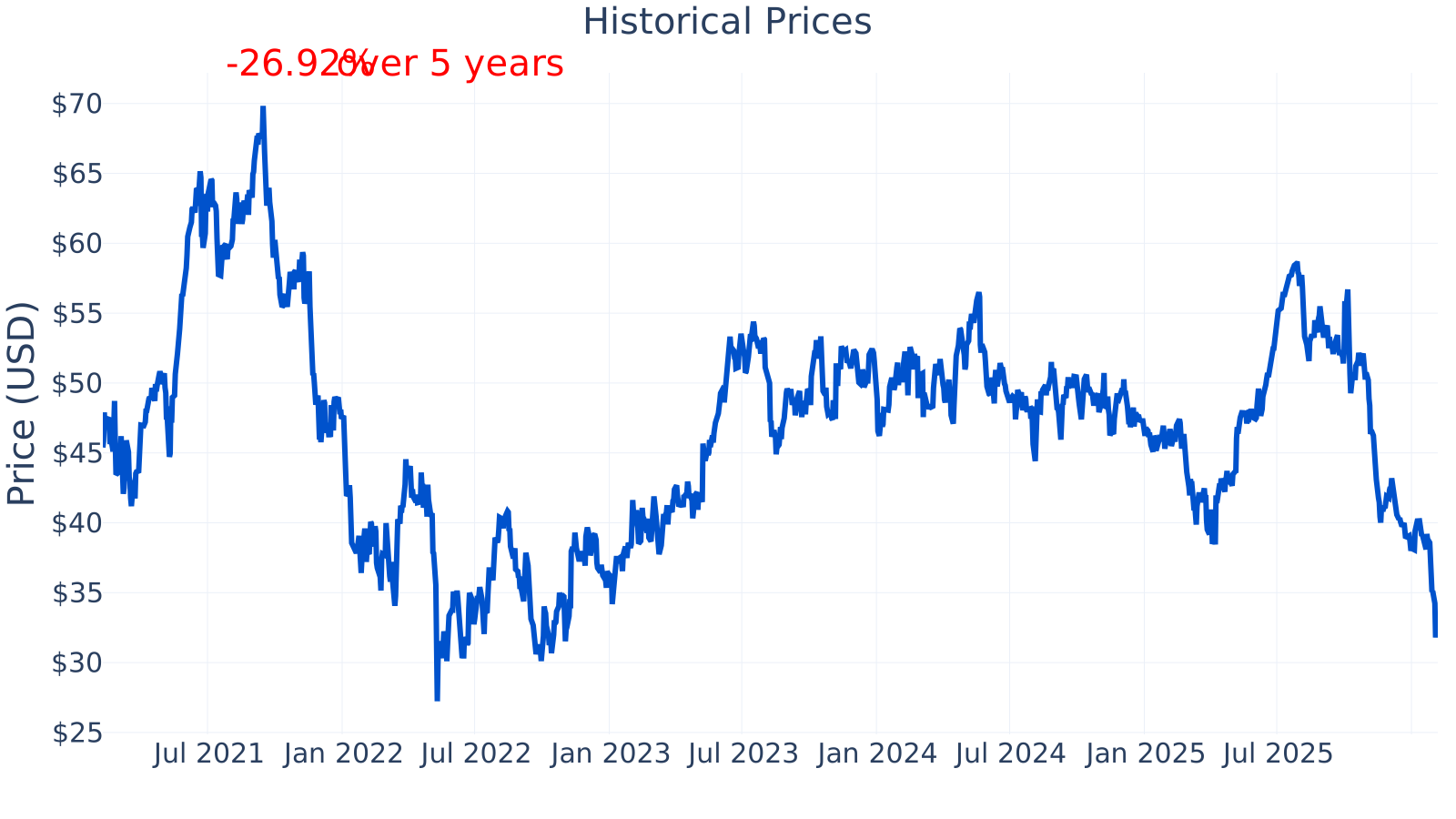
Bentley’s market capitalization is about $10.1B. The stock’s beta is about 1.20, which indicates it has tended to move somewhat more than the overall market. The P/E ratio is about 40.5 versus an industry median near 27.8, suggesting the shares trade at a higher earnings multiple than many software application peers. Profit margin is about 18.5% versus an industry median around 6.0%, indicating stronger profitability than the typical peer in this comparison set. Year-over-year revenue growth is about 12.0% versus an industry median near 15.8%, pointing to growth that is solid but not the fastest in the group. Debt-to-equity is about 107% versus an industry median near 25%, meaning Bentley uses more balance-sheet leverage than many peers. Trailing twelve-month free cash flow is about $460M, showing meaningful cash generation relative to its size.
Growth (medium)
Bentley operates in markets linked to long-lived, essential infrastructure. Demand is influenced by multi-year capital spending cycles, maintenance needs, safety and regulatory requirements, and modernization efforts. Digitalization is an ongoing theme: infrastructure owners increasingly want better data, better coordination between teams, and more efficient maintenance once assets are in service.
Strategically, Bentley’s focus on software that supports the full lifecycle of assets (from design through operations) can matter for long-term growth because it expands the number of teams and workflows that can use its tools. If a platform becomes embedded across design and operations, switching can be inconvenient due to training, standards, integrations, and long-term project archives.
The year-over-year revenue growth pattern shows a step-down from the very high growth rates seen in 2021–2022 (often above 20%) to more moderate, steadier growth in more recent periods (roughly high single digits to low teens). This can be consistent with a business scaling to a larger revenue base and operating in infrastructure end markets that typically grow steadily rather than explosively.
Free cash flow trends upward over the period shown: roughly $304M (2021) to about $436M (2025), with the latest trailing twelve-month level around $460M. For a software company, sustained free cash flow can support ongoing product development, acquisitions, and debt service, while also providing flexibility during slower spending cycles.
Risks (medium)
This article is for informational purposes only and does not constitute financial advice. Some content is AI-generated. See Disclaimer


