Stock Analysis · Benchmark Electronics Inc (BHE)
Overview
Benchmark Electronics Inc (BHE) is an electronics manufacturing services (EMS) company. In simple terms, it helps other companies design, build, test, and support electronic products. Customers typically outsource these activities to reduce cost, speed up production, and gain access to specialized manufacturing and supply-chain capabilities.
Benchmark describes itself as serving several end markets, commonly including areas such as industrial, aerospace & defense, medical, and semiconductor-capital-equipment-related programs (exact wording and grouping can vary by filing). Its role often spans the full product lifecycle: early engineering and design support, manufacturing and final assembly, testing and quality controls, and after-market services.
Public filings generally describe revenue as coming primarily from manufacturing and related services provided to customers (rather than selling branded products). Detailed revenue splits by end market and/or geography may be presented in company filings; the exact percentages depend on the most recent annual report and segment disclosures.
Across the years shown, total revenue moved from about $2.26B (2021) up to about $2.66B (2025). A large share of revenue is consumed by cost of revenue (typical for contract manufacturers), leaving a relatively thin gross profit pool. Net income was positive in each year shown, but it fell notably in 2025 versus 2024, reflecting how small changes in costs, pricing, mix, interest, or taxes can have an outsized impact when margins are slim.
Key Figures
| Metric | Value | Industry ⓘ |
|---|---|---|
| Date | Feb 08, 2026 | |
| Context | ||
| Sector | Technology | |
| Industry | Electronic Components | |
| Market Cap ⓘ | $2.09B | |
| Beta ⓘ | 1.02 | |
| Fundamental | ||
| P/E Ratio ⓘ | 85.74 | 41.23 |
| Profit Margin ⓘ | 0.94% | 6.11% |
| Revenue Growth ⓘ | 7.20% | 12.20% |
| Debt to Equity ⓘ | 9.31% | 39.00% |
| PEG ⓘ | 1.91 | |
| Free Cash Flow ⓘ | $85.42M | |
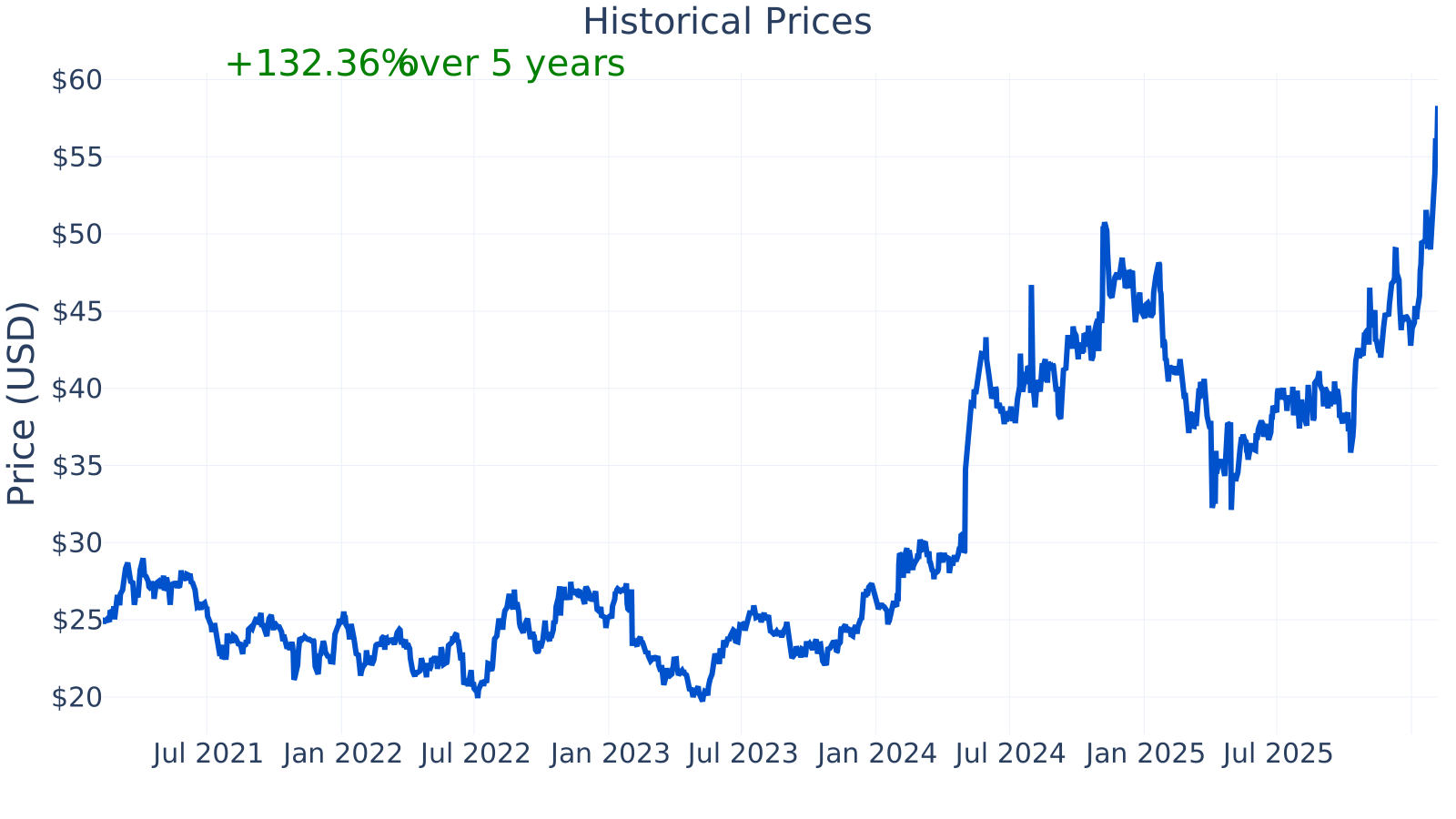
Benchmark’s market capitalization is about $2.09B and the beta is about 1.02, which suggests the stock has tended to move roughly in line with the broader market historically. The P/E ratio is about 85.7 versus an industry median around 41.2, while the PEG ratio is about 1.91 (both are valuation-oriented signals that depend heavily on earnings level and growth expectations). Profit margin is about 0.94% versus an industry median around 6.11%, highlighting that Benchmark operates with much thinner net profitability than the typical company in its industry group. Revenue growth year over year is about 7.2% versus an industry median around 12.2%. Debt-to-equity is about 9.3% versus an industry median around 39.0%, indicating comparatively low leverage. Trailing twelve-month free cash flow is about $85.4M.
Growth (Medium)
Electronics outsourcing is supported by long-running forces: increasing product complexity, the need for flexible capacity, tighter quality and regulatory requirements in certain end markets, and more complicated global supply chains. These trends can create steady demand for EMS partners that can handle sophisticated builds, manage component sourcing, and support customers from design through production.
For Benchmark specifically, future growth tends to be influenced by (1) customer program ramps and new program wins, (2) mix of end markets (some are more cyclical than others), and (3) the company’s ability to execute reliably on quality, cost, and delivery. In contract manufacturing, growth can arrive in “steps” when large programs ramp, but it can also slow quickly if customer demand softens or programs end.
The year-over-year revenue growth pattern shown is uneven. Growth was strong in 2021–2022 (including several quarters above 20% and even above 30%), then turned negative through much of 2023–2025 before returning to positive territory by the end of 2025 (about 7.2%). This kind of swing is consistent with an outsourcing/manufacturing model where customer order patterns, inventory corrections, and program timing can materially affect reported revenue from quarter to quarter.
Free cash flow has also been volatile over the period shown, including negative trailing twelve-month figures in 2022 and 2023, followed by a sharp improvement in 2024 and a still-positive level in 2025. For manufacturers, free cash flow can move significantly with working capital (inventory and receivables) and capital spending needs, so it is often helpful to view it over multiple years rather than a single period.
Risks (Medium-High)
This article is for informational purposes only and does not constitute financial advice. Some content is AI-generated. See Disclaimer


