Stock Analysis · Bath & Body Works Inc (BBWI)
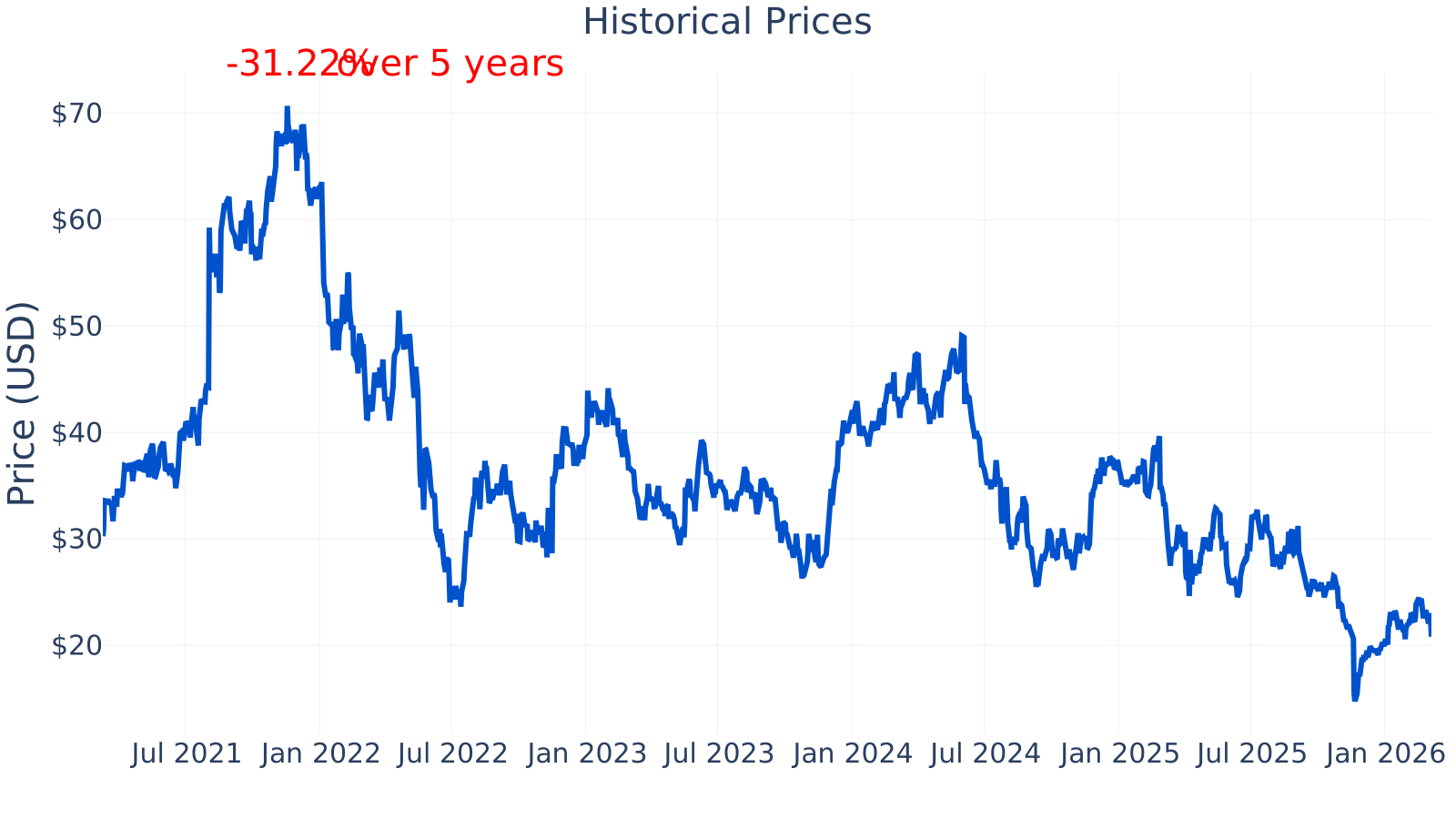
Overview
Bath & Body Works Inc. (BBWI) is a specialty retailer focused on personal care and home fragrance products. The company sells items such as body care (lotions, soaps, fragrances) and home fragrance (candles, wall plug-ins, room sprays). Its sales are generated through a mix of company-operated stores and digital commerce, supported by marketing and loyalty programs designed to drive repeat purchases.
In its reporting, Bath & Body Works is primarily centered around the Bath & Body Works brand and business (following the separation from Victoria’s Secret). As a consumer-facing retailer, revenue is closely tied to product innovation, promotional activity, store traffic, and online conversion, with strong seasonality around holidays.
Main sources of revenue (high level):
- Body care products (largest category)
- Home fragrance products (second-largest category)
- Other (smaller portion; includes select accessories and related items)
Over the last several fiscal years, total revenue has been relatively stable in the ~$7.3B–$7.9B range, while profitability has moved more than revenue—suggesting that costs, promotions, and operating efficiency have played a major role in results.
From FY2022 to FY2026 (fiscal years ending around late January), total revenue moved from about $7.88B to about $7.29B, while net income declined from about $1.33B to about $0.65B. Interest expense decreased over the period (from about $388M to about $276M), but operating income also trended down (from about $1.81B to about $1.13B), indicating that operating performance—not only financing costs—has been an important driver of the net income change.
Key Figures
| Metric | Value | Industry ⓘ |
|---|---|---|
| Date | Mar 09, 2026 | |
| Context | ||
| Sector | Consumer Cyclical | |
| Industry | Specialty Retail | |
| Market Cap ⓘ | $4.29B | |
| Beta ⓘ | 1.42 | |
| Fundamental | ||
| P/E Ratio ⓘ | 6.44 | 22.01 |
| Profit Margin ⓘ | 8.90% | 6.27% |
| Revenue Growth ⓘ | -2.30% | 5.10% |
| Debt to Equity ⓘ | -387.33% | 103.28% |
| PEG ⓘ | 1.12 | |
| Free Cash Flow ⓘ | $865.00M | |
Bath & Body Works has a market capitalization of about $4.29B. The stock’s beta of ~1.42 suggests it has tended to move more than the broader market (higher volatility). The latest P/E ratio is ~6.44, which is below the specialty retail industry median (~22.01) shown here. Profitability is positive, with a profit margin of ~8.9% versus an industry median of ~6.27%. Recent year-over-year revenue growth is about -2.3%, compared with an industry median of about +5.1%. Trailing twelve-month free cash flow is about $865M. The debt-to-equity value is negative, which commonly happens when accounting equity is negative; in that case, the ratio can become less intuitive and should be interpreted alongside the balance sheet details in filings.
Growth (Medium)
Bath & Body Works operates in consumer discretionary retail—an area that can grow over time but is typically sensitive to the economy, competition, and changing customer preferences. For long-term growth, the company’s main levers generally include: expanding and refreshing product lines (new scents and collections), improving digital sales capabilities, strengthening loyalty engagement, and managing promotions and inventory so that sales do not rely excessively on discounting.
The year-over-year revenue growth pattern shown is frequently slightly negative, with occasional positive quarters. The most recent point is about -2.3%, below the industry median shown (about +5.1%). This points to a business that has recently been more focused on maintaining sales levels and managing profitability than on generating consistent top-line expansion.
Free cash flow has remained substantial, moving from about $1.22B (FY2022) down to roughly $0.66B (FY2024–FY2025), and then rising to about $0.87B (FY2026). For a retailer, steady free cash flow can matter because it supports ongoing operations (inventory, stores, technology) and financial flexibility. That said, free cash flow can vary due to working capital swings (inventory and payables), capital spending, and changes in profitability.
Potential catalysts (in a factual, business-driver sense) often include: improved merchandise performance (new product cycles that resonate), more efficient promotions and inventory management, and continued scaling of the digital channel. Because the company is brand-led, consumer response to product innovation and marketing is a recurring swing factor.
Risks (High)
Bath & Body Works faces several risks typical of specialty retail. Demand can weaken when consumers reduce discretionary spending, and results can be pressured when competition increases promotional intensity. The business is also exposed to input costs and supply chain execution (product sourcing, freight, and inventory planning). Seasonality is another key factor: major selling periods can disproportionately affect annual performance.
Competitive positioning is largely built around brand recognition in fragrance and body care, frequent product newness, and an approach that encourages repeat purchasing (often supported by loyalty and gifting occasions). However, the categories the company serves tend to have low switching costs for shoppers, which can limit pricing power over time if comparable products are widely available.
Key competitors are generally other beauty and personal care retailers and brands, including large specialty beauty chains and mass-market retailers with strong beauty aisles, as well as direct-to-consumer brands. Competition is not only about product quality, but also about price, convenience, and marketing reach.
The debt-to-equity series is negative across the entire period shown (latest about -387%). A negative ratio often reflects negative shareholders’ equity, which can occur due to capital structure choices (such as significant share repurchases over time) and accounting impacts. In practical terms, this makes simple leverage comparisons versus peers less straightforward than when equity is positive. It also increases the importance of reviewing debt levels, maturities, and cash generation capacity directly in the company’s filings.
Profit margin has trended down from very high levels earlier in the period (peaking around 19% in 2021) to about 8.9% most recently, though it remains above the industry median shown (about 5.6%). This suggests the company has still been more profitable than the median peer, but also that profitability has compressed versus earlier years—consistent with a more challenging retail environment and/or higher operating and promotional pressures.
Valuation
The P/E ratio shown for Bath & Body Works has generally ranged from the mid-single digits to low teens over the period displayed, with the latest value around 6.44. The industry median on the same timeline is often higher, and the latest industry median shown is around 22.01. A lower P/E can reflect a mix of factors, such as slower expected growth, higher perceived business risk, greater earnings volatility, or investor concerns about longer-term category dynamics.
Whether the current multiple is “high” or “low” in a fundamental sense depends heavily on how durable earnings and cash flows prove to be, and on the company’s ability to stabilize or grow revenue while maintaining margins. With recent revenue growth slightly negative and margins below earlier peaks, the valuation picture is closely tied to execution: maintaining brand relevance, managing promotions, and protecting profitability through cost and inventory discipline.
Conclusion
Bath & Body Works is a focused specialty retailer built around fragrance and personal care categories, with meaningful cash generation and profit margins that have recently remained above the median peer group shown. At the same time, recent years show relatively flat-to-down revenue and margin compression from prior highs, highlighting how sensitive results can be to consumer demand and retail promotional conditions.
The company’s long-term fundamentals therefore center on brand strength, product innovation cadence, and disciplined retail execution (pricing, promotions, and inventory). Key watch items over time include the direction of comparable sales and revenue growth, the stability of operating income, and how the balance sheet is managed given the negative debt-to-equity reading that can occur when shareholders’ equity is negative.
Sources:
- SEC EDGAR — Bath & Body Works Inc. filings (Form 10-K, Form 10-Q)
- Bath & Body Works, Inc. — Investor Relations materials (press releases and company presentations)
- Wikipedia — “Bath & Body Works, Inc.” (basic company background)
This article is for informational purposes only and does not constitute financial advice. Some content is AI-generated. See Disclaimer


