Stock Analysis · Ball Corporation (BALL)
Overview
Ball Corporation is a packaging manufacturer best known for making aluminum beverage containers (cans) and related packaging products. In practice, Ball’s business is tied to everyday consumer demand for beverages (such as soft drinks, beer, sparkling water, energy drinks) and to brand owners’ packaging choices. The company also sells aluminum cups and works with customers on can sizes, designs, and supply agreements that help large beverage producers secure reliable packaging at scale.
From a “where money comes from” perspective, Ball’s revenue is primarily driven by sales of aluminum beverage packaging. The company’s filings describe results mainly through its beverage packaging operations, with geographic reporting typically centered on major regions (for example, North America and EMEA). Precise revenue percentages by product line can vary by year and are best read directly in the company’s annual report segment disclosures.
In simple terms, the biggest revenue drivers are generally:
- Aluminum beverage packaging (the core business; the largest contributor)
- Other packaging-related products and services (smaller, varies by period)
At a high level, Ball’s economics are heavily influenced by aluminum costs, plant utilization (how full factories are), and the company’s ability to pass input-cost changes through to customers via contracts.
Across the years shown, revenue and costs move in large absolute amounts, which is typical for a high-volume manufacturer. One notable item is the unusually high net income in 2024 compared with surrounding years, which can occur when a company records one-time gains, accounting impacts, or major business events; the detailed drivers are typically explained in the annual report notes and “Management’s Discussion and Analysis.”
Key Figures
| Metric | Value | Industry ⓘ |
|---|---|---|
| Date | Feb 07, 2026 | |
| Context | ||
| Sector | Consumer Cyclical | |
| Industry | Packaging & Containers | |
| Market Cap ⓘ | $18.09B | |
| Beta ⓘ | 1.14 | |
| Fundamental | ||
| P/E Ratio ⓘ | 20.14 | 21.79 |
| Profit Margin ⓘ | 6.93% | 5.56% |
| Revenue Growth ⓘ | 16.20% | 6.00% |
| Debt to Equity ⓘ | 129.35% | 137.29% |
| PEG ⓘ | 1.41 | |
| Free Cash Flow ⓘ | $788.00M | |
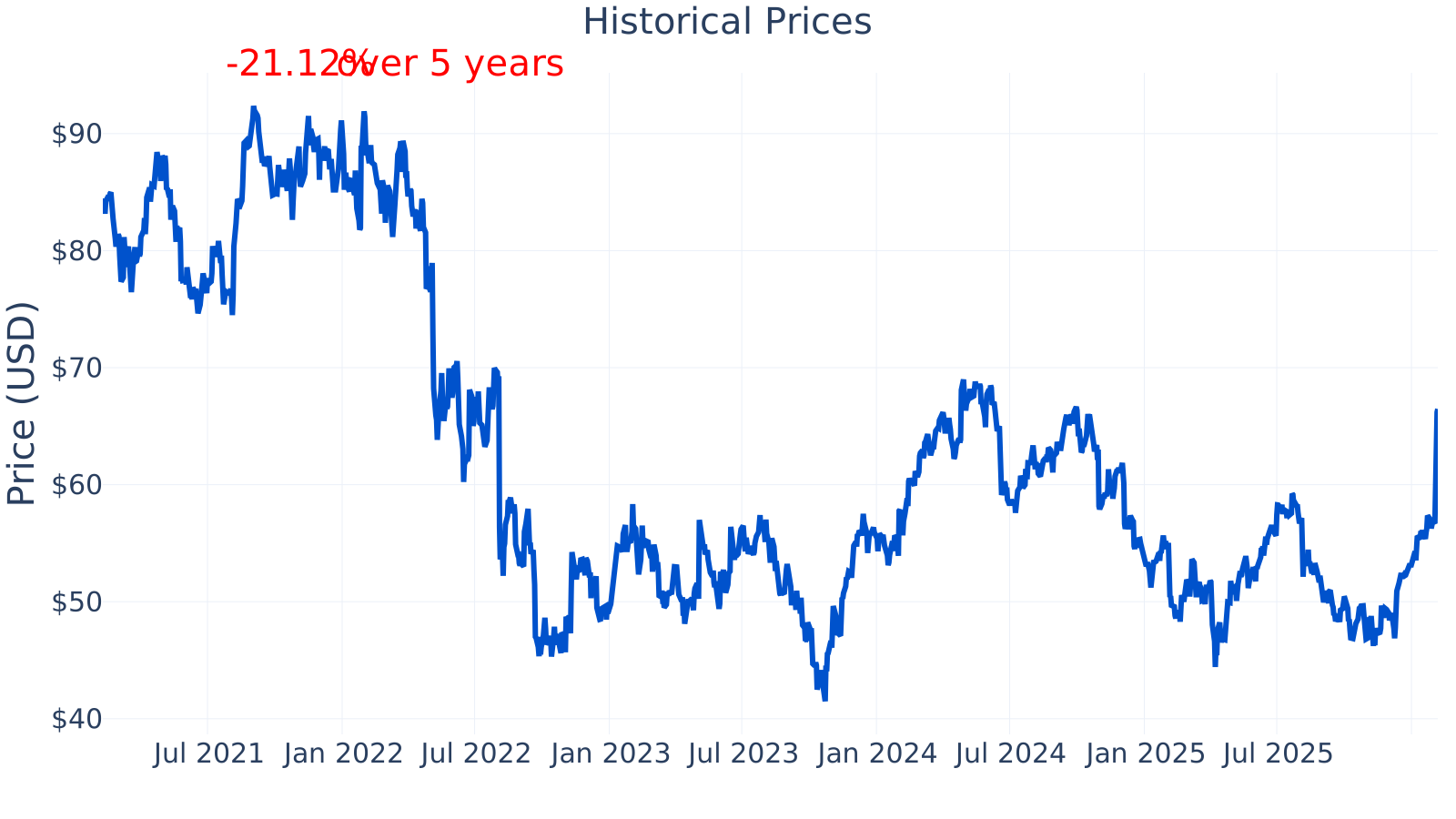
Ball’s market capitalization is about $18.1B, and the stock’s beta of ~1.14 suggests it has tended to move somewhat more than the broader market. The latest P/E ratio is ~20.1, close to the industry median (~21.8). Profit margin is about 6.9% versus an industry median near 5.6%. Revenue growth (year-over-year) is about 16.2% versus an industry median near 6.0%. Debt-to-equity is about 129%, slightly below the industry median of roughly 137%. Trailing twelve-month free cash flow is approximately $788M.
Growth (Medium)
Packaging is a mature industry: people have been buying canned beverages for decades, and overall demand tends to rise with population, consumption trends, and product innovation rather than through explosive market expansion. That said, aluminum cans are often positioned as a recyclable format, and many beverage brands periodically shift packaging mix (for example, between plastic, glass, and aluminum) based on consumer preferences, regulations, and recycling infrastructure. For a company like Ball, growth is therefore usually a combination of (1) general beverage volume trends, (2) packaging mix shifts, (3) price and contract pass-through mechanics, and (4) efficiency improvements.
The year-over-year revenue growth pattern shown is cyclical: strong growth in 2021–2022, a contraction through much of 2023–2024, and then a return to positive growth in 2025, ending near 16%. This kind of swing can happen in packaging due to changing demand, customer inventory cycles, and price effects tied to aluminum and contractual pass-throughs. For long-term context, it is often useful to compare volume trends and multi-year averages rather than focusing on a single quarter.
Free cash flow (cash left after operating needs and capital spending) has also been uneven in the period shown: it was negative in 2022 and 2023, then improved to positive territory, reaching about $788M on a trailing twelve-month basis most recently. For manufacturers, free cash flow can be influenced by major plant investments, timing of customer and supplier payments (working capital), and restructuring or optimization programs.
Potential catalysts that can matter for Ball’s growth and earnings quality typically include higher factory utilization (more volume through existing plants), productivity initiatives, favorable contract resets that better match input costs, and steady demand for canned beverages. On the other hand, growth can be constrained when beverage volumes weaken or when customers reduce orders after building inventory.
Risks (Medium)
This article is for informational purposes only and does not constitute financial advice. Some content is AI-generated. See Disclaimer