Stock Analysis · Badger Meter Inc (BMI)
Overview
Badger Meter Inc. (BMI) designs and sells products that help measure and manage the flow of water and other fluids. In plain terms, it provides meters (including “smart” meters) and related systems that utilities and industrial customers use to measure usage, spot leaks, and improve how networks are operated. The business is often tied to essential infrastructure spending, especially drinking water and wastewater systems, where measurement accuracy and network visibility matter for billing, conservation, and maintenance.
From a revenue standpoint, the company generally groups its business around:
- Utility water solutions (water meters, advanced metering infrastructure/AMR/AMI, software and analytics used by municipalities and water utilities)
- Flow instrumentation (devices and sensors used in industrial and other applications to measure flow and related parameters)
Public filings provide the most reliable breakdowns of revenue by segment and geography, but the exact mix and percentages can shift by year depending on utility demand cycles and product mix.
Over the last several years, total revenue and profits have increased meaningfully, with operating income and net income rising alongside sales. That pattern is consistent with a company scaling a solutions portfolio (hardware plus related technology) while keeping operating costs from rising as fast as revenue.
Key Figures
| Metric | Value | Industry ⓘ |
|---|---|---|
| Date | Apr 20, 2026 | |
| Context | ||
| Sector | Technology | |
| Industry | Scientific & Technical Instruments | |
| Market Cap ⓘ | $3.37B | |
| Beta ⓘ | 0.90 | |
| Fundamental | ||
| P/E Ratio ⓘ | 26.08 | 38.28 |
| Profit Margin ⓘ | 14.56% | 12.96% |
| Revenue Growth ⓘ | -9.00% | 7.90% |
| Debt to Equity ⓘ | N/A | 25.56% |
| PEG ⓘ | 2.44 | |
| Free Cash Flow ⓘ | $173.50M | |
Badger Meter’s market capitalization is about $3.37B, and its beta is ~0.90, which is often associated with price moves that have been somewhat less volatile than the broader market. The latest P/E ratio is ~26.1 versus an industry median around 38.3. Profit margin is about 14.6% (industry median ~13.0%). The most recent year-over-year revenue growth shown is about -9.0% versus an industry median near +7.9%, while trailing twelve-month free cash flow is about $173.5M. The PEG ratio shown (~2.44) suggests the valuation is meaningfully influenced by expected growth assumptions.
Growth (Medium)
Badger Meter operates in areas supported by long-term needs: replacing aging water infrastructure, improving measurement accuracy, reducing non-revenue water (water that is produced but not billed due to leaks or metering issues), and adopting more connected monitoring. These drivers can be durable because utilities typically must maintain service reliability and comply with regulations, even when economic conditions soften.
The company’s strategy of combining metering hardware with communication technology and software-like capabilities (analytics, visibility, and system management) can make sense in this context. As utilities modernize, they often shift from manual reads to more automated systems, and then toward deeper network monitoring. This type of evolution can expand the value per installed endpoint over time.
Revenue growth was strong across many quarters shown (often in the low-to-mid double digits), but the most recent point turns negative (about -9% year over year). For long-term context, a single negative period can happen due to timing of utility project rollouts, tough comparisons after strong prior-year demand, or product mix changes. The key question for readers is whether declines persist across multiple periods or revert as project cycles normalize.
Free cash flow has risen steadily over the period shown—from about $60.1M (TTM) in 2022 to about $173.5M most recently. Growing cash generation can matter because it tends to give a company flexibility to fund product development, capacity, acquisitions, or shareholder returns without relying heavily on borrowing.
Risks (Medium)
A core risk is that a meaningful portion of demand is tied to utility budgeting and capital planning. Even if water is essential, project timing can shift due to procurement cycles, rate-setting, or funding variability. That can create uneven quarter-to-quarter results, particularly after periods of elevated replacement activity.
Competition is another risk. Water metering and flow measurement include established global players and specialized technology providers. Competitive pressure can show up through pricing, the pace of product innovation, or the ability to integrate meters with communications networks and utility software ecosystems. Switching costs can exist (installed base, data systems, operational retraining), but utilities also run formal bid processes that may open the door to rivals.
Badger Meter’s competitive advantages, as described in company materials and filings, typically relate to its installed base, product reliability, and its portfolio of connected measurement solutions. Whether that translates into sustained leadership depends on continuing to meet utility requirements (accuracy, cybersecurity, interoperability, and total cost of ownership) while maintaining service levels.
Leverage appears very low versus peers. Debt-to-equity has been around roughly 1%–3% in the periods shown, compared with an industry median often in the ~36%–46% range on the same chart. Lower leverage can reduce financial risk (for example, less sensitivity to interest rates and refinancing needs), though it can also mean growth relies more on operational cash flow and internal returns.
Profit margin improved from about 11%–12% earlier in the series to the mid-teens more recently, and it has often been above the industry median since 2023. The latest value is about 14.6% versus an industry median near 12.7%. Margins can still be pressured by component costs, manufacturing efficiency, mix shifts (hardware vs. technology content), and competitive pricing.
Valuation
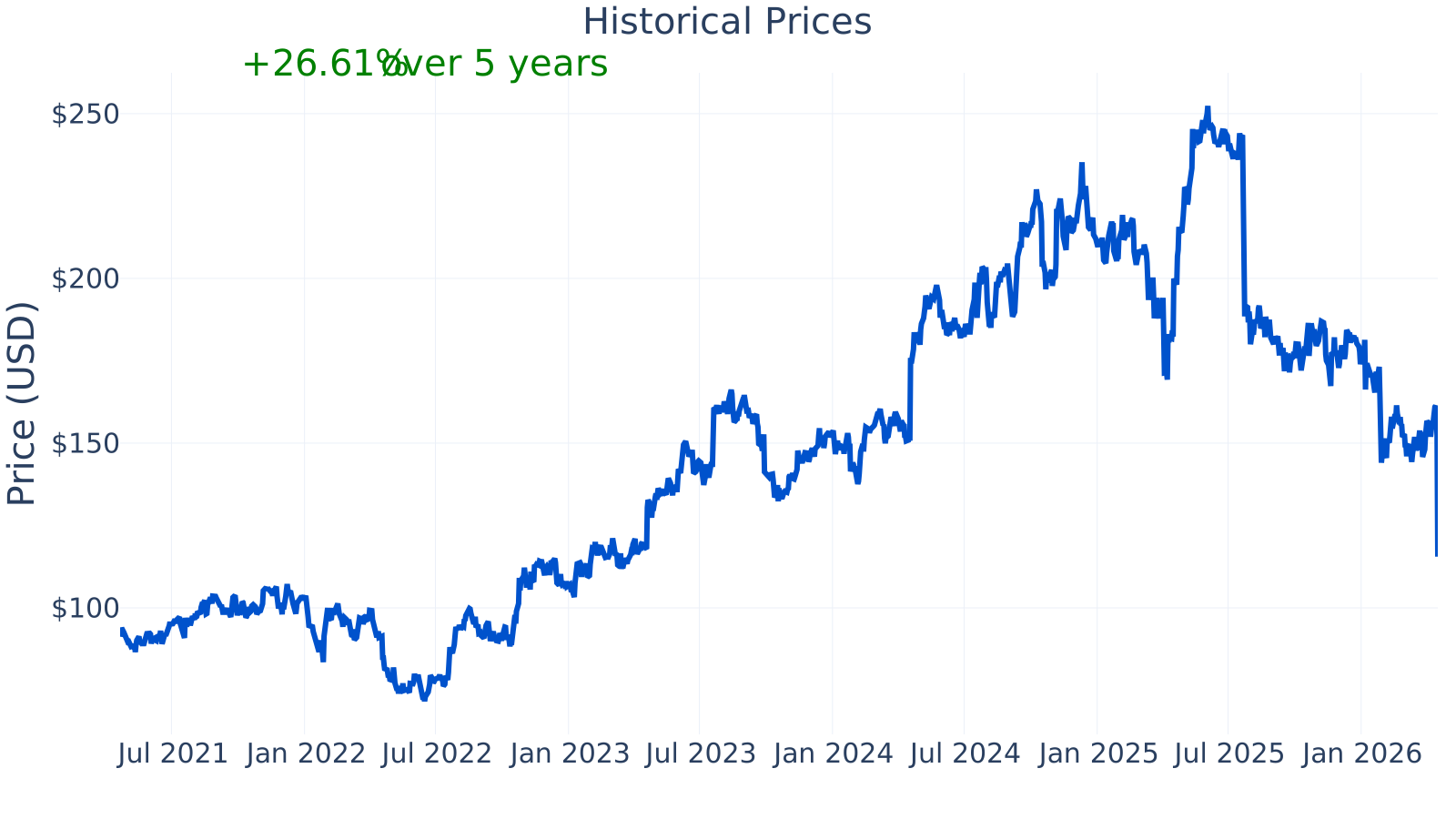
The company’s valuation (using P/E) has come down substantially from the higher levels seen in 2021–2024, and the latest P/E shown is about 34.2 historically on the chart’s last point, while the separate “latest metrics” table shows a current P/E around 26.1. The industry median at the most recent point on the chart is about 36.3, and the latest industry median in the table is about 38.3. In descriptive terms, the stock has recently traded at a valuation that is below the industry median on this metric.
Whether that valuation is “high” or “low” in context depends largely on two things discussed earlier: (1) whether revenue growth normalizes after the recent year-over-year decline, and (2) whether the company can sustain its improved profitability. The PEG ratio of ~2.44 indicates the price can still be sensitive to changes in expected growth rates, particularly if markets reassess medium-term demand from utilities or the pace of connected-meter adoption.
Conclusion
Badger Meter is a measurement and monitoring company tied closely to water infrastructure needs, with a business profile that often benefits from long-lived assets, recurring replacement cycles, and the gradual shift toward connected systems. Financially, the company has shown rising revenue and profits over multiple years, improving profit margins versus its industry median, and steadily expanding free cash flow.
At the same time, the recent negative year-over-year revenue growth highlights that demand can be cyclical due to project timing and comparison effects, and competitive dynamics remain important in utility procurement markets. The balance sheet leverage shown is notably low relative to peers, which can reduce certain financial risks. On valuation, recent P/E levels appear lower than the industry median, but the overall interpretation remains closely linked to whether growth re-accelerates and margins stay resilient.
Sources:
- SEC EDGAR — Badger Meter Inc. Form 10-K (Annual Report)
- SEC EDGAR — Badger Meter Inc. Form 10-Q (Quarterly Reports)
- Badger Meter — Investor Relations materials and press releases (company-hosted)
- Wikipedia — “Badger Meter” (general background)
This article is for informational purposes only and does not constitute financial advice. Some content is AI-generated. See Disclaimer


