Stock Analysis · Badger Meter Inc (BMI)
Overview
Badger Meter Inc. (BMI) designs and sells equipment and software that help utilities and industrial customers measure and manage water. In simple terms, it provides water meters and “smart” systems that collect meter readings automatically, plus tools that help detect leaks, monitor flows, and improve the reliability of water networks. The company’s products are typically used by municipal water utilities (cities and water districts) as well as some commercial and industrial users.
Badger Meter reports operations primarily through its utility water activities and related flow measurement offerings. Revenue is generally driven by a mix of:
- Metering hardware (water meters and related endpoints/registers installed at homes and businesses)
- Data collection / communications (fixed network and drive-by systems that transmit readings)
- Software and services (analytics, leak detection, and ongoing support tied to installed systems)
- Flow instrumentation (measurement devices used in water and certain industrial applications)
Because these systems are often installed for long periods, utilities may generate repeat demand through replacements, upgrades to smart metering, and expansion of monitoring across the distribution network.
Over the years shown, total revenue rises meaningfully (from about $505M to about $917M), while operating income and net income also increase. That pattern suggests the business has been scaling without profits being “left behind” by growth.
Key Figures
| Metric | Value | Industry ⓘ |
|---|---|---|
| Date | Feb 08, 2026 | |
| Context | ||
| Sector | Technology | |
| Industry | Scientific & Technical Instruments | |
| Market Cap ⓘ | $4.46B | |
| Beta ⓘ | 0.88 | |
| Fundamental | ||
| P/E Ratio ⓘ | 31.57 | 45.31 |
| Profit Margin ⓘ | 15.45% | 12.33% |
| Revenue Growth ⓘ | 7.60% | 7.45% |
| Debt to Equity ⓘ | N/A | 49.68% |
| PEG ⓘ | 3.19 | |
| Free Cash Flow ⓘ | $169.67M | |
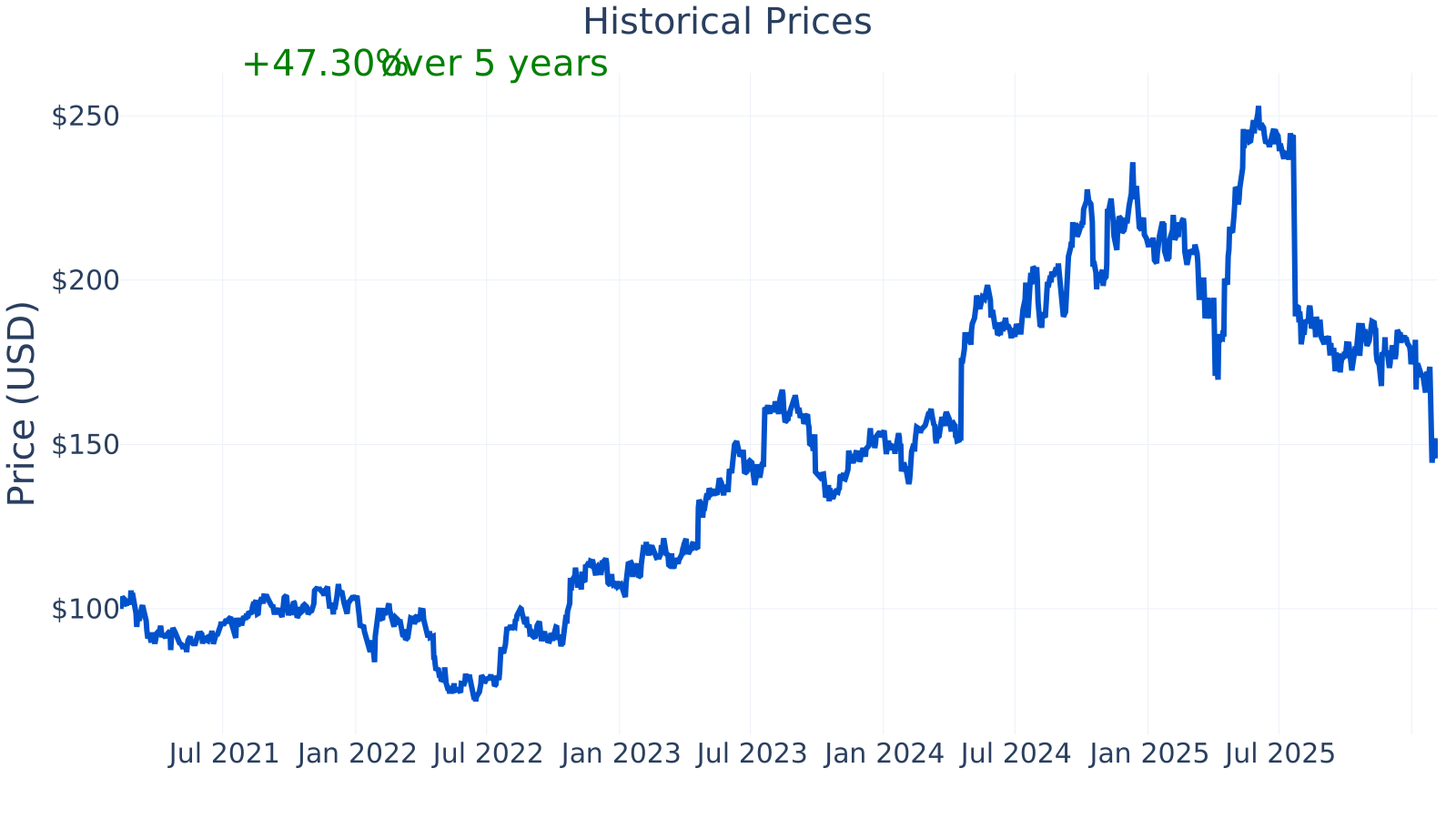
Badger Meter’s market capitalization is about $4.46B, with a beta of ~0.88, which is commonly interpreted as the stock having been somewhat less volatile than the broader market. Profit margin is about 15.45% versus an industry median near 12.33%, indicating stronger profitability than many peers in its listed industry group. Year-over-year revenue growth is about 7.6%, close to the industry median (~7.45%). The P/E ratio is about 31.6, below the industry median (~45.3) for the same peer set. Trailing twelve-month free cash flow is about $169.7M, reflecting ongoing cash generation after operating needs and capital spending.
Growth (Medium)
Badger Meter operates in water infrastructure, a market supported by long-term needs: aging distribution systems, tighter standards for water loss and leakage, the need for more accurate billing, and increasing interest in digitizing utility operations. “Smart” metering and networked monitoring can reduce manual meter reading, improve data quality, and help utilities identify leaks earlier—benefits that can support multi-year upgrade cycles.
The company’s strategy—combining meters, communications, and software—fits how utilities typically modernize: first deploying devices in the field, then expanding networking and analytics on top of the installed base. This type of “stack” can also increase switching costs over time, because once a utility standardizes on a platform, it may prefer compatible upgrades and extensions.
Revenue growth is positive across the period shown but not uniform. There are several quarters with double-digit year-over-year growth, followed by a more moderate pace more recently, ending near 7–8%. That mix is consistent with a business that can experience waves of project timing and comparison effects, alongside steady underlying demand from replacements and upgrades.
Free cash flow trends upward over the period shown (roughly $81M to about $153M), which can matter for long-term business resilience because it represents cash available for reinvestment, acquisitions, dividends, or share repurchases—without needing to raise outside funding.
Risks (Medium)
This article is for informational purposes only and does not constitute financial advice. Some content is AI-generated. See Disclaimer