Stock Analysis · Axcelis Technologies Inc (ACLS)
Overview
Axcelis Technologies, Inc. is a semiconductor equipment company. In simple terms, it builds specialized machines that help chipmakers “treat” silicon wafers during manufacturing. Axcelis is best known for equipment used in a step called ion implantation, where ions are embedded into a wafer to change its electrical properties. This step is used across many chip types, including power-related chips that go into electric vehicles, industrial systems, and energy infrastructure.
Its business is mainly built around selling these systems to semiconductor manufacturers and then supporting them throughout their lifecycle. That support typically includes spare parts, maintenance, upgrades, and services that help customers keep equipment running and productive.
In its SEC reporting, Axcelis generally describes revenue in two broad categories (exact percentages can vary by year and are reported in filings):
- Equipment sales (sales of ion implantation systems)
- Customer support (spares, service, upgrades, and other ongoing support)
The company’s results are influenced by how much the semiconductor industry is spending on new manufacturing capacity, along with the ongoing service needs of installed equipment.
Over the last several years shown, total revenue increased from about $662M (2021) to $1.13B (2023), before declining to about $1.02B (2024). Operating expenses (including R&D and selling/general costs) rose over time, but operating income still expanded meaningfully from 2021 to 2023, then eased in 2024 alongside lower revenue.
Key Figures
| Metric | Value | Industry ⓘ |
|---|---|---|
| Date | Feb 16, 2026 | |
| Context | ||
| Sector | Technology | |
| Industry | Semiconductor Equipment & Materials | |
| Market Cap ⓘ | $2.93B | |
| Beta ⓘ | 1.76 | |
| Fundamental | ||
| P/E Ratio ⓘ | 22.30 | 48.26 |
| Profit Margin ⓘ | 15.93% | 8.62% |
| Revenue Growth ⓘ | -16.70% | 12.90% |
| Debt to Equity ⓘ | 4.18% | 20.73% |
| PEG ⓘ | 1.23 | |
| Free Cash Flow ⓘ | $124.03M | |
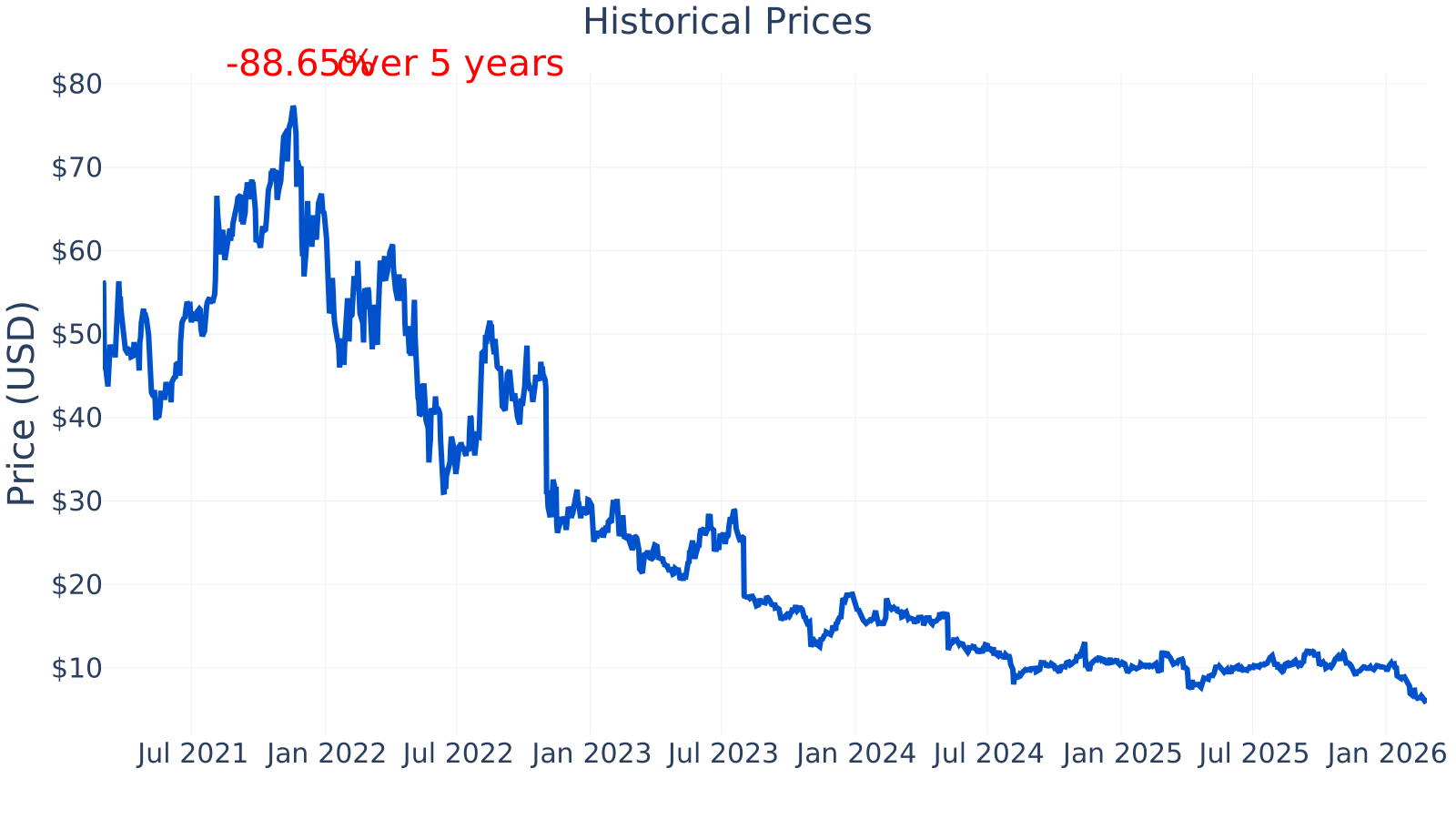
Axcelis has a market capitalization of about $2.93B and a relatively high beta (1.76), which indicates the stock has historically moved more than the overall market. Profitability (profit margin about 15.93%) is higher than the industry median (~8.62%), while debt-to-equity (~4.18%) is well below the industry median (~20.73%). Recent year-over-year revenue growth is negative (~-16.7%), compared with a positive industry median (~12.9%). The P/E ratio (~22.3) is below the industry median (~48.3), and trailing twelve-month free cash flow is about $124M.
Growth (Medium)
Axcelis operates in the semiconductor equipment industry, which is tied to long-term growth drivers like electrification, automation, connectivity, and increased computing needs. Demand for chips tends to rise over long periods, but the path is not smooth: chip investment cycles can be volatile, with periods of rapid expansion followed by slowdowns when customers reduce capital spending.
A key part of the Axcelis story is its focus on ion implantation, a step that remains necessary for many types of semiconductor devices. In particular, power semiconductors (commonly used for managing electricity in EVs, charging, solar/wind, and industrial motors) are frequently highlighted by the company as an important end-market. If customers continue building capacity for these device types, that can support future equipment demand, while a larger installed base can support customer support revenue over time.
The recent trend shows a clear shift from very strong growth in 2021–2023 to contraction in 2024–2025. After peaking at very high year-over-year growth rates (for example, above 50% in parts of 2021–2022), growth moved toward low single digits by early 2024 and then became negative, reaching roughly -24% in parts of 2025 before improving somewhat to around -16.7% in the most recent point shown. This pattern is consistent with a cyclical slowdown rather than a steady, linear growth profile.
Free cash flow remained positive across the periods shown, but it has come down from higher levels. It rose from about $38M (TTM in 2021) to about $213M (TTM in 2023), then fell to about $144M (TTM in 2024) and about $123M (TTM in 2025). Positive free cash flow can provide flexibility for investment, resilience in slower periods, and balance sheet strength, even when revenue growth slows.
Risks (High)
This article is for informational purposes only and does not constitute financial advice. Some content is AI-generated. See Disclaimer