Stock Analysis · Avnet Inc (AVT)
Overview
Avnet, Inc. (AVT) is a global distributor and solutions provider for electronic components and related services. In simple terms, it sits between companies that make chips and other electronic parts (suppliers) and the businesses that use those parts to build products (customers). Avnet helps customers source components, manage supply logistics, and, in some cases, support product design and engineering so devices can move from concept to production.
Because Avnet operates in distribution, it typically handles large volumes and operates with relatively thin profit margins. Results are often influenced by the health of electronics demand, the availability of semiconductors and other parts, and how quickly customers are working through inventories.
Avnet reports revenue primarily through two operating groups:
- Electronic Components (largest): broadline distribution of semiconductors and other components to industrial and other markets.
- Farnell (smaller): a high-service distributor focused on engineering, maintenance, and small-to-mid volume purchasing, including online sales.
Percentages by segment can vary by fiscal year; the company’s annual report (Form 10‑K) is the best reference for the most current breakdown.
Across recent fiscal years, total revenue has fluctuated meaningfully (roughly $19.5B to $26.5B in the periods shown), while net income has also moved up and down (about $193M to $771M, then lower in the most recent period shown). This pattern is consistent with a cycle-sensitive distribution business where profitability can expand during stronger demand and tighter supply conditions, and compress when customers reduce orders or normalize inventories.
Key Figures
| Metric | Value | Industry ⓘ |
|---|---|---|
| Date | Feb 08, 2026 | |
| Context | ||
| Sector | Technology | |
| Industry | Electronics & Computer Distribution | |
| Market Cap ⓘ | $5.45B | |
| Beta ⓘ | 0.94 | |
| Fundamental | ||
| P/E Ratio ⓘ | 27.08 | 18.34 |
| Profit Margin ⓘ | 0.90% | 1.85% |
| Revenue Growth ⓘ | 11.60% | 9.70% |
| Debt to Equity ⓘ | 67.73% | 54.56% |
| PEG ⓘ | 2.53 | |
| Free Cash Flow ⓘ | $217.73M | |
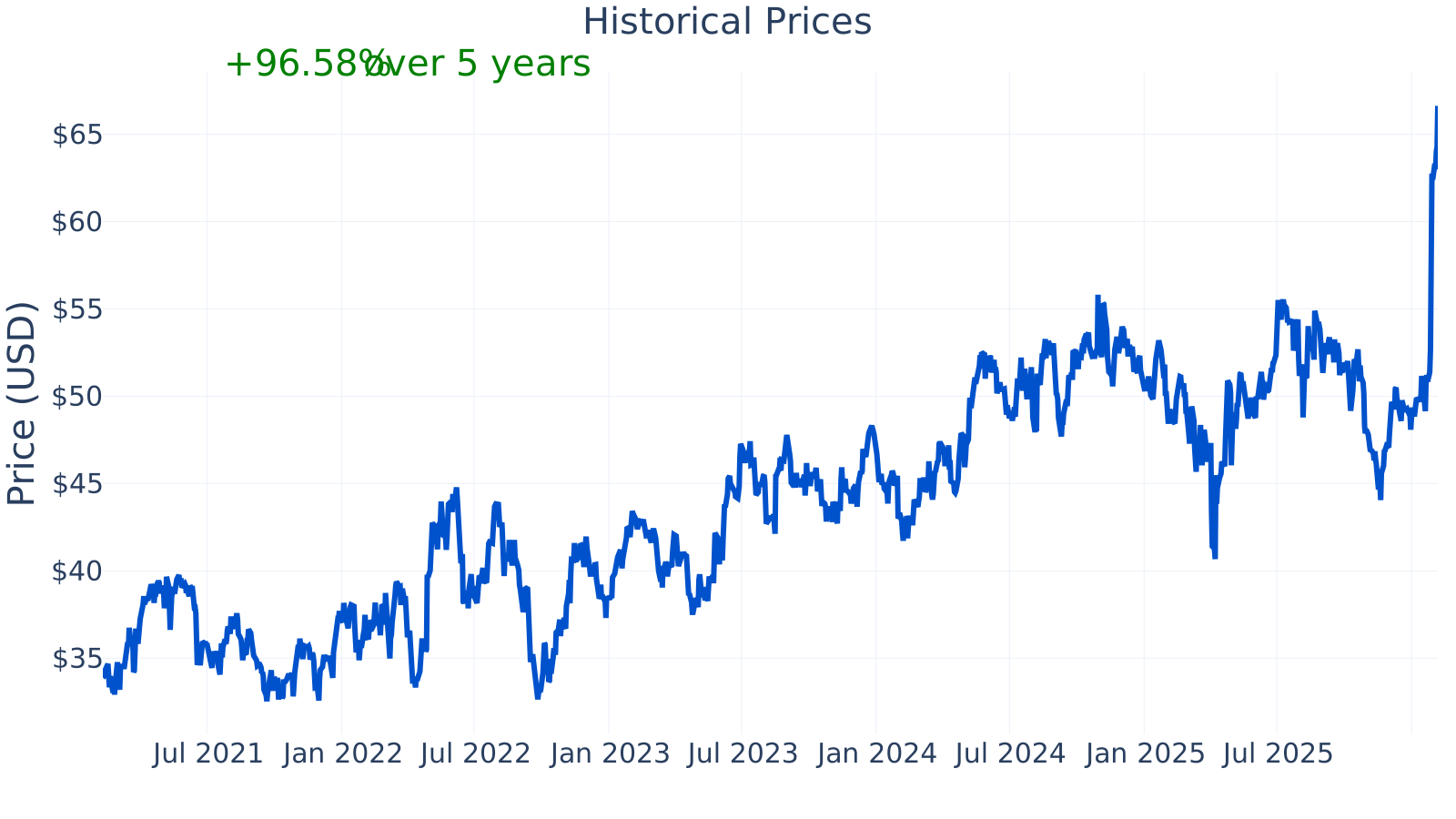
Avnet’s market capitalization is about $5.45B, and its beta of ~0.94 suggests the stock has tended to move somewhat similarly to the overall market. The latest P/E ratio is ~27.1 versus an industry median near 18.3, while the latest profit margin is ~0.9% versus an industry median near 1.85%, reflecting the thin-margin nature of distribution and recent margin pressure. Recent year-over-year revenue growth is ~11.6% (industry median ~9.7%). Leverage is moderate, with debt-to-equity around 67.7% (industry median ~54.6%). Trailing twelve-month free cash flow is about $218M.
Growth (medium)
Avnet operates in the electronics supply chain, which is supported over the long run by ongoing digitization: more semiconductors and electronic content in vehicles, industrial equipment, networking gear, and many everyday products. That said, distribution is a mature, highly competitive business, so growth is often tied less to “new invention” and more to customer production levels, supply conditions, and market share execution.
The company’s strategy—global scale, deep supplier relationships, and value-added services (logistics and design/engineering support)—is intended to make it a preferred channel partner rather than a simple middleman. This positioning can matter when customers want reliable sourcing and when suppliers want broad market reach.
Revenue growth has been notably cyclical. The chart shows strong positive growth through 2021–2022, followed by a downturn (negative growth across much of 2023–2024), and then a return to positive territory by late 2025 (about +11.6% most recently shown). This “downcycle then recovery” pattern is common in electronics distribution as customers adjust inventory levels and demand normalizes.
Free cash flow has also swung sharply over time, including periods of negative free cash flow (notably in 2022 and 2023 in the values shown) and then a rebound to positive levels (about $745M by 2025-03-31, and $218M on the latest metric snapshot provided). For a distributor, working capital (inventory and receivables) can meaningfully affect cash generation from year to year, especially during rapid demand shifts.
Potential catalysts are generally tied to the broader electronics cycle (improving end-demand and inventory normalization), plus execution factors such as maintaining supplier lines, expanding value-added services, and managing costs and working capital discipline across cycles.
Risks (high)
This article is for informational purposes only and does not constitute financial advice. Some content is AI-generated. See Disclaimer