Stock Analysis · Avery Dennison Corp (AVY)
Overview
Avery Dennison Corp (AVY) is a global materials science and manufacturing company best known for products that help identify, label, and track items. In everyday life, its technologies show up in things like product labels on food and household goods, retail tags and labels used for pricing and inventory, and specialized materials used in industrial and graphic applications.
The company organizes its business into two main reporting segments:
- Materials Group: Pressure-sensitive label materials (often called label “facestock” and adhesives) and other functional materials used across consumer packaging, logistics, industrial, and graphics end markets.
- Solutions Group: Products and services tied to “intelligent labels,” including RFID (radio-frequency identification) inlays and related solutions that help customers identify and track items through the supply chain and in stores.
Revenue is largely generated by selling these materials and identification solutions to consumer brands, retailers, and industrial customers. In practice, the largest share typically comes from the Materials Group, with a smaller but strategically important portion from the Solutions Group (including RFID). Exact percentages can vary by year and are disclosed in the company’s annual reporting by segment.
Across the years shown, total revenue moves within a relatively narrow band (about $8.4B to $9.0B), while profitability fluctuates more noticeably. Net income declines in 2023 compared with 2022, then rebounds in 2024, and slightly dips in 2025. Interest expense rises meaningfully versus earlier years, which can matter when comparing operating performance to bottom-line results.
Key Figures
| Metric | Value | Industry ⓘ |
|---|---|---|
| Date | Feb 07, 2026 | |
| Context | ||
| Sector | Consumer Cyclical | |
| Industry | Packaging & Containers | |
| Market Cap ⓘ | $14.80B | |
| Beta ⓘ | 0.99 | |
| Fundamental | ||
| P/E Ratio ⓘ | 21.79 | 21.79 |
| Profit Margin ⓘ | 7.77% | 5.56% |
| Revenue Growth ⓘ | 3.90% | 6.00% |
| Debt to Equity ⓘ | 166.49% | 137.29% |
| PEG ⓘ | 1.76 | |
| Free Cash Flow ⓘ | $712.40M | |
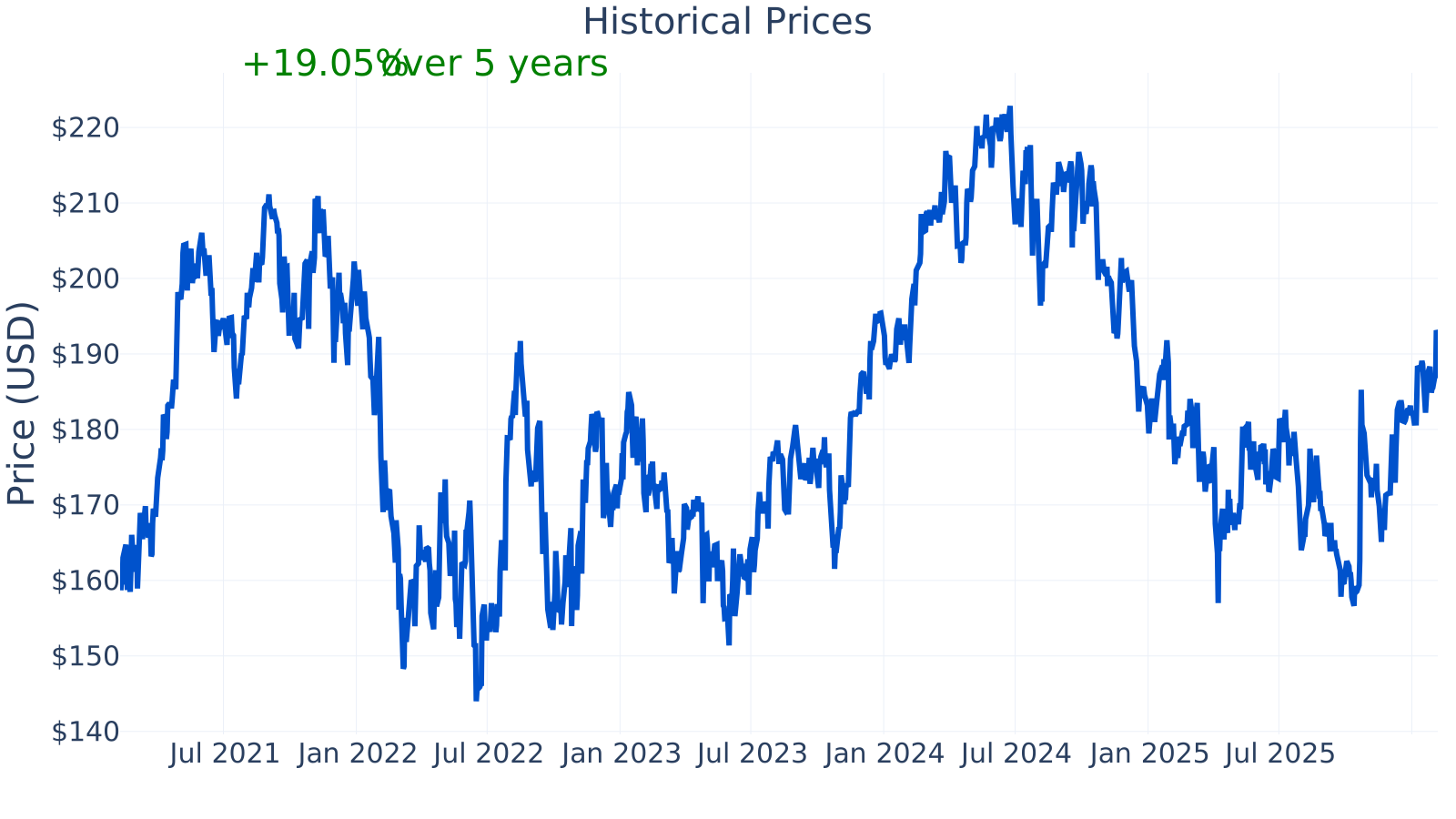
Avery Dennison’s market capitalization is about $14.8B, and its beta is about 0.99, which is close to the broader market’s typical day-to-day volatility. The company’s P/E ratio is ~21.8, in line with the industry median (~21.8). Profit margin is about 7.8%, which is higher than the industry median (~5.6%). Year-over-year revenue growth is about 3.9%, below the industry median (~6.0%). Debt-to-equity is about 166%, above the industry median (~137%). Trailing twelve-month free cash flow is about $712M, and the PEG ratio is about 1.76 (a valuation measure that relates the P/E ratio to expected earnings growth).
Growth (Medium)
Avery Dennison operates in markets linked to packaged goods, logistics, and retail—areas that tend to persist across economic cycles because products still need labels, packaging identification, and compliance markings. That said, demand can rise and fall with overall consumer spending, production volumes, and inventory cycles.
A key long-term growth theme for the company is the shift toward more data-rich item identification, especially RFID. RFID can help retailers and brands improve inventory accuracy, reduce out-of-stocks, and speed up supply-chain visibility. This strategy is directionally aligned with broader trends such as automation in warehouses, omnichannel retail, and item-level tracking.
The pattern over the period shown looks cyclical: strong growth in 2021, a slowdown that turns negative through much of 2023, and a return to modest positive growth in 2024. By late 2025, growth is again positive (around 3.9% year over year), but not at the higher levels seen earlier in the period.
Free cash flow (cash generated after operating needs and capital spending) remains solid but uneven. It declines from about $750M (2021) to about $524M (2023), then recovers to roughly $673M (2024) before landing around $592M (2025). For long-term analysis, this variability can be important because free cash flow helps fund dividends, share repurchases, and debt repayment.
Risks (Medium)
This article is for informational purposes only and does not constitute financial advice. Some content is AI-generated. See Disclaimer


