Stock Analysis · AutoZone Inc (AZO)
Overview
AutoZone, Inc. is a retailer and distributor of automotive replacement parts and accessories. In simple terms, it sells the parts people need to maintain or repair vehicles (such as batteries, brakes, filters, and fluids), along with tools and related items. The company serves both “do-it-yourself” customers (people working on their own cars) and “do-it-for-me” customers, such as repair shops and professional installers that buy parts frequently.
AutoZone’s business model is built around having a wide selection of parts available quickly through a large store network, distribution centers, and commercial delivery to professional customers. This type of business tends to benefit from a large installed base of vehicles on the road, because older vehicles typically require more maintenance and repairs over time.
Main revenue sources (largest to smallest) are typically described as:
- Retail (“DIY”) sales: parts and accessories sold directly to consumers in stores and online.
- Commercial (“DIFM”) sales: parts sold to repair shops and professional installers, often with local delivery.
- Other items/services: smaller lines that may include certain programs or ancillary offerings (varies by reporting period).
AutoZone reports results across geographies (notably the U.S., Mexico, and Brazil) and discusses the commercial and retail dynamics in its filings, but the exact revenue percentages by customer type may not always be presented as a simple split in every summary view.
Over the periods shown, total revenue rises from about $14.6B (FY2021) to about $18.9B (FY2025). Operating income also increases over that span, although interest expense becomes noticeably larger by FY2024–FY2025, which can matter when interest rates are higher.
Key Figures
| Metric | Value | Industry ⓘ |
|---|---|---|
| Date | Feb 07, 2026 | |
| Context | ||
| Sector | Consumer Cyclical | |
| Industry | Auto Parts | |
| Market Cap ⓘ | $61.23B | |
| Beta ⓘ | 0.41 | |
| Fundamental | ||
| P/E Ratio ⓘ | 25.64 | 25.56 |
| Profit Margin ⓘ | 12.78% | 3.38% |
| Revenue Growth ⓘ | 8.20% | 4.95% |
| Debt to Equity ⓘ | -373.21% | 66.87% |
| PEG ⓘ | 1.95 | |
| Free Cash Flow ⓘ | $1.86B | |
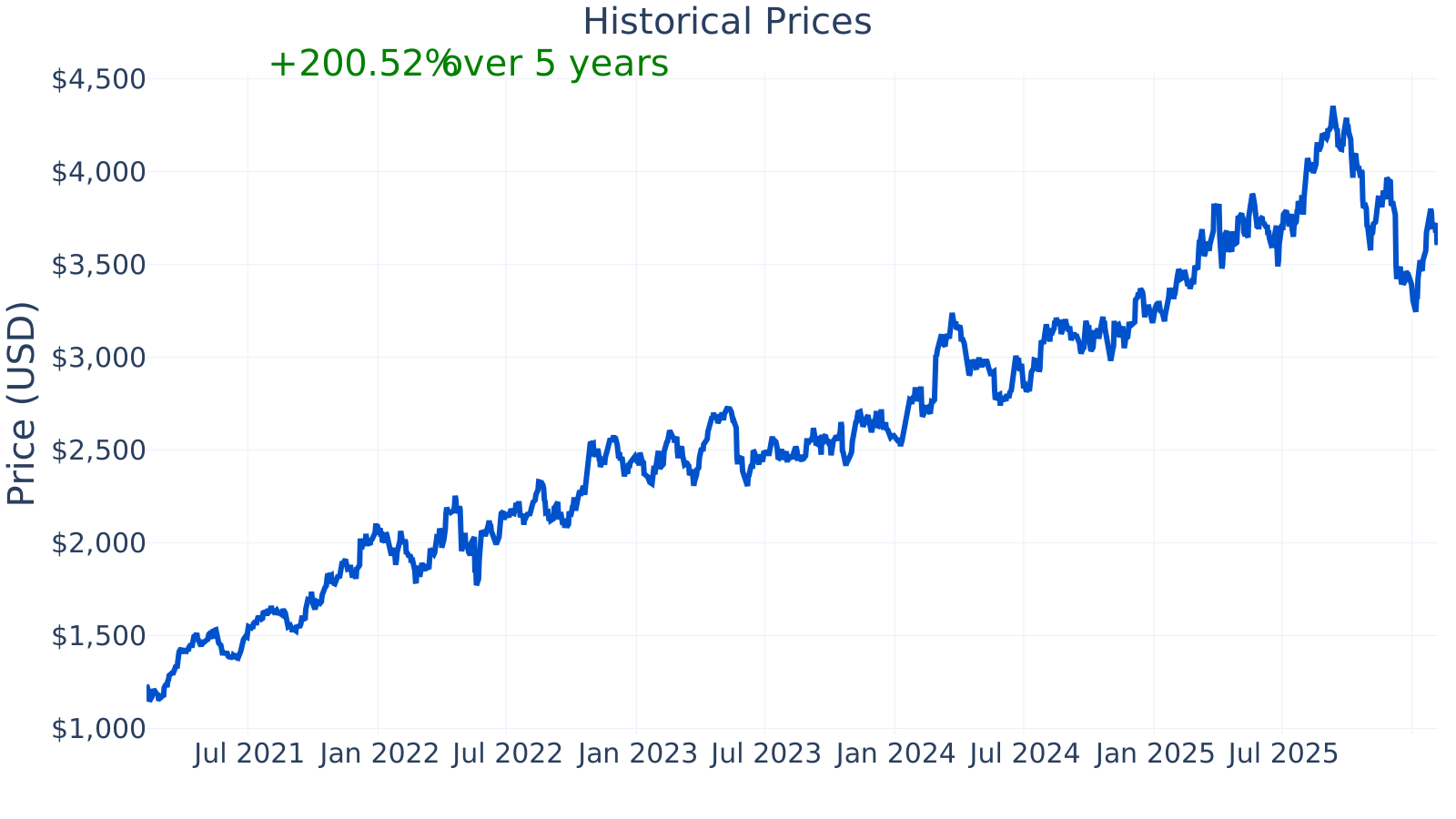
AutoZone’s latest market capitalization is about $61.2B, and the stock’s beta (~0.41) suggests it has historically moved less than the broader market on average (though this can change). The company’s P/E ratio (~25.6) is close to the industry median (~25.6). Profitability stands out: profit margin ~12.8% versus an industry median ~3.4%. Recent year-over-year revenue growth is ~8.2%, above the industry median ~5.0%. The debt-to-equity ratio is negative, which usually happens when total shareholders’ equity is negative (often influenced by large share repurchases over time), making this ratio less intuitive to interpret than in companies with positive equity. Trailing twelve-month free cash flow is about $1.86B.
Growth (Medium)
The auto parts retail and distribution space is generally tied to how many vehicles are on the road, how old they are, and how much driving people do. A key long-term support for demand is that vehicles often stay in service for many years, and as they age, maintenance and repair needs typically increase. That backdrop can create relatively steady demand compared with more discretionary retail categories.
AutoZone’s strategy is centered on expanding product availability, improving delivery speed for professional customers, and keeping parts in stock through its hub-and-distribution network. For long-term business growth, the most important internal drivers tend to be: (1) gaining share with repair shops (commercial business), (2) store network and supply chain productivity, and (3) keeping customer service and in-stock levels strong, which can influence repeat purchases.
Revenue growth is positive in most periods shown, but it is not smooth. It ranges from very strong growth earlier in the series (above 30% at one point) down to low single digits in some later quarters (near 0.6%), then back to about 8.2% in the most recent point shown. This pattern is consistent with a business that can be resilient but still affected by comparisons, pricing, consumer behavior, and the timing of demand.
Free cash flow remains solid but trends down from about $3.03B (FY2022) to about $2.01B–$2.03B (FY2024–FY2025), with the latest trailing figure around $1.86B. For a retailer/distributor, sustained free cash flow matters because it helps fund inventory, supply chain investment, and shareholder returns while providing flexibility during slower periods.
Risks (Medium)
This article is for informational purposes only and does not constitute financial advice. Some content is AI-generated. See Disclaimer


