Stock Analysis · Automatic Data Processing Inc (ADP)
Overview
Automatic Data Processing, Inc. (ADP) provides software and outsourced services that help employers run payroll, manage benefits, support human resources (HR) processes, and handle compliance tasks tied to employing people. In simple terms, ADP sits in the middle of a recurring, business-critical workflow: employees must be paid accurately and on time, taxes must be filed, and HR records must be maintained. ADP sells these services mainly to businesses, from small employers to large global organizations.
ADP organizes its operations around two main business segments that also represent its biggest revenue streams. The company also earns interest-related revenue connected to the short-term investment of client funds held temporarily during payroll processing (often called “float” in plain language). In ADP’s reporting, this is typically shown as interest on funds held for clients rather than as a separate “segment,” but it can still be a meaningful contributor when interest rates are higher.
Main sources of revenue (largest to smallest, in ADP’s segment reporting):
- Employer Services: Payroll and HR solutions primarily for small and mid-sized businesses, including platforms such as RUN Powered by ADP and ADP Workforce Now, plus related services.
- Professional Employer Organization (PEO) Services: Co-employment model (ADP TotalSource) where ADP provides HR administration and access to benefits, while clients keep control of day-to-day work.
- Interest on funds held for clients: Interest income earned while client payroll funds are held before being paid out (reported as interest income, not a segment).
At a high level, ADP’s business is built around recurring client relationships, high switching costs (changing payroll providers can be disruptive), and scale benefits (processing large volumes and staying current on regulations across many jurisdictions).
The visual overview of ADP’s income structure shows a multi-year pattern of rising total revenue and operating income. Over time, operating income has grown faster than operating expenses, and net income has trended upward as well. Interest expense increases in the more recent periods are also visible, which can matter when assessing financial flexibility.
Key Figures
| Metric | Value | Industry ⓘ |
|---|---|---|
| Date | Feb 07, 2026 | |
| Context | ||
| Sector | Technology | |
| Industry | Software - Application | |
| Market Cap ⓘ | $93.57B | |
| Beta ⓘ | 0.85 | |
| Fundamental | ||
| P/E Ratio ⓘ | 22.22 | 27.79 |
| Profit Margin ⓘ | 19.96% | 6.02% |
| Revenue Growth ⓘ | 6.20% | 15.80% |
| Debt to Equity ⓘ | 72.45% | 25.15% |
| PEG ⓘ | 2.89 | |
| Free Cash Flow ⓘ | $4.60B | |
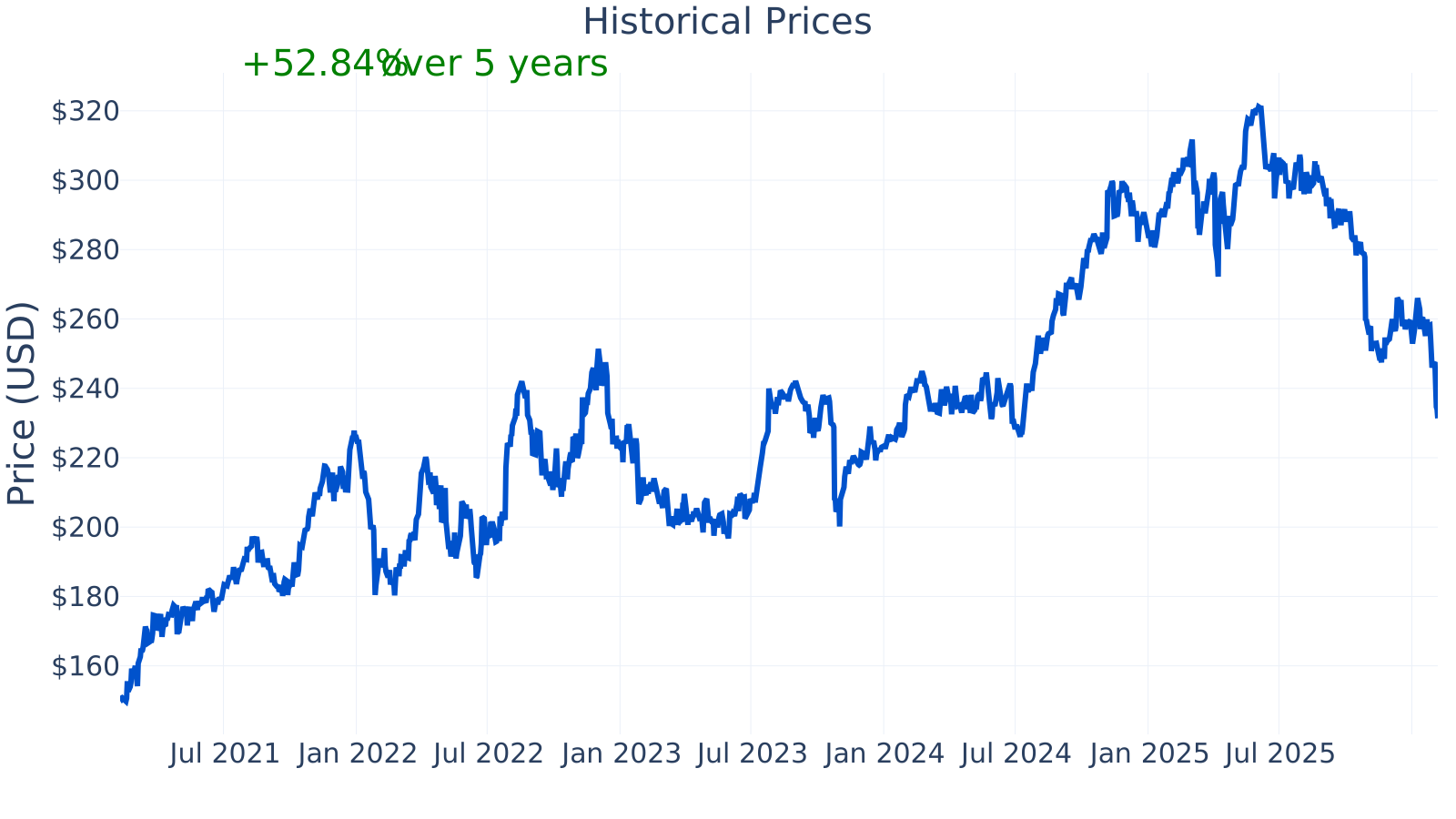
ADP’s market capitalization is about $93.6B, and the stock’s beta of ~0.85 indicates it has historically fluctuated somewhat less than the broader market. The current P/E ratio is ~22.2, below the displayed industry median (~27.8), while profitability stands out: ADP’s profit margin is ~20.0% versus an industry median around 6.0%. Growth is steadier than many software peers: year-over-year revenue growth is ~6.2% versus an industry median around 15.8%. Leverage is higher than the median in this industry set: debt-to-equity is ~72% versus a median around 25%. Trailing twelve-month free cash flow is about $4.6B, reflecting the company’s capacity to generate cash after operating needs and investment spending.
Growth (Medium)
ADP operates in markets tied to long-running needs: payroll processing, HR administration, benefits support, and compliance. These needs tend to persist across economic cycles because employers must continue paying employees and meeting regulatory requirements. Over time, demand is influenced by employment levels, wage growth, business formation, outsourcing trends (companies choosing vendors rather than building internal systems), and technology shifts toward integrated, cloud-based HR platforms.
ADP’s strategy is generally oriented around retaining clients for long periods and expanding what each client uses (for example, adding time tracking, benefits administration, compliance tools, and analytics). This “land and expand” approach can support durable growth even when new client formation is slower. Another structural driver is complexity: multi-state and international compliance, tax filings, and benefit rules can be burdensome, which can make a scaled provider more valuable.
The year-over-year revenue growth trend shows ADP has been growing at a relatively consistent pace, mostly in the mid-to-high single digits in recent periods. This pattern is often associated with mature, recurring-service businesses: less explosive upside than early-stage software firms, but potentially more stability across cycles.
Free cash flow has risen over the multi-year period shown, moving from roughly $2.6B (TTM around 2021) to about $4.5B (TTM around 2025). For long-term business quality assessment, consistent free cash flow can matter because it provides resources for reinvestment, acquisitions, dividends, and share repurchases (depending on management’s capital allocation choices).
Potential catalysts that can influence ADP’s results include changes in interest rates (affecting interest earned on client funds), shifts in employment and wage levels (affecting payroll volumes), and continued migration by employers toward more integrated HR platforms. In addition, product enhancements that reduce manual HR work (automation features) can strengthen retention and increase adoption of add-on modules.
Risks (Medium)
This article is for informational purposes only and does not constitute financial advice. Some content is AI-generated. See Disclaimer