Stock Analysis · Autoliv Inc (ALV)
Overview
Autoliv Inc (ALV) is a global automotive supplier focused on vehicle safety systems. In simple terms, it designs and manufactures equipment intended to protect people in crashes, and it sells those products primarily to automakers (OEMs). Autoliv operates at large scale across multiple regions, with manufacturing and engineering footprints designed to serve global vehicle platforms.
In its reporting, Autoliv groups its business around two main product areas:
- Airbags (including airbag cushions and modules)
- Seatbelts (including complete seatbelt systems and related components)
Revenue is mainly generated through high-volume, long-running supply programs tied to specific vehicle models. Sales are therefore closely linked to global vehicle production levels and platform launches. Autoliv’s filings also describe ongoing work in advanced safety solutions and electronics that support vehicle safety, but the core business remains airbags and seatbelts sold to automakers.
Across recent years shown, total revenue increased from about $8.23B (2021) to about $10.82B (2025). Over the same span, operating income rose from roughly $674M to about $1.09B, while interest expense increased (from about $60M to around $103M), highlighting that profitability improved, but financing costs became a larger line item.
Key Figures
| Metric | Value | Industry ⓘ |
|---|---|---|
| Date | Feb 07, 2026 | |
| Context | ||
| Sector | Consumer Cyclical | |
| Industry | Auto Parts | |
| Market Cap ⓘ | $9.56B | |
| Beta ⓘ | 1.33 | |
| Fundamental | ||
| P/E Ratio ⓘ | 13.17 | 25.56 |
| Profit Margin ⓘ | 6.80% | 3.38% |
| Revenue Growth ⓘ | 7.70% | 4.95% |
| Debt to Equity ⓘ | 94.87% | 66.87% |
| PEG ⓘ | 0.85 | |
| Free Cash Flow ⓘ | $715.00M | |
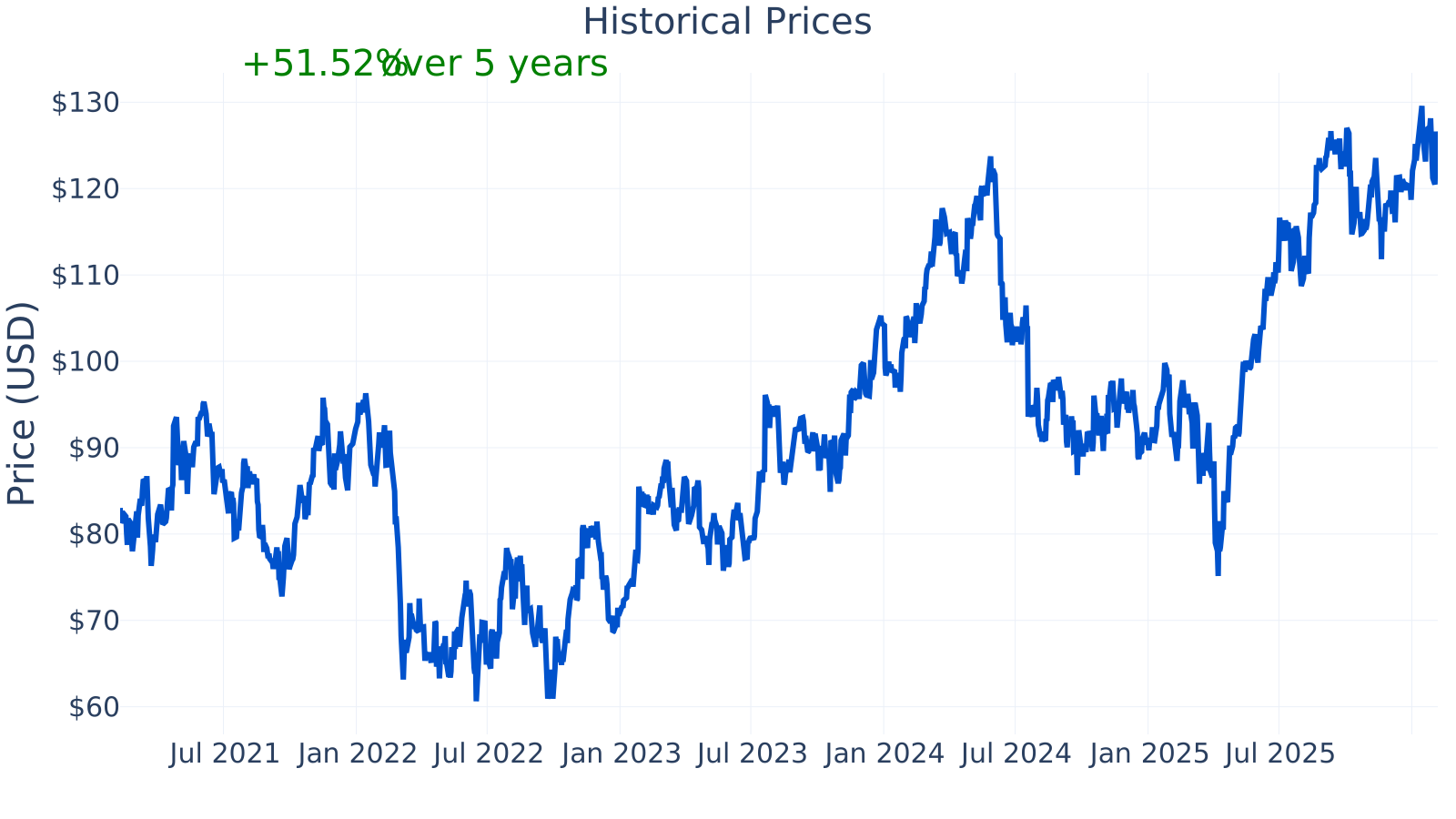
Autoliv’s equity value is about $9.56B, placing it in the mid-cap range. The stock’s beta of ~1.33 suggests it has tended to move more than the broader market. On valuation, the current P/E ratio is ~13.2 versus an industry median ~25.6, while profitability appears stronger than the industry median with a net profit margin of ~6.8% versus ~3.4%. Recent top-line momentum is also somewhat higher than peers with ~7.7% year-over-year revenue growth versus an industry median ~5.0%. Leverage is higher than the median, with debt-to-equity around 94.9% versus ~66.9%. Free cash flow over the last twelve months is approximately $715M, and the listed PEG ratio (~0.85) is below 1, which often indicates the P/E is low relative to expected growth assumptions embedded in that metric (though PEG can be sensitive to forecasting inputs and cycles).
Growth (Medium)
Autoliv operates in an industry where long-term demand is supported by a straightforward structural driver: vehicle safety content per car. Safety regulations, consumer safety expectations, and automakers’ focus on safety ratings can support continued adoption of more sophisticated restraint systems over time. At the same time, the business is still tied to global vehicle production volumes, which are cyclical and can rise or fall with macroeconomic conditions.
A practical way to think about Autoliv’s growth is that it has two levers:
- More vehicles produced globally (volume-driven)
- More safety content per vehicle (content-driven), as designs evolve and safety requirements tighten
The year-over-year revenue growth pattern has been uneven, with strong periods followed by softer quarters, which is consistent with the industry’s sensitivity to production schedules and platform timing. The most recent value shown is about 7.7%, indicating a return to moderate growth after a weaker stretch in 2024–early 2025.
Free cash flow has also been volatile, moving from positive levels to slightly negative in 2023, then rebounding strongly afterward. The latest trailing figure is about $715M. For a manufacturing supplier, sustained free cash flow matters because it is what typically supports reinvestment, debt reduction, and resilience during downturns.
Potential catalysts that can influence results include new vehicle program launches, changes in global production rates, and operational execution (cost control, manufacturing efficiency, and pricing discipline), since many supplier contracts are negotiated within competitive, cost-focused environments.
Risks (High)
This article is for informational purposes only and does not constitute financial advice. Some content is AI-generated. See Disclaimer