Stock Analysis · Autodesk Inc (ADSK)
Overview
Autodesk, Inc. (ADSK) develops software used to design, model, and manage projects in industries like architecture, construction, manufacturing, and media. Many of its products are industry standards for creating 2D drawings, 3D models, and digital prototypes. Well-known offerings include AutoCAD (general design and drafting), Revit (building design and engineering), Fusion (product design and manufacturing workflows), and Autodesk Construction Cloud (tools to manage construction projects and documents).
Autodesk mainly sells its software through subscriptions rather than one-time licenses. This subscription model aims to create more predictable recurring revenue, while cloud-connected features can make it easier for teams to collaborate and for Autodesk to deliver updates frequently.
In its financial reporting, Autodesk groups revenue into these main categories:
- Subscription revenue (the largest portion)
- Maintenance (legacy support for older contract types)
- Other revenue (for example, certain services and miscellaneous items)
Autodesk also describes its business using product “collections” and industry-focused platforms, with key areas including Architecture, Engineering & Construction (AEC) and Manufacturing, plus Media & Entertainment.
Across the last four fiscal years shown (FY2022 to FY2025), total revenue rose from about $4.40B to about $6.13B, while net income increased from about $0.50B to about $1.11B. Over the same period, research and development spending also climbed (from about $1.11B to about $1.49B), indicating continued investment in product capabilities.
Key Figures
| Metric | Value | Industry ⓘ |
|---|---|---|
| Date | Feb 07, 2026 | |
| Context | ||
| Sector | Technology | |
| Industry | Software - Application | |
| Market Cap ⓘ | $51.21B | |
| Beta ⓘ | 1.45 | |
| Fundamental | ||
| P/E Ratio ⓘ | 46.77 | 27.79 |
| Profit Margin ⓘ | 16.13% | 6.02% |
| Revenue Growth ⓘ | 18.00% | 15.80% |
| Debt to Equity ⓘ | 94.50% | 25.15% |
| PEG ⓘ | 1.08 | |
| Free Cash Flow ⓘ | $2.12B | |
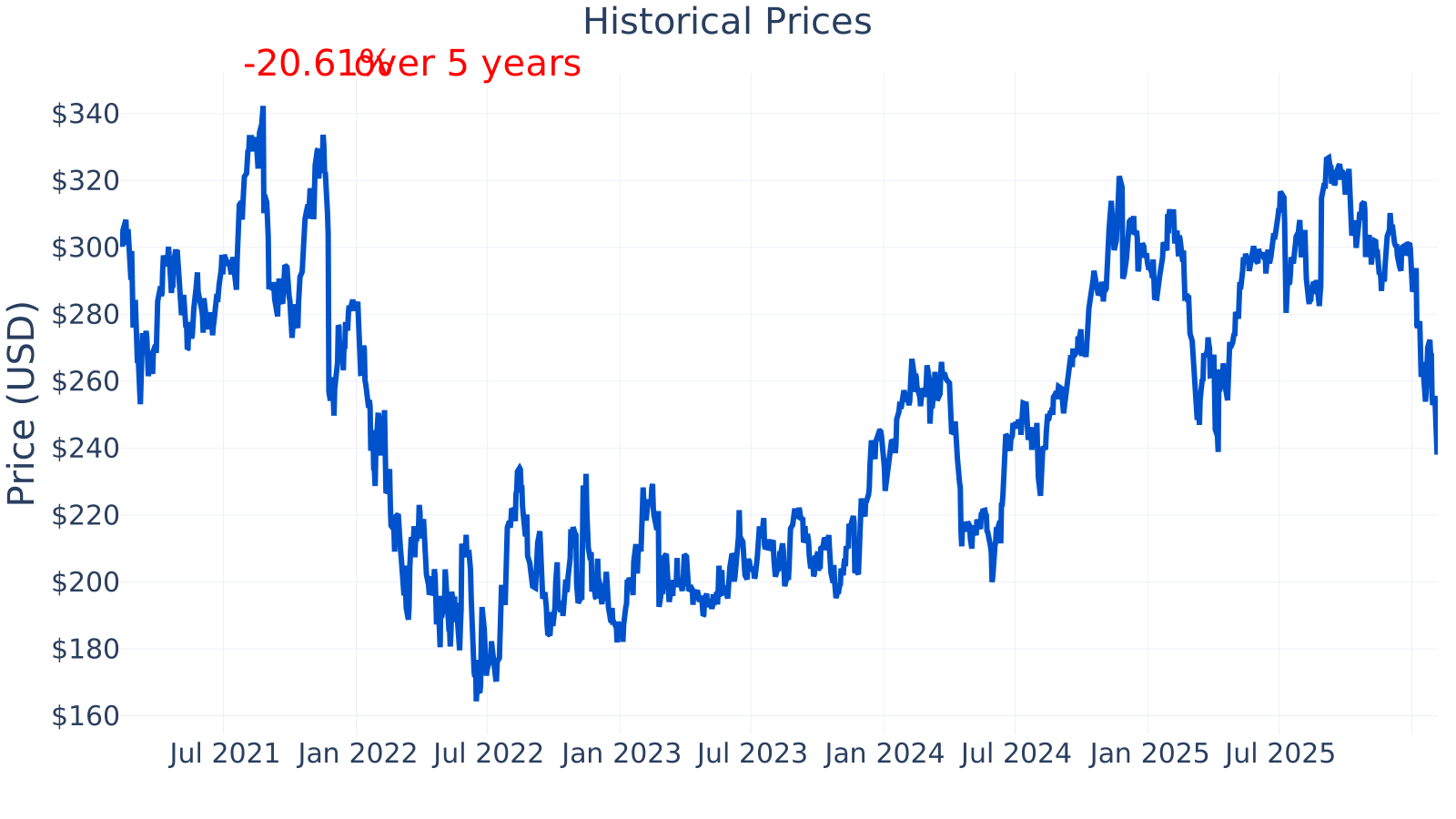
Autodesk’s market capitalization is about $51.2B, and the stock’s beta (~1.45) suggests it has historically moved more than the overall market (higher volatility). The latest P/E ratio (~46.8) is above the industry median (~27.8), while the latest profit margin (~16.1%) is notably above the industry median (~6.0%). The latest year-over-year revenue growth (~18.0%) is also slightly above the industry median (~15.8%). Debt-to-equity is about 94.5% versus an industry median around 25.2%, indicating higher leverage than many peers. Trailing twelve-month free cash flow is about $2.12B.
Growth (Medium)
Autodesk operates in markets tied to long-running needs: designing buildings and infrastructure, developing manufactured products, and digitizing construction workflows. A structural trend supporting this space is the broader shift from paper-based and disconnected tools toward integrated digital design and project management, including cloud collaboration across distributed teams.
Its strategy of focusing on subscriptions and cloud-connected platforms is designed to improve retention and expand usage within existing customers over time (for example, a design team standardizing on a suite of tools, or a construction organization expanding from document management to broader workflow coordination). In practice, this approach often aims to grow revenue not only by adding new customers, but also by increasing the value delivered to current ones.
Revenue growth has been positive throughout the period shown, dipping into the mid-single digits in parts of 2023 before re-accelerating into the mid-to-high teens more recently (about 18% in the latest point). This pattern can reflect both customer spending cycles and the timing of renewals in subscription businesses.
Free cash flow (a measure of cash generated after operating costs and capital spending) has remained substantial, ranging from roughly $1.25B to $2.03B across the years shown, with the most recent value around $2.12B. For long-term business durability, consistent cash generation can matter because it helps fund product development, acquisitions, and balance-sheet flexibility.
Risks (Medium)
This article is for informational purposes only and does not constitute financial advice. Some content is AI-generated. See Disclaimer