Stock Analysis · Atmus Filtration Technologies Inc (ATMU)
Overview
Atmus Filtration Technologies Inc designs and sells filtration products used mainly in engines and industrial applications. In simple terms, its products help keep fluids and air clean inside equipment—an important job because cleaner systems generally run longer and more reliably. The company’s brand portfolio includes well-known filtration lines that are sold to original equipment manufacturers (OEMs) and to the aftermarket (replacement filters and related parts used during maintenance).
Across its business, revenue is typically tied to:
- OEM demand (filters installed on new equipment during manufacturing)
- Aftermarket demand (replacement filters sold for ongoing maintenance over the life of equipment)
- Geographic mix (sales across multiple regions, which can diversify demand but also adds currency and regional-cycle exposure)
At a high level, filtration tends to be a “must-have” consumable category: even when new equipment sales slow, existing engines and machines still need periodic replacement filters. That replacement cycle can help smooth results compared with businesses tied only to new equipment sales.
From 2021 to 2025, total revenue increased (about $1.44B to $1.76B). Over the same period, gross profit expanded faster than revenue (about $349M to $510M), which suggests improved gross margin. Operating income also grew (about $184M to $289M). Interest expense increased notably after 2022, which is consistent with higher debt levels and/or higher interest rates and is relevant when thinking about risk and financial flexibility.
Key Figures
| Metric | Value | Industry ⓘ |
|---|---|---|
| Date | May 05, 2026 | |
| Context | ||
| Sector | Consumer Cyclical | |
| Industry | Auto Parts | |
| Market Cap ⓘ | $4.14B | |
| Beta ⓘ | 1.48 | |
| Fundamental | ||
| P/E Ratio ⓘ | 21.03 | 24.76 |
| Profit Margin ⓘ | 11.57% | 3.56% |
| Revenue Growth ⓘ | 14.60% | 5.40% |
| Debt to Equity ⓘ | 262.48% | 69.29% |
| PEG ⓘ | N/A | |
| Free Cash Flow ⓘ | $158.00M | |
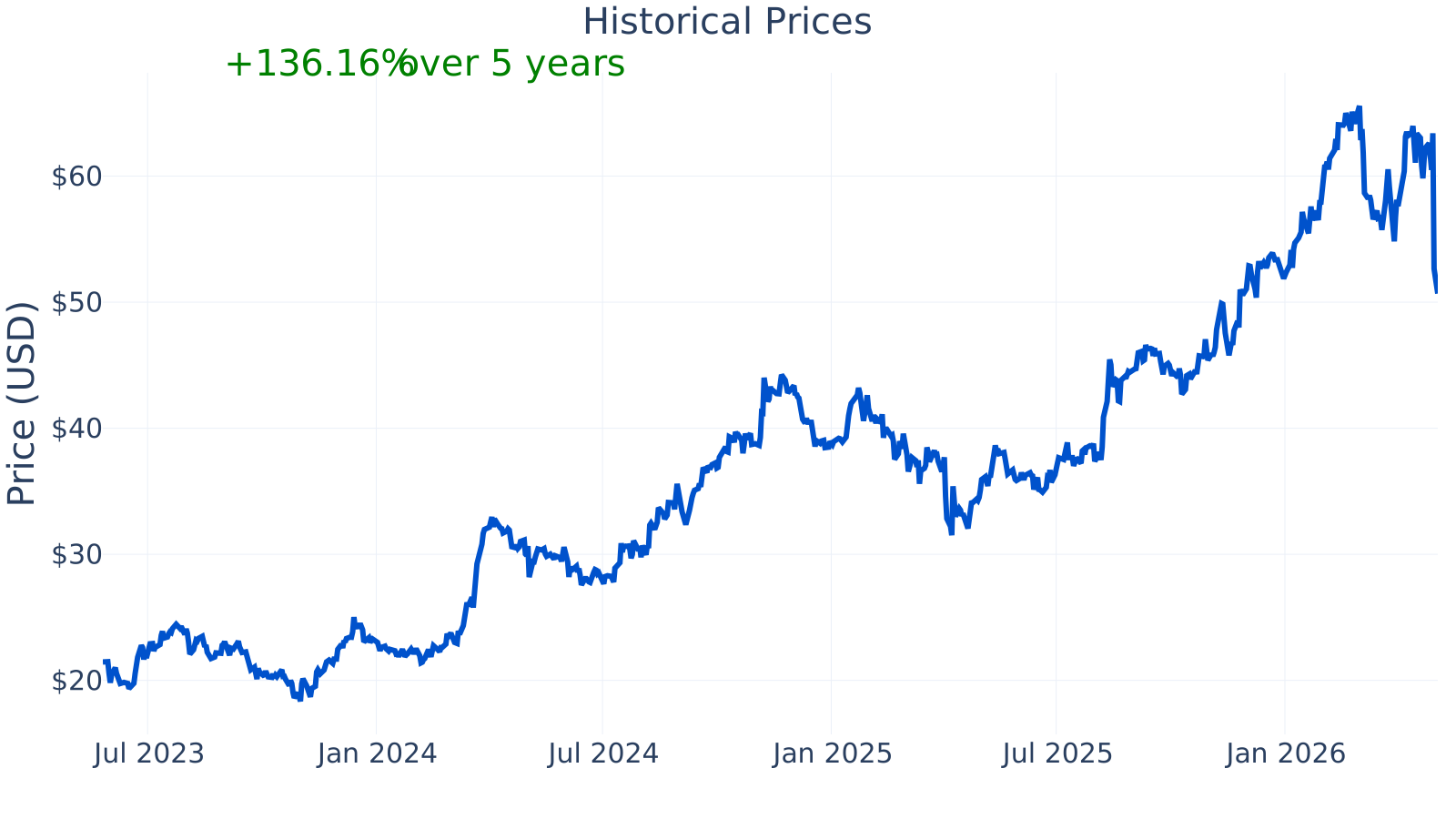
At the latest point shown, Atmus has a market capitalization of about $4.14B and a beta of ~1.48, which indicates the stock has historically moved more than the broader market (higher day-to-day volatility than a beta near 1.0).
Profitability stands out versus the industry median in the table: the company’s profit margin is ~11.6% compared with an industry median of ~3.6%. Recent growth also appears higher than the industry median: revenue growth year-over-year is ~14.6% versus ~5.4% for the industry median.
One area that looks meaningfully different from many peers is leverage: debt-to-equity is ~262% versus an industry median of ~69%. Free cash flow over the trailing twelve months is shown at about $158M, which is an important support for debt service, reinvestment, and resilience during weaker cycles.
Growth (Medium)
Atmus operates in filtration, a mature but durable category tied to vehicle and equipment usage. The long-run demand drivers are typically linked to (1) the installed base of engines and machines that require ongoing maintenance, and (2) OEM production levels. Because replacement cycles continue throughout the life of equipment, the aftermarket side can provide a steadier baseline than purely OEM-driven businesses.
Recent year-over-year revenue growth fluctuated but improved into the most recent period shown, reaching roughly 14.6%. That pattern—moving from low single digits (and one slightly negative quarter) to higher growth—can indicate a combination of stronger end-market demand, pricing, product mix, or recovery from earlier softness. For long-term context, it matters whether growth is coming mainly from sustainable volume/mix improvements versus temporary factors.
Free cash flow (TTM) rose to about $158M in the most recent period shown, after being lower in prior periods. For an industrial/auto-parts-adjacent business, consistent cash generation tends to be a practical signal because it supports investment in new products, manufacturing capabilities, and working capital needs without relying solely on outside financing.
Potential catalysts for a filtration company like Atmus typically include expanding distribution in the aftermarket, new product introductions (including higher-value filtration solutions), and share gains with OEMs. Another practical tailwind can be an aging installed base in certain markets, which can increase maintenance needs—though this tends to be cyclical and region-dependent rather than a straight-line trend.
Risks (Medium-High)
The most visible fundamental risk in the metrics is leverage. Higher debt can amplify results in good times, but it can also reduce flexibility in downturns because interest payments are fixed obligations.
Debt-to-equity decreased sharply from extremely elevated levels in 2023 to a lower (but still high) range, and the latest value is about 262% versus an industry median near 69%. The improvement suggests the balance sheet structure has been moving in a better direction than it was earlier, but the company still appears more leveraged than many peers in its industry grouping. This makes exposure to interest rates, refinancing conditions, and cyclical downturns more important to monitor.
Another key risk is end-market cyclicality. Demand for parts tied to engines and equipment often follows broader industrial activity and vehicle production. Even with a steadier aftermarket component, weaker freight cycles, industrial slowdowns, or lower OEM build rates can pressure volumes, pricing, or customer ordering patterns.
Profit margin has been consistently above the industry median across the periods shown, reaching roughly 11%–12% recently versus an industry median closer to 3%–6% depending on the quarter. This can be interpreted as a competitive strength (better pricing, product mix, cost structure, or scale), but it also introduces a different risk: if competition intensifies or if customers push back on pricing, margins can compress from elevated levels.
Competition is a real factor in filtration. The market includes large, diversified industrial and auto-supply companies as well as specialized filtration providers. Competitive position usually comes down to long-standing customer relationships (especially with OEMs), product performance and certification requirements, manufacturing quality, and distribution strength in the aftermarket. Atmus’s above-median margins suggest it has meaningful strengths, but filtration is not a monopoly-style market, and customers can dual-source or switch over time if alternatives meet specifications and pricing.
Valuation
The latest P/E ratio shown is about 21.0 versus an industry median near 24.8. Over the periods shown, the company’s P/E ratio generally trended upward from the low-to-mid teens into the mid-20s. In descriptive terms, that can reflect a combination of (1) share price appreciation, (2) changes in earnings, and (3) changing expectations about future growth and risk.
Interpreting whether the current multiple is “high” or “low” depends on a few fundamentals highlighted earlier:
- Growth: recent revenue growth is above the industry median, which can support a higher multiple than slower-growing peers.
- Profitability: margins have been materially above the industry median, which often supports stronger valuation levels.
- Leverage: debt levels are higher than the industry median, which can weigh on valuation because it increases financial risk and exposes earnings to interest costs.
With those factors together, the valuation profile looks like a blend of “quality signals” (profitability, recent growth) and “risk signals” (leverage). A neutral way to track justification over time is to watch whether earnings and free cash flow grow in a way that keeps leverage manageable while sustaining margins.
Conclusion
Atmus Filtration Technologies is a filtration-focused company with a business that often benefits from recurring aftermarket demand alongside OEM sales. The operating picture shown here includes rising revenue over multiple years, above-industry profit margins, and improving free cash flow in the most recent period.
The main counterweight is balance-sheet risk: leverage remains well above the industry median even after a large improvement from earlier extremes, and interest expense rose meaningfully after 2022. In a cyclical environment, that higher debt level can matter as much as operational execution.
Based on the facts summarized, the long-term story centers on whether Atmus can maintain above-peer profitability and convert that into steady cash generation while keeping debt at a level that does not limit flexibility through different economic cycles.
Sources:
- SEC EDGAR — Atmus Filtration Technologies Inc filings (Form 10-K, Form 10-Q)
- Atmus Filtration Technologies Inc — Investor Relations materials and press releases (as posted by the company)
- Wikipedia — “Atmus Filtration Technologies” (basic company background)
This article is for informational purposes only and does not constitute financial advice. Some content is AI-generated. See Disclaimer


