Stock Analysis · Atmus Filtration Technologies Inc (ATMU)
Overview
Atmus Filtration Technologies Inc. designs and sells filtration products that help engines and equipment run cleaner and longer. In simple terms, it makes filters and related components used in vehicles and industrial applications to remove contaminants from air, fuel, and lubricants. Filtration is a “needs-based” product: engines require it for performance, durability, and compliance with emissions and maintenance standards.
For long-term business durability, a key concept is the mix between original equipment (parts installed on new equipment) and the aftermarket (replacement parts sold over time). Filtration tends to benefit from recurring replacement cycles, because filters are routinely changed as part of maintenance. That can support steadier demand than purely one-time equipment sales, although it can still be influenced by the overall level of driving, freight activity, industrial utilization, and the build rate of new vehicles and equipment.
Public filings describe revenue by business lines and/or end markets (for example, sales tied to original equipment customers versus aftermarket channels, and by geography). Exact percentages can vary by reporting period and disclosure format, so the most reliable breakdown is the one presented in the company’s latest annual report (Form 10-K).
From 2021 to 2025, total revenue rose from about $1.44B to about $1.76B, while net income increased from about $170M to about $207M. Over the same period, interest expense increased meaningfully (from under $1M in 2021–2022 to tens of millions later), which is a reminder that financing structure can matter even when operating performance improves.
Key Figures
| Metric | Value | Industry ⓘ |
|---|---|---|
| Date | Feb 17, 2026 | |
| Context | ||
| Sector | Consumer Cyclical | |
| Industry | Auto Parts | |
| Market Cap ⓘ | $5.23B | |
| Beta ⓘ | 1.57 | |
| Fundamental | ||
| P/E Ratio ⓘ | 25.65 | 24.32 |
| Profit Margin ⓘ | 11.76% | 3.56% |
| Revenue Growth ⓘ | 9.80% | 4.95% |
| Debt to Equity ⓘ | 150.59% | 66.38% |
| PEG ⓘ | N/A | |
| Free Cash Flow ⓘ | $148.80M | |
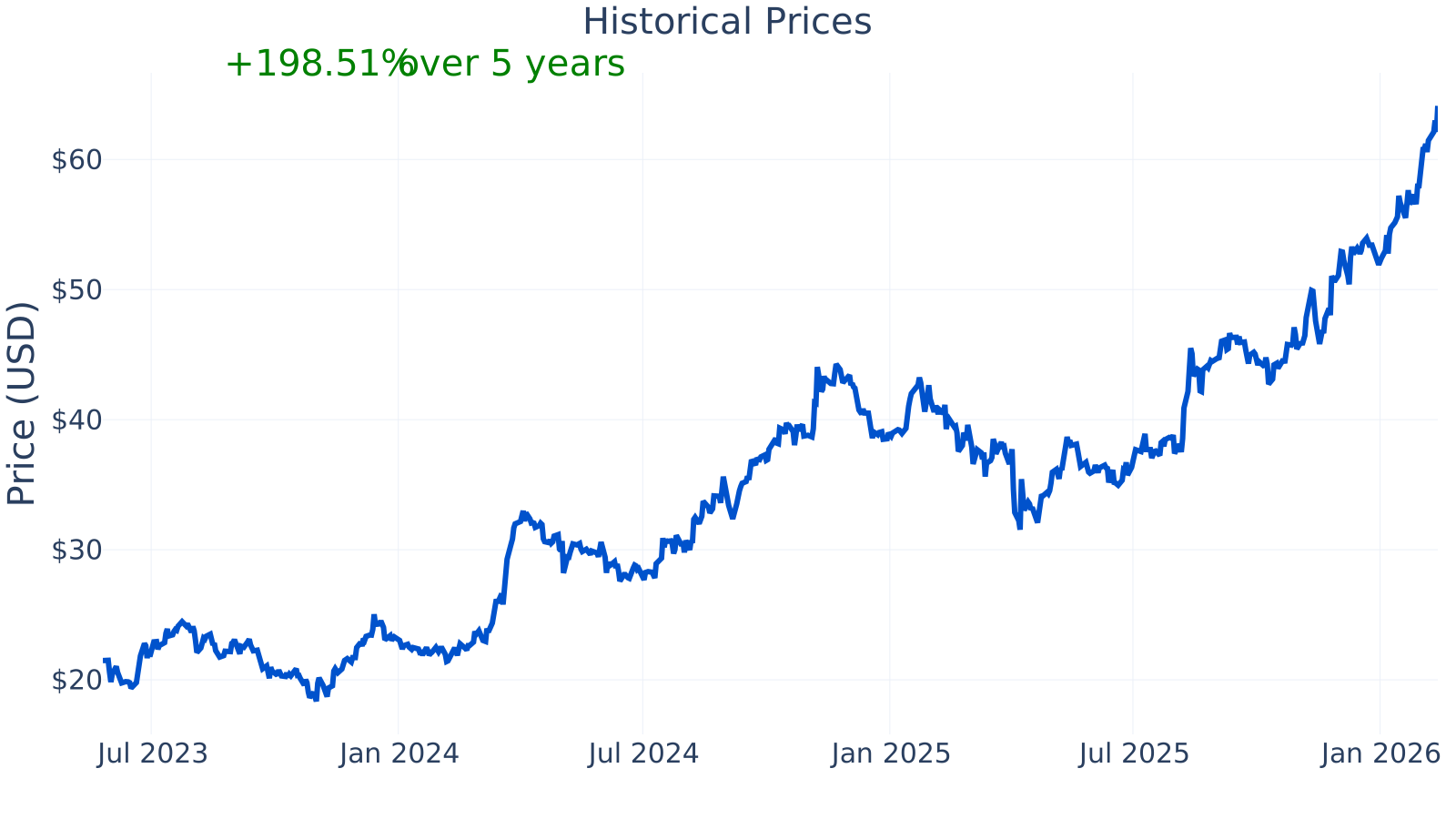
At a market capitalization of about $5.23B, Atmus sits in the mid-cap range. The beta of about 1.57 indicates the stock has historically moved more than the broader market on average, which can translate into larger up-and-down swings.
Profitability stands out versus the industry median shown: profit margin is about 11.76% versus an industry median near 3.57%. Revenue growth (year over year) is about 9.8% versus an industry median near 4.95%, suggesting the company has recently grown faster than many peers in its listed industry group.
Leverage is also notable: debt-to-equity is about 150.6% versus an industry median near 66.4%. This does not automatically indicate a problem, but it does mean capital structure deserves closer attention because higher leverage can amplify outcomes in both good and difficult operating environments.
Growth (Medium)
Filtration generally participates in long-lived trends: fleets need regular maintenance, emissions and efficiency standards encourage effective filtration, and global transportation and industrial activity require reliable engine and equipment performance. However, it is not a “hyper-growth” category; demand often tracks underlying miles driven, hours operated, fleet size, and new equipment production. That tends to support steady growth with cyclical sensitivity.
Recent year-over-year revenue growth has been uneven quarter to quarter, including at least one negative quarter (about -2.37% in 2025-03-31) followed by stronger quarters later in 2025 (rising to roughly 10.9% and then about 9.8%). That pattern is consistent with a business exposed to customer inventory cycles and broader industrial/transport conditions, while still showing the ability to re-accelerate.
Free cash flow over the trailing twelve months shown is positive (about $148.8M most recently), with earlier periods displayed at about $121.3M, dipping to about $66.1M, then improving to about $91.9M. In plain terms, the business has been generating cash after operating needs and capital spending, but the amount has fluctuated. For long-term analysis, consistency of cash generation and how management allocates that cash (debt reduction, reinvestment, or shareholder returns) can be as important as the size of a single year’s number.
Potential catalysts tend to be operational rather than “one-off”: expanding penetration in aftermarket channels, winning supply positions with original equipment manufacturers, improving manufacturing efficiency, and growing in regions or applications with higher service intensity. Because filters are replaced regularly, expanding installed base and aftermarket reach can support compounding demand over time, assuming competitive positioning holds.
Risks (Medium-High)
This article is for informational purposes only and does not constitute financial advice. Some content is AI-generated. See Disclaimer