Stock Analysis · Atlassian Corp Plc (TEAM)
Overview
Atlassian Corp Plc is a software company best known for tools that help teams plan work, build software, and support customers. Its products are used across many industries by software developers, IT departments, and business teams to manage projects, track tasks, document knowledge, and run service desks. Well-known Atlassian products include Jira (work tracking and project management), Confluence (team documentation and knowledge sharing), and Jira Service Management (IT service management and support).
The business model is largely subscription-based software, meaning customers typically pay recurring fees to keep using the products. Atlassian has also been shifting more customers toward cloud-based offerings (hosted by Atlassian) rather than self-managed installations, which can support recurring revenue and ongoing product updates.
In its financial reporting, Atlassian commonly breaks revenue into broad categories rather than a detailed product-by-product split. The main revenue streams are:
- Subscription revenue (generally the largest): recurring fees from cloud products and term subscriptions
- Maintenance revenue: support and updates tied to certain self-managed/server-style licenses (a smaller portion over time as the business shifts toward cloud)
- Other revenue: typically includes services and other items (generally the smallest)
How money flows through the business (high-level): Atlassian generates several billions of dollars of annual revenue and keeps a large gross profit, but it reinvests heavily in operating expenses—especially research and development—resulting in operating losses and net losses in recent fiscal years shown.
Across fiscal years shown (ending June 30), revenue increased from about $2.09B (FY2021) to about $5.22B (FY2025). Over the same period, research and development spending also rose materially (from about $0.93B to about $2.67B), which helps explain why net income remained negative even as the company scaled.
Key Figures
| Metric | Value | Industry ⓘ |
|---|---|---|
| Date | Feb 07, 2026 | |
| Context | ||
| Sector | Technology | |
| Industry | Software - Application | |
| Market Cap ⓘ | $24.93B | |
| Beta ⓘ | 0.88 | |
| Fundamental | ||
| P/E Ratio ⓘ | N/A | 27.79 |
| Profit Margin ⓘ | -3.29% | 6.02% |
| Revenue Growth ⓘ | 23.30% | 15.80% |
| Debt to Equity ⓘ | 87.43% | 25.15% |
| PEG ⓘ | 0.97 | |
| Free Cash Flow ⓘ | $1.27B | |
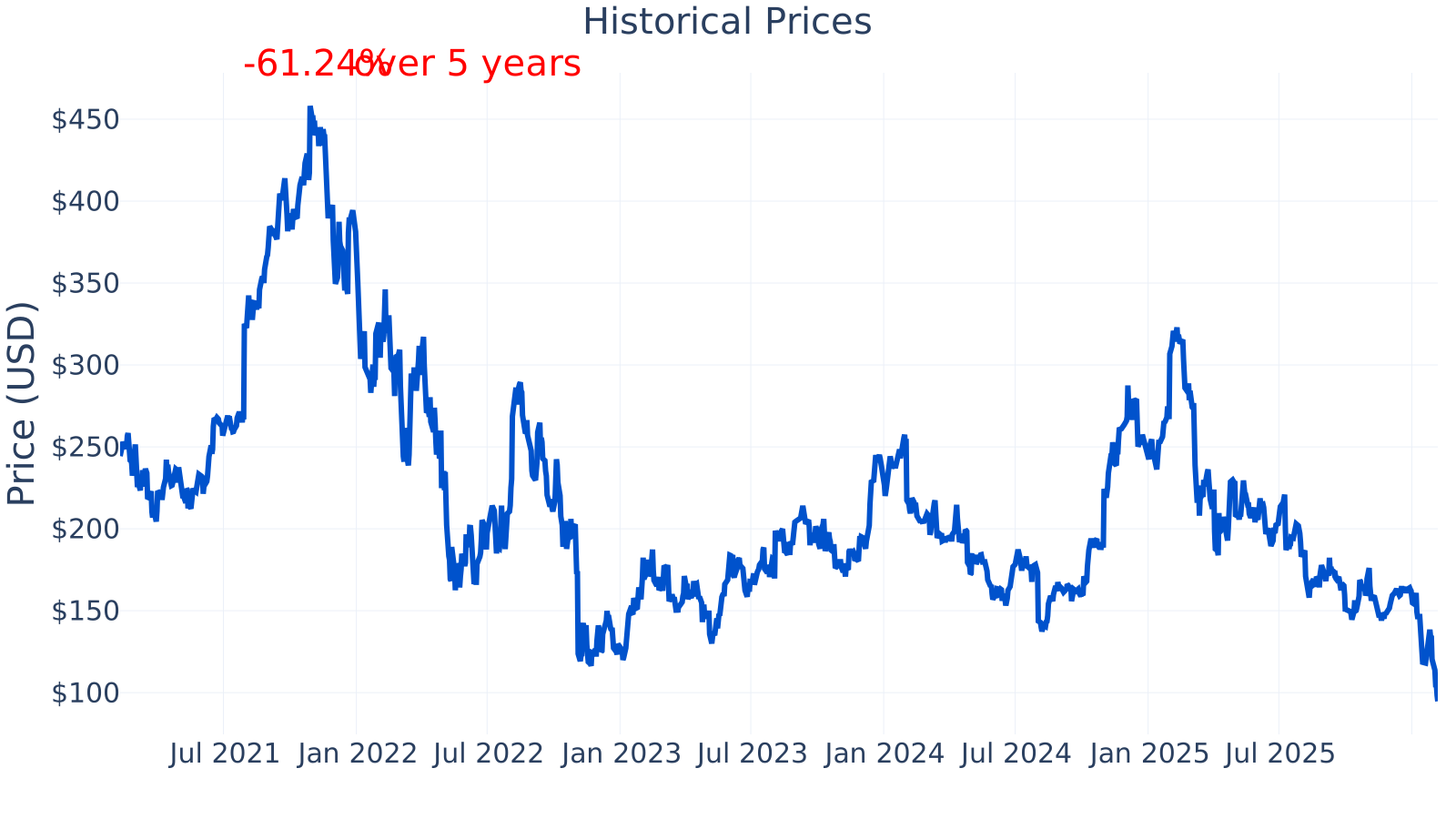
At the latest point shown, Atlassian’s market capitalization is about $24.9B. The stock’s beta of 0.88 suggests it has historically moved somewhat less than the broader market on average (though individual periods can still be volatile).
From an operating perspective, the company shows positive free cash flow (TTM) of about $1.27B, while its profit margin is about -3.29% versus an industry median around 6.03%. Revenue growth year over year is about 23.3%, above the industry median shown (about 15.8%). Debt-to-equity is about 87%, higher than the industry median shown (about 25%).
Growth (medium)
Atlassian operates in collaboration software, project/work management, and IT service management—areas supported by long-term trends such as ongoing digitization, distributed work, and the rising importance of software development across the economy. In addition, many organizations are standardizing workflows and documentation across teams, which can reinforce demand for platforms that become embedded in daily operations.
A key strategic driver is the company’s continued emphasis on cloud offerings. Cloud delivery can improve the speed of feature releases, strengthen security and reliability investments at scale, and reduce friction for customers who prefer not to manage infrastructure themselves. Over time, cloud can also increase the opportunity to expand usage within existing customers (for example, adding more users, more teams, or additional Atlassian products).
The year-over-year revenue growth trend shown remains positive, with recent values around the low-to-mid 20% range (latest shown: ~23.3%). Growth has varied over time (including a period where it slowed into the mid-teens) but has generally stayed solidly positive across the timeframe displayed.
The free cash flow line indicates improvement over multiple years—from roughly $742M (TTM, 2021) to about $1.45B (TTM, 2025). This matters because free cash flow can help a company fund product development and operations without relying as heavily on external financing, even when accounting profits are still negative.
Risks (high)
This article is for informational purposes only and does not constitute financial advice. Some content is AI-generated. See Disclaimer


