Stock Analysis · Asbury Automotive Group Inc (ABG)
Overview
Asbury Automotive Group, Inc. is a U.S. automotive retailer. In plain terms, it operates car dealerships and related businesses that sell new and used vehicles, provide repair and maintenance services, sell replacement parts, and arrange vehicle financing and related products. Like many dealership groups, its results are influenced by consumer demand for cars, available vehicle supply, pricing conditions, and interest rates (which affect affordability and loan payments).
Its revenue is mainly generated from:
- New vehicle sales (selling new cars through its dealership network)
- Used vehicle sales (selling pre-owned cars)
- Parts & service (maintenance and repairs, which tend to be more recurring than vehicle sales)
- Finance & insurance (F&I) (arranging financing and selling related products, typically recognized as higher-margin revenue than vehicle sales)
Across the last several years, the company’s total revenue has fluctuated with the broader auto retail cycle, reaching about $18.0B in 2025 after about $17.2B in 2024 and about $14.8B in 2023. Profitability has varied as market conditions normalized after unusually strong dealership pricing dynamics earlier in the decade.
One visible pattern is that revenue grew materially from 2021 to 2022 (about $9.8B to $15.4B), then moderated, and later returned to growth by 2024–2025. Over the same span, interest expense increased (for example, from about $102M in 2021 to roughly $279M in 2025), which matters because higher interest costs can weigh on net income when debt levels or interest rates rise.
Key Figures
| Metric | Value | Industry ⓘ |
|---|---|---|
| Date | Feb 08, 2026 | |
| Context | ||
| Sector | Consumer Cyclical | |
| Industry | Auto & Truck Dealerships | |
| Market Cap ⓘ | $4.43B | |
| Beta ⓘ | 0.80 | |
| Fundamental | ||
| P/E Ratio ⓘ | 8.96 | 16.79 |
| Profit Margin ⓘ | 2.73% | 2.73% |
| Revenue Growth ⓘ | 3.80% | 5.70% |
| Debt to Equity ⓘ | 154.35% | 143.50% |
| PEG ⓘ | 0.47 | |
| Free Cash Flow ⓘ | $688.50M | |
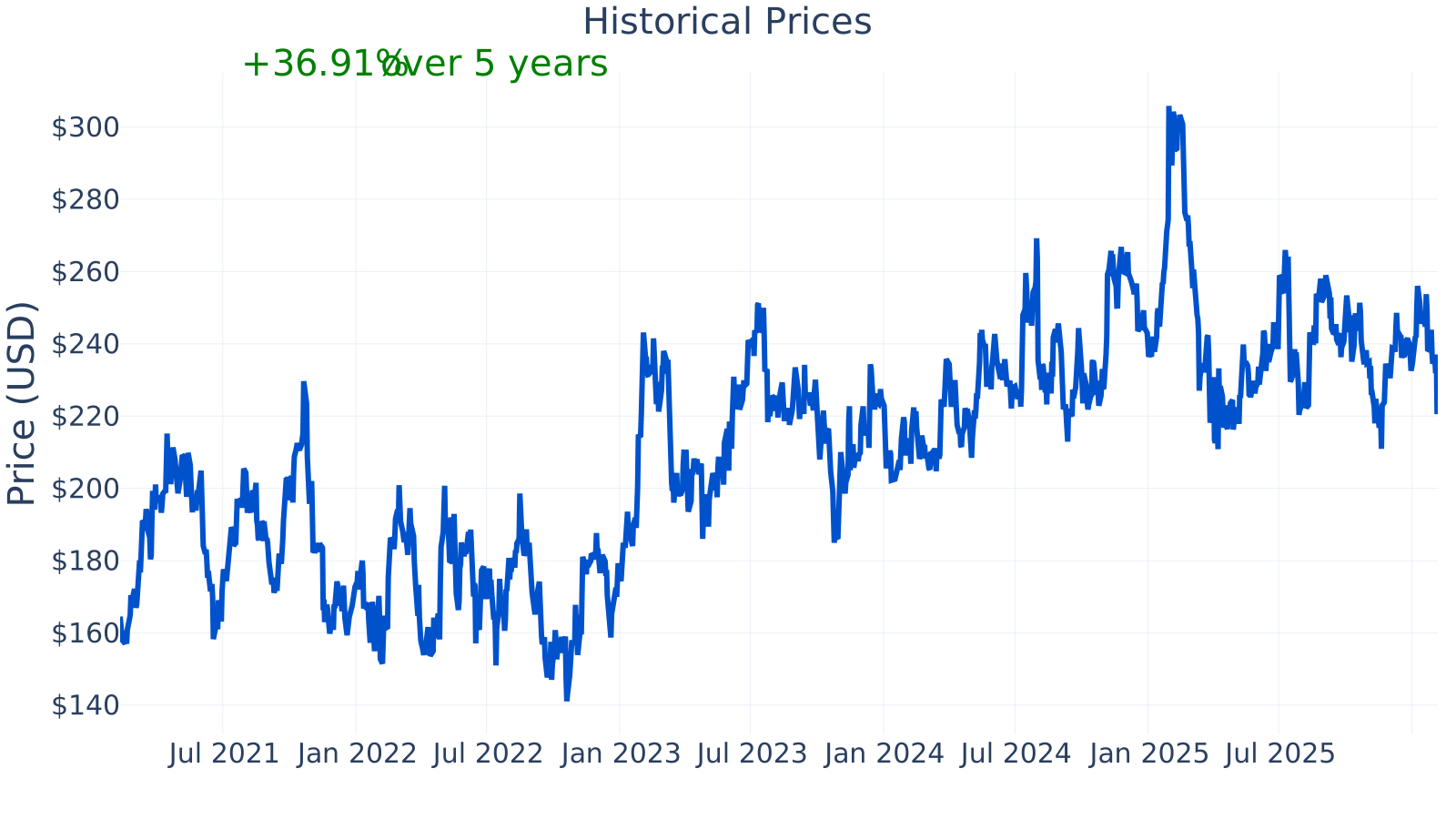
As of the latest metrics shown, Asbury’s market capitalization is about $4.43B and its beta is about 0.80, which implies the shares have historically moved somewhat less than the overall market. The company’s P/E ratio is about 9.0 versus an industry median near 16.8. Profit margin is about 2.73%, in line with the industry median (also about 2.73%). Year-over-year revenue growth is about 3.8% versus an industry median around 5.7%. Debt-to-equity is about 154% versus an industry median near 143%. Trailing twelve-month free cash flow is about $688.5M, and the PEG ratio shown is about 0.47 (a ratio that compares valuation to growth assumptions).
Growth (Medium)
The auto retail industry is mature and cyclical: long-term demand is tied to factors like population growth, household formation, vehicle replacement cycles, and credit availability. That said, dealership groups can still grow through a mix of acquisitions, expanding higher-value customer services (maintenance/repair), improving digital retailing capabilities, and operating efficiency.
Two business areas often viewed as more durable within dealership models are parts & service (customers need maintenance regardless of whether they buy a new car this year) and used vehicles (which can be supported by trade-ins and sourcing strategies). In addition, F&I income can be an important earnings contributor, though it is sensitive to lending conditions and consumer credit health.
The year-over-year revenue growth pattern has been volatile, with very strong growth in 2021–2022, a contraction in parts of 2023, and a return to positive growth through much of 2024, ending 2025 at a modest positive rate (about 3.8%). This kind of variability is common in auto retail because vehicle availability, incentives, and affordability can change quickly.
Free cash flow (a rough measure of cash generated after operating needs and capital spending) also fluctuated meaningfully: it was about $1.28B in 2022, then dropped to the mid-hundreds of millions in 2023–2025, and is shown at about $688.5M on a trailing twelve-month basis. For long-term business strength, the key point is that cash generation can swing with inventory conditions, profitability per vehicle, and the pace of dealership acquisitions or other investments.
Risks (High)
This article is for informational purposes only and does not constitute financial advice. Some content is AI-generated. See Disclaimer


