Stock Analysis · Asana Inc (ASAN)
Overview
Asana, Inc. is a software company focused on helping teams plan, track, and manage work. Its product is commonly used to coordinate projects, tasks, and cross-functional workflows (for example, marketing launches, product development, or operational processes). The company sells its software primarily as a subscription service delivered over the cloud.
Asana’s revenue is largely recurring and tied to subscriptions, with customers typically paying over time for access to the platform and higher-tier features. In its SEC filings, Asana describes revenue as coming primarily from subscription fees (rather than one-time license sales), with professional services playing a smaller supporting role.
Main revenue sources (from largest to smallest, based on how Asana describes its business in filings):
- Subscriptions (the core of revenue; recurring fees for access to Asana’s platform)
- Professional services (implementation/support services; generally a smaller portion)
From a business-model perspective, the company’s cost structure is typical for software: it generates gross profit on subscriptions, then invests heavily in research and development and in sales/marketing to acquire and retain customers.
Over the last several fiscal years, revenue has increased meaningfully (from about $378M in FY2022 to about $724M in FY2025), while operating losses have remained large (operating income around -$247M in FY2025). Research and development is a major expense line (about $341M in FY2025), highlighting a strategy centered on continued product investment.
Key Figures
| Metric | Value | Industry ⓘ |
|---|---|---|
| Date | Feb 08, 2026 | |
| Context | ||
| Sector | Technology | |
| Industry | Software - Application | |
| Market Cap ⓘ | $2.08B | |
| Beta ⓘ | 0.96 | |
| Fundamental | ||
| P/E Ratio ⓘ | N/A | 27.79 |
| Profit Margin ⓘ | -28.33% | 6.02% |
| Revenue Growth ⓘ | 9.30% | 15.80% |
| Debt to Equity ⓘ | 135.50% | 25.15% |
| PEG ⓘ | N/A | |
| Free Cash Flow ⓘ | $72.39M | |
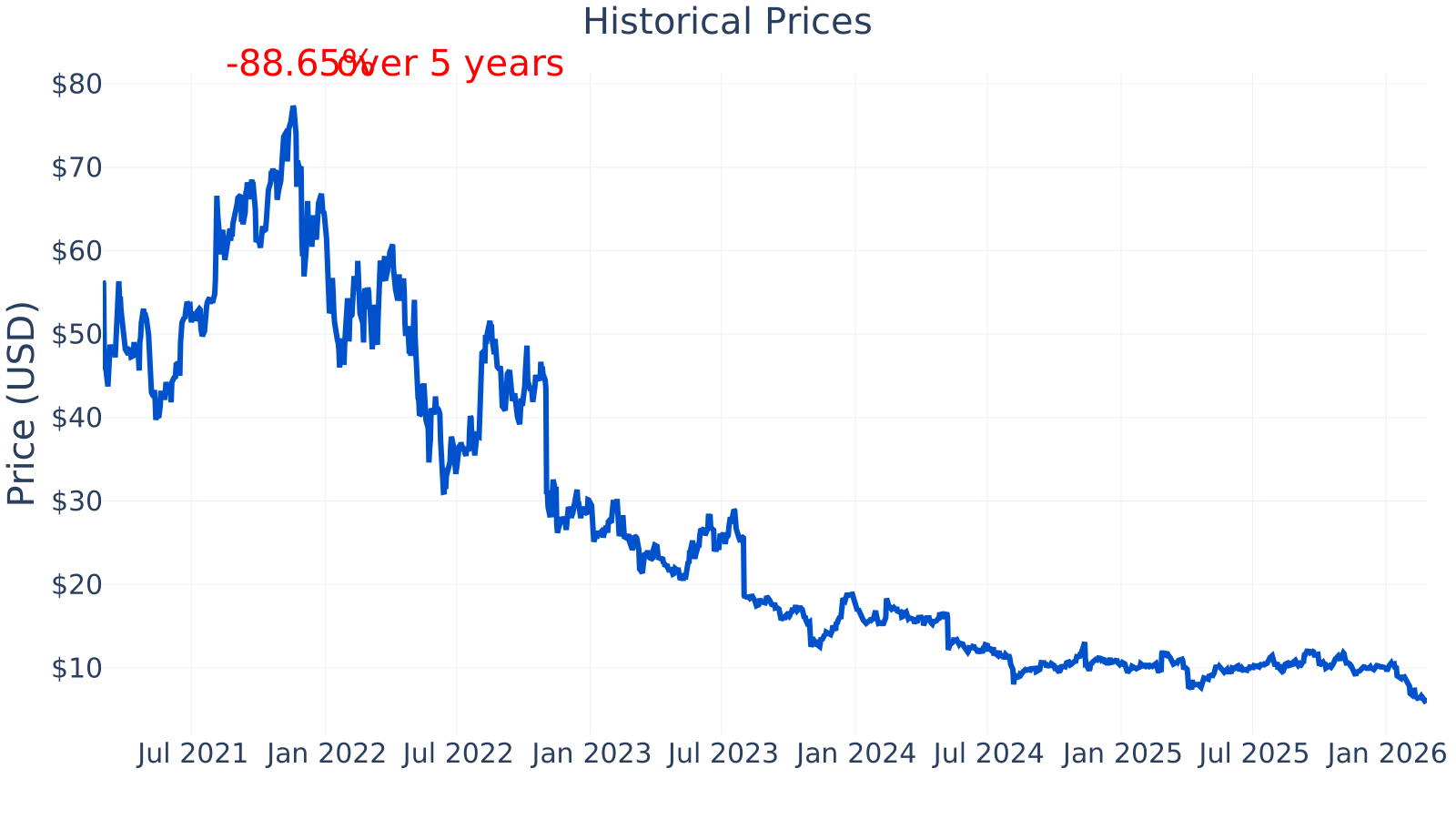
As of the latest metrics shown, Asana’s market capitalization is about $2.08B and the stock’s beta is about 0.96 (roughly in line with broad market movement). The company’s profit margin is about -28.33%, compared with an industry median around +6.03%, indicating it is still meaningfully unprofitable on a net basis. Year-over-year revenue growth is about 9.3%, below the industry median shown (about 15.8%). Debt-to-equity is about 135%, higher than the industry median shown (about 25%). Free cash flow over the trailing twelve months is positive at about $72.4M, which can matter because cash generation helps fund operations without relying as heavily on external financing.
Growth (Medium)
Asana operates in the broader market for work management and collaboration software—an area supported by long-running trends like distributed work, increasing project complexity, and the desire to standardize processes across teams. In general, this is a large software category with many potential customers, ranging from small businesses to large enterprises.
A key question for long-term growth is whether Asana can sustain durable expansion while improving profitability. The company has historically grown quickly, but the pace has slowed over time, which is common as revenue bases become larger and customers become more cost-conscious.
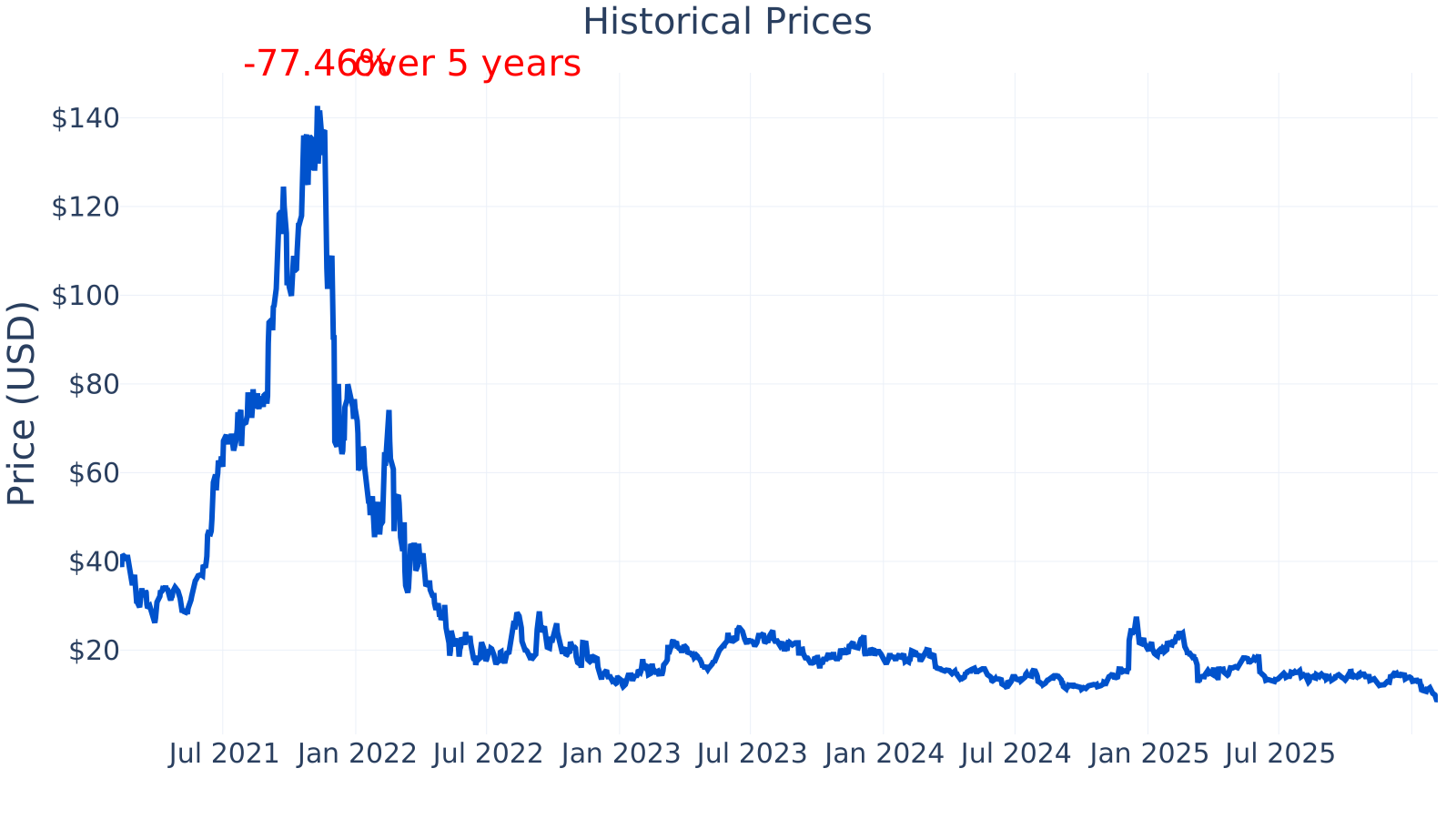
The year-over-year revenue growth trend shows a clear deceleration from very high growth rates earlier in the period (above 50–70%) to roughly 9–10% more recently. That shift does not automatically mean the product is weakening, but it does raise the importance of execution: retaining customers, expanding within existing accounts, and differentiating the platform in a competitive market.
Free cash flow has improved substantially, moving from deeply negative levels (around -$126.5M in FY2022 and -$167.2M in FY2023) to near breakeven in FY2024 (about -$31.1M) and slightly positive in FY2025 (about $6.6M). The latest metrics also show trailing twelve-month free cash flow around $72.4M. If this cash generation proves consistent, it can reduce financial pressure and provide more flexibility for product investment.
Potential catalysts mentioned broadly in company communications and filings for companies in this category typically include deeper adoption by larger organizations, expansion of use cases across departments, and new product capabilities. For Asana specifically, the effectiveness of product improvements and the ability to turn product investment into durable customer expansion are central to future growth.
Risks (High)
This article is for informational purposes only and does not constitute financial advice. Some content is AI-generated. See Disclaimer