Stock Analysis · Arrow Electronics Inc (ARW)
Overview
Arrow Electronics Inc. is a global distributor and solutions provider that helps companies design and source electronic components and other technology products. In simple terms, Arrow sits between the manufacturers of chips and other parts and the businesses that need them (such as industrial, automotive, communications, and consumer electronics companies). Beyond “moving boxes,” Arrow also supports customers with engineering and design services, helping them choose components and build complete solutions.
The business is typically described as having two main activities: (1) distributing electronic components (such as semiconductors and connectors) and (2) distributing enterprise computing solutions (such as servers, storage, and related services). Revenue tends to be influenced by the overall health of electronics demand and by inventory cycles across the supply chain.
Main sources of revenue (largest to lowest) are generally organized as:
- Global Components (electronic components distribution)
- Global Enterprise Computing Solutions (enterprise IT hardware/software and related services distribution)
In the company’s filings, these are the primary reportable segments. Exact percentages can vary by year and are detailed in annual reports (segment reporting).
Over the years shown, total revenue reached a high level in 2022, dropped meaningfully in 2023–2024, and then recovered in 2025. Profitability also moved with the cycle: net income peaked in 2022, fell sharply by 2024, and improved in 2025. This pattern is consistent with a distribution business that is exposed to customer demand swings, pricing, and inventory adjustments.
Key Figures
| Metric | Value | Industry ⓘ |
|---|---|---|
| Date | Feb 07, 2026 | |
| Context | ||
| Sector | Technology | |
| Industry | Electronics & Computer Distribution | |
| Market Cap ⓘ | $8.17B | |
| Beta ⓘ | 1.04 | |
| Fundamental | ||
| P/E Ratio ⓘ | 14.51 | 18.34 |
| Profit Margin ⓘ | 1.85% | 1.72% |
| Revenue Growth ⓘ | 20.10% | 9.70% |
| Debt to Equity ⓘ | 46.85% | 54.56% |
| PEG ⓘ | 0.88 | |
| Free Cash Flow ⓘ | $36.67M | |
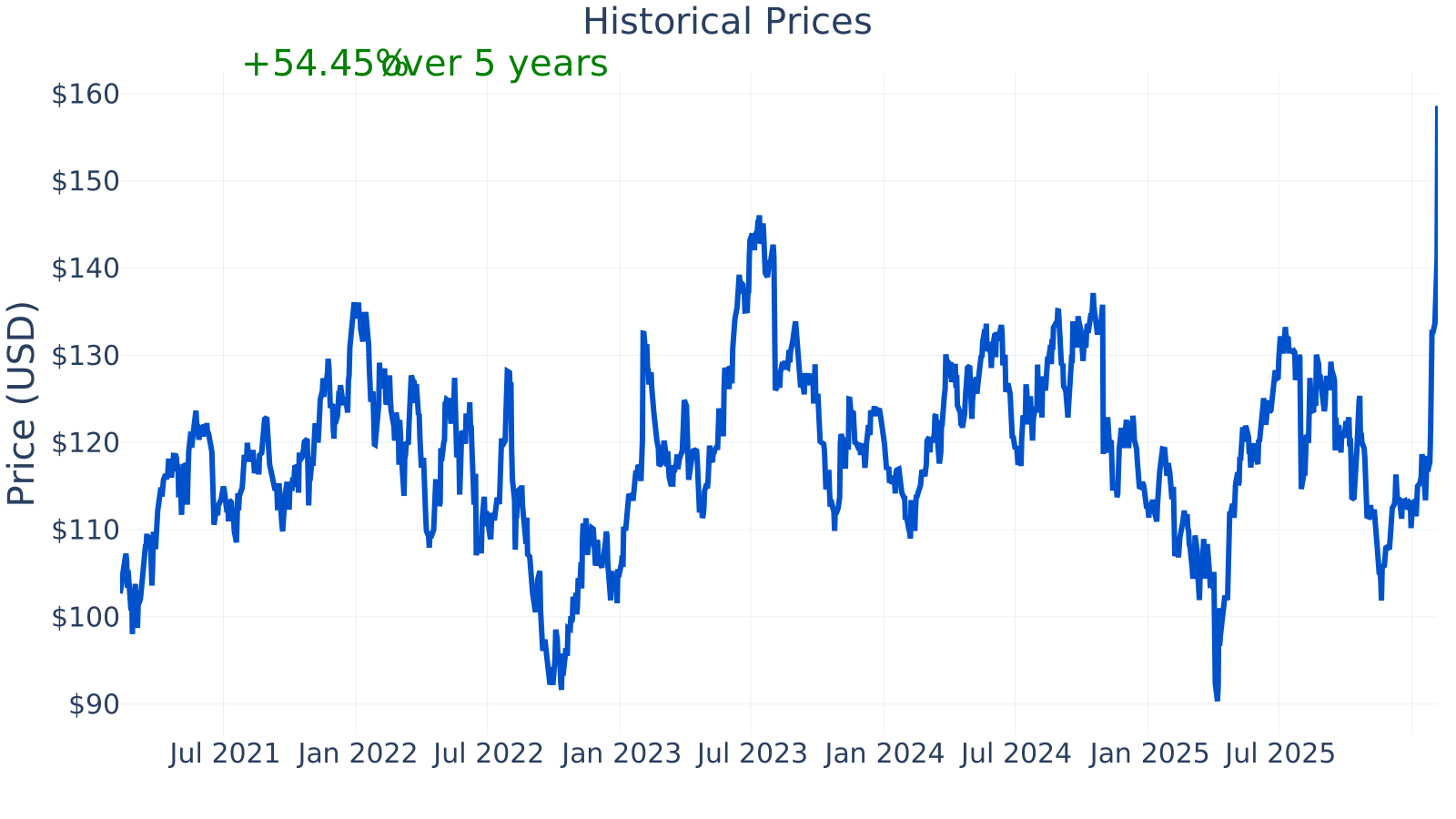
Arrow Electronics has a market capitalization of about $8.17B and a beta of 1.04, which indicates the stock has historically moved roughly in line with the overall market. The P/E ratio is 14.51 versus an industry median of 18.34. Profit margin is about 1.85% (industry median 1.72%), reflecting the thin-margin nature of distribution businesses. Year-over-year revenue growth is shown at about 20.10% versus an industry median of 9.70%, which suggests a stronger recent rebound than peers at this point in time. Debt-to-equity is about 46.85% (industry median 54.56%). The PEG ratio is 0.88. Trailing twelve-month free cash flow is about $36.7M.
Growth (Medium)
Arrow operates in the broad electronics and IT supply chain, which is supported over the long run by ongoing digitization: more computing power in cars and factories, expanding data needs, industrial automation, and connected devices. That said, this is not a smooth, straight-line growth area. Demand often comes in waves because customers and manufacturers adjust inventory levels, and because end markets (like industrial and consumer electronics) can slow down during weaker economic periods.
The year-over-year revenue growth pattern highlights this cyclicality. After strong growth in 2021, growth weakened and turned negative through 2023 and most of 2024, before improving again in 2025 and finishing the year at roughly +20%. For long-term context, this suggests Arrow’s revenue can rebound sharply after downcycles, but it can also contract for extended periods when customers reduce orders and work through excess inventory.
Cash generation has also varied significantly. Trailing free cash flow appears strong in 2024 and 2025 (reaching close to $991M by 2025-03-31 in the series shown), but the most recent point in the table shows a much lower trailing figure ($36.7M). For a distributor, free cash flow can swing due to changes in working capital (especially inventory and receivables), so it often helps to look at multi-year patterns rather than a single point.
Potential catalysts for growth are typically tied to the same forces that drive customers’ production and investment plans: a sustained recovery in electronics demand, normalization of supply chain conditions, and increased design activity where Arrow’s engineering support helps lock in future component content. Management commentary in filings often emphasizes navigating cycles, maintaining supplier relationships, and expanding value-added services.
Risks (High)
This article is for informational purposes only and does not constitute financial advice. Some content is AI-generated. See Disclaimer