Stock Analysis · Arista Networks (ANET)
Overview
Arista Networks designs and sells networking equipment and software used to connect large numbers of computers inside data centers. In practical terms, its products help move data quickly and reliably between servers, storage systems, and cloud infrastructure. The company is best known for high-speed Ethernet switching systems and its network operating software, which are commonly used by cloud service providers, large enterprises, and other organizations running large-scale networks.
Arista’s business model is primarily product-based (networking hardware) with an important software component (its network operating system and related features). Over time, recurring revenue from software subscriptions and support services can become more meaningful, but the company is still widely viewed as hardware-led within data-center networking.
From an official reporting perspective, Arista generally discloses revenue by major product/service categories rather than by many small business lines. Its main sources of revenue typically include:
- Product revenue (primarily data center switches and related hardware)
- Service revenue (including software subscriptions, maintenance, and support)
Because percentages vary by period and depend on the company’s reporting tables in its filings, the exact split should be taken from the most recent annual report (Form 10‑K) if precise percentages are required.
Across the years shown, total revenue rises substantially (from about $2.95B in 2021 to about $9.01B in 2025), and net income increases as well (from about $0.84B to about $3.51B). Operating expenses also grow, with research and development expanding notably, which is consistent with ongoing investment in new products and software features.
Key Figures
| Metric | Value | Industry ⓘ |
|---|---|---|
| Date | Feb 20, 2026 | |
| Context | ||
| Sector | Technology | |
| Industry | Computer Hardware | |
| Market Cap ⓘ | $172.81B | |
| Beta ⓘ | 1.44 | |
| Fundamental | ||
| P/E Ratio ⓘ | 50.08 | 24.44 |
| Profit Margin ⓘ | 38.99% | 3.74% |
| Revenue Growth ⓘ | 28.90% | 21.50% |
| Debt to Equity ⓘ | N/A | 4.94% |
| PEG ⓘ | 2.11 | |
| Free Cash Flow ⓘ | $4.25B | |
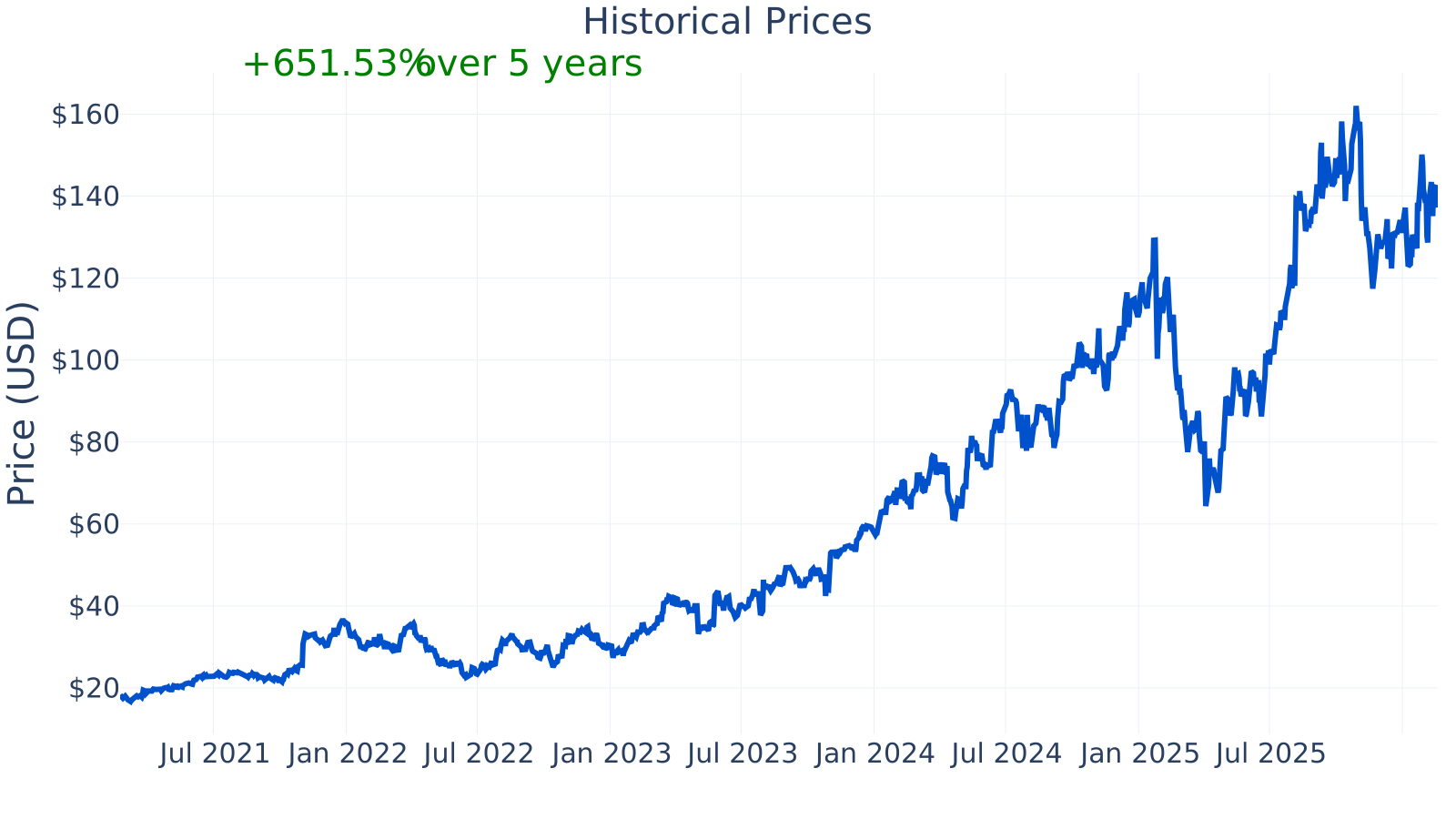
At the latest point shown, Arista’s market capitalization is about $172.8B. The stock’s beta of 1.44 indicates it has historically moved more than the overall market (higher volatility). The company’s profit margin is shown at 38.99%, which is far above the industry median of 3.74%, highlighting unusually strong profitability versus peers in its listed industry group. Revenue growth year-over-year is 28.9% versus an industry median of 21.5%. Free cash flow over the trailing twelve months is about $4.25B. The P/E ratio is about 50.1 compared with an industry median near 24.4, indicating a meaningfully higher earnings multiple than the typical peer in the comparison set.
Growth (medium)
Arista operates in data center networking, an area supported by long-term drivers such as cloud computing, ongoing data center buildouts, and higher traffic inside data centers created by modern applications. A key industry trend is the move toward faster Ethernet speeds and more automation in network operations—both areas where Arista focuses product development.
Strategically, Arista’s emphasis on high-performance switching, a unified network operating system, and software features for automation and visibility aligns with how large customers try to run networks: standardized designs, fewer operational surprises, and easier scaling. When large customers expand capacity (more servers and more connections), demand can translate into additional switching ports, upgrades to higher speeds, and attached software and support.
The year-over-year revenue growth series shows strong expansion in 2022 and 2023 (several quarters above 40% and peaking above 50%), followed by a slowdown in early-to-mid 2024 (mid-teens), and then a re-acceleration into the mid-to-high 20% range through 2025 (roughly 27% to 30%). This pattern can be consistent with digestion cycles after rapid buildouts, followed by renewed capacity additions.
Free cash flow increases materially over the period shown, rising from under $1B (around $0.78B in 2021) to nearly $3.8B by 2025 (with the latest table showing about $4.25B TTM). For long-horizon analysis, sustained free cash flow matters because it reflects cash generation after operating needs and capital spending, which can support reinvestment, balance-sheet strength, and shareholder-return programs (when and if management chooses).
Risks (medium)
This article is for informational purposes only and does not constitute financial advice. Some content is AI-generated. See Disclaimer


