Stock Analysis · Applied Opt (AAOI)
Overview
Applied Opt (AAOI) designs and manufactures fiber-optic networking products that help move data quickly through internet infrastructure. In simple terms, its components sit inside network equipment used in data centers and telecom networks, converting electrical signals to light (and back) so information can travel efficiently over fiber.
Based on its SEC filings, the company’s revenue is primarily tied to selling optical modules and related products into large network markets. The exact mix can change from year to year depending on customer demand and product cycles, but the main buckets typically include:
- Optical transceivers / modules for data communications (commonly used in cloud/data center networking)
- Optical transceivers / modules for telecommunications (used by telecom and broadband operators)
- Other fiber-optic components and services (smaller portion)
From an operating standpoint, the business profile is shaped by (1) large customers that can represent meaningful portions of sales, and (2) manufacturing execution—because cost, yield, and quality directly influence profitability.
Over recent years, revenue has increased overall (from about $212M in 2021 to about $249M in 2024), but operating results have been pressured by a cost structure where operating expenses (notably R&D and SG&A) and cost of revenue have consumed most of gross profit. In 2024, operating income and net income were notably negative, indicating that higher sales did not translate into profitability that year.
Key Figures
| Metric | Value | Industry ⓘ |
|---|---|---|
| Date | Feb 08, 2026 | |
| Context | ||
| Sector | Technology | |
| Industry | Communication Equipment | |
| Market Cap ⓘ | $3.02B | |
| Beta ⓘ | 3.35 | |
| Fundamental | ||
| P/E Ratio ⓘ | N/A | 39.43 |
| Profit Margin ⓘ | -36.97% | 4.65% |
| Revenue Growth ⓘ | 82.10% | 14.10% |
| Debt to Equity ⓘ | 42.06% | 59.08% |
| PEG ⓘ | 0.51 | |
| Free Cash Flow ⓘ | -$302.26M | |
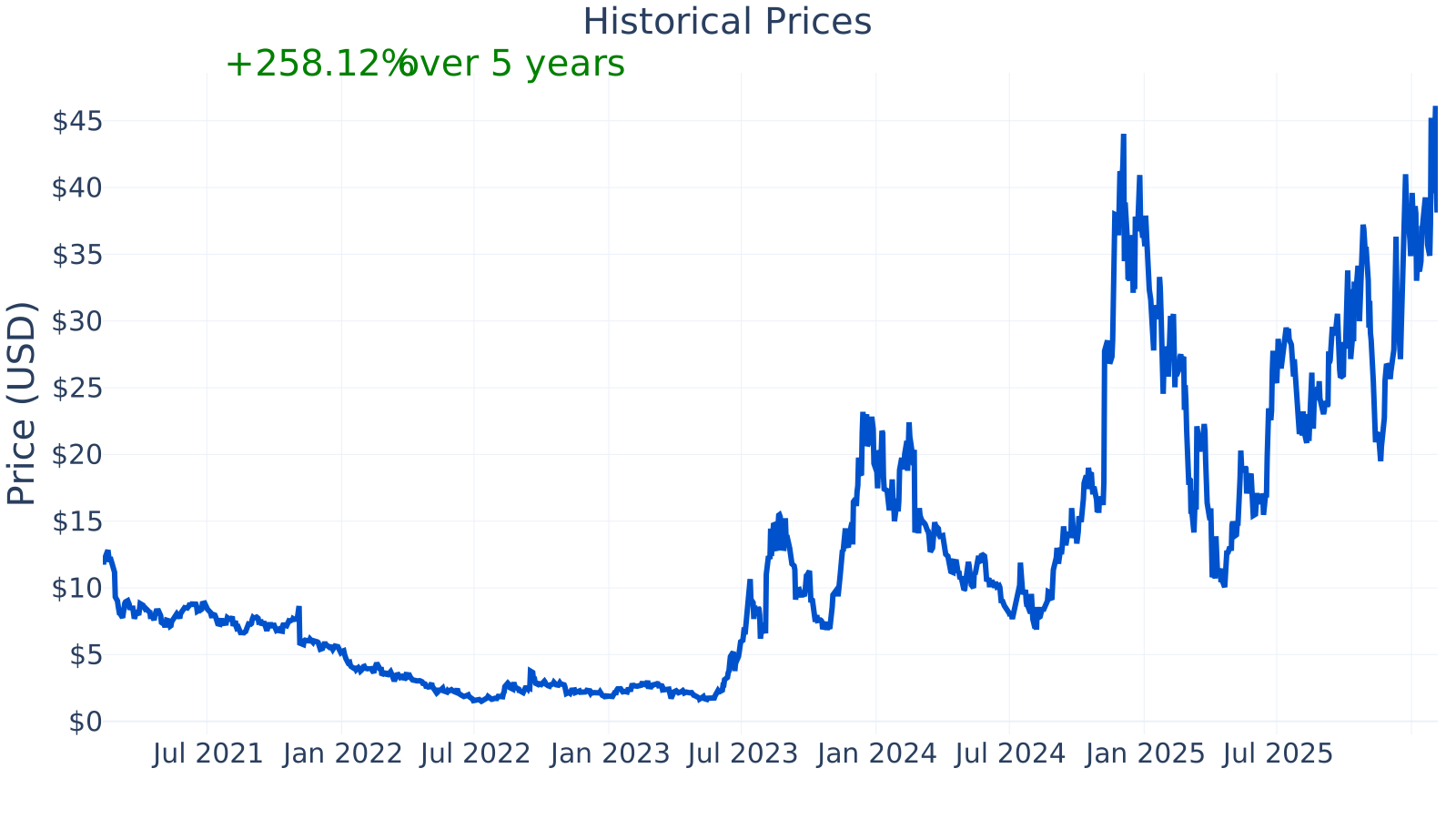
Applied Opt’s market capitalization is about $3.0B. The stock has shown high historical volatility (beta about 3.35), meaning its price has tended to move much more than the broader market. Profitability is currently a key weak point: the latest profit margin shown is about -37% versus an industry median near +4.7%. At the same time, recent year-over-year revenue growth is elevated at about +82% versus an industry median near +14%, showing strong top-line momentum. Leverage (debt-to-equity about 42%) is below the industry median (about 59%). Free cash flow over the trailing twelve months is negative (about -$302M), which implies the company has recently used more cash than it generated from operations and capital spending.
Growth (medium)
Applied Opt operates in fiber-optic connectivity, which is supported by long-term demand drivers such as growth in cloud computing, higher data center network speeds, video and AI-related traffic, and continued upgrades in telecom infrastructure. These trends generally increase the need for faster optical links and higher-volume shipments of optical modules.
Revenue growth has been uneven over time, with several periods of decline or modest growth followed by a sharp acceleration more recently. The latest year-over-year growth rate shown (roughly +82%) stands out versus the company’s earlier quarters and the industry median, suggesting a meaningful upswing in demand and/or customer ramps. For long-term outcomes, an important question is whether that growth proves durable (multi-quarter and multi-customer) rather than tied to a single product cycle.
Even with improving revenue growth, free cash flow has remained negative across the time points shown and has recently become more negative. For a manufacturing-heavy hardware business, this can happen when the company is building inventory, investing in capacity/equipment, funding product development, or absorbing inefficiencies. Sustained negative free cash flow can matter because it may increase reliance on cash reserves or external financing if it does not improve over time.
Potential catalysts (described at a high level in company disclosures) often include: successful ramp of next-generation optical module products, expansion of customer adoption, and better manufacturing yields/cost structure that allow incremental revenue to flow through to operating profit rather than being absorbed by expenses.
Risks (high)
This article is for informational purposes only and does not constitute financial advice. Some content is AI-generated. See Disclaimer