Stock Analysis · Applied Materials Inc (AMAT)
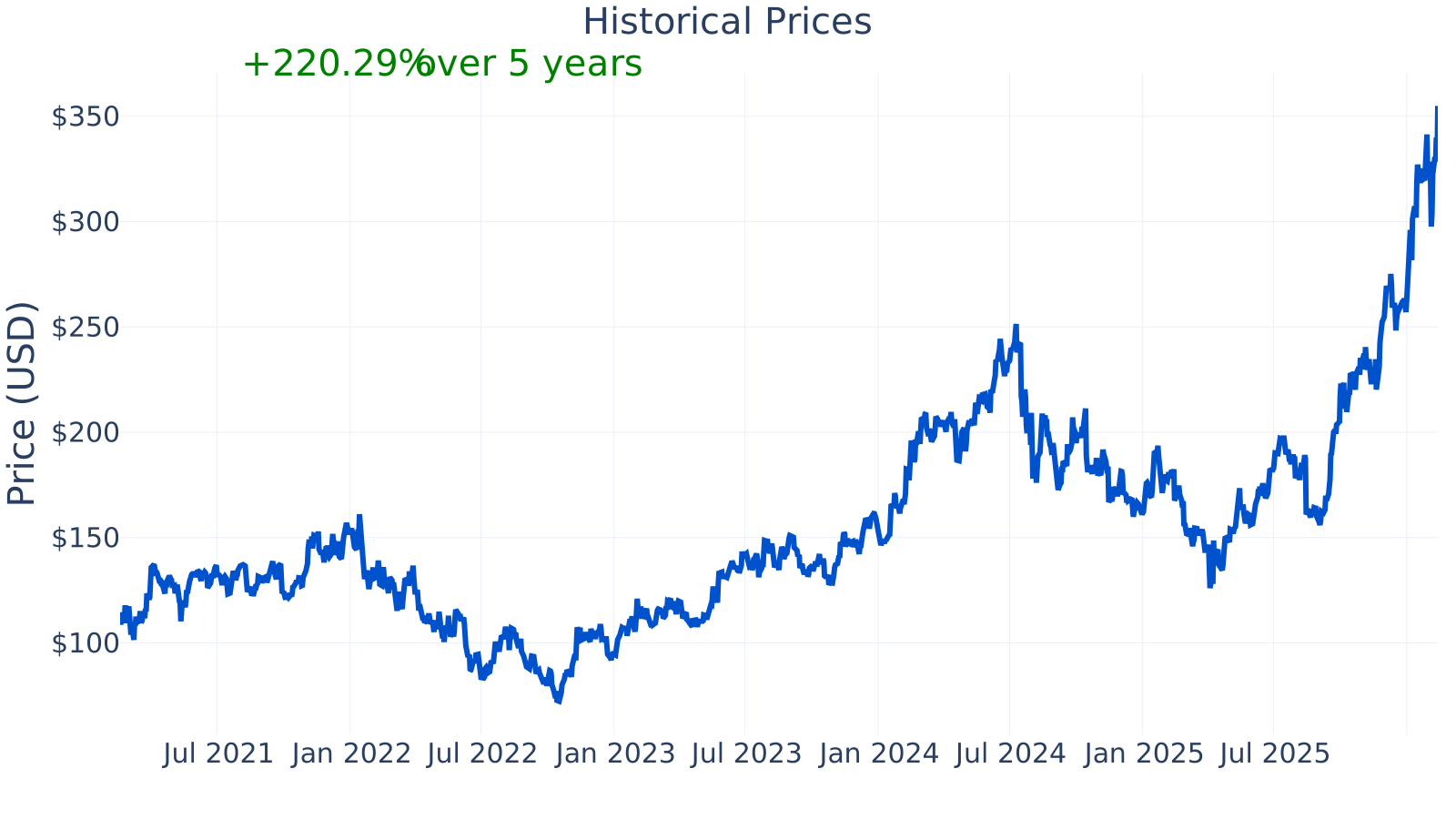
Overview
Applied Materials, Inc. (AMAT) designs and sells equipment, software, and services used to manufacture semiconductors (computer chips) and advanced displays. In simple terms, it provides many of the highly specialized machines and process steps that help turn raw materials into the tiny, complex structures inside chips and screens. Its customers are mainly large chip manufacturers and foundries around the world, along with display makers.
The company reports revenue primarily through these business segments (as described in its annual reporting):
- Semiconductor Systems: equipment used in chipmaking (the largest segment)
- Applied Global Services: services, spare parts, upgrades, and subscriptions that support installed tools
- Display: equipment used to manufacture display panels
For long-term context, this type of business tends to be linked to customers’ capital spending cycles: when chipmakers expand factories and add capacity, equipment demand rises; when they slow spending, equipment demand can soften.
Across recent fiscal years, revenue increased from about $23.1B (FY2021) to about $28.4B (FY2025), while net income remained sizable (roughly $5.9B–$7.2B in FY2021–FY2024, and about $7.0B in FY2025). Operating expenses also rose over time, including research and development spending, which reflects ongoing investment to keep tools competitive as chip technology advances.
Key Figures
| Metric | Value | Industry ⓘ |
|---|---|---|
| Date | Feb 16, 2026 | |
| Context | ||
| Sector | Technology | |
| Industry | Semiconductor Equipment & Materials | |
| Market Cap ⓘ | $281.70B | |
| Beta ⓘ | 1.68 | |
| Fundamental | ||
| P/E Ratio ⓘ | 36.36 | 48.26 |
| Profit Margin ⓘ | 27.78% | 8.62% |
| Revenue Growth ⓘ | -2.10% | 12.90% |
| Debt to Equity ⓘ | 30.17% | 20.73% |
| PEG ⓘ | 2.95 | |
| Free Cash Flow ⓘ | $5.70B | |
Applied Materials’ latest market capitalization is about $281.7B, and the stock’s beta of ~1.68 suggests it has historically moved more than the broader market (in both directions). Profitability stands out: the latest profit margin is ~27.8%, which is materially above the industry median (~8.6%) shown in the table. At the same time, the latest year-over-year revenue growth is about -2.1%, compared with a positive industry median (~12.9%), highlighting that growth can vary significantly by cycle and company mix.
Growth (Medium)
Applied Materials operates in the semiconductor equipment industry, which is closely tied to long-term computing demand. Over multi-year periods, chip content tends to rise across many areas—such as data centers, consumer devices, automotive electronics, industrial automation, and communications. However, the path is rarely smooth: the industry is known for alternating periods of heavy investment and digestion.
The year-over-year revenue growth pattern shown above illustrates this cyclicality: very strong growth in 2021 moderated over time, and more recently moved slightly negative. For a company like Applied Materials, growth is influenced not only by the total amount customers spend, but also by which chip technologies are being built (leading-edge logic, advanced memory, specialty chips) and how much process complexity increases (more steps can mean more equipment demand per wafer).
Free cash flow (cash generated after operating needs and capital spending) has remained substantial over the periods shown—about $5.99B (2022), $4.08B (2023), $7.71B (2024), and $5.94B (2025). Consistent free cash flow can matter in this industry because it can help fund research, support manufacturing and supply chain needs, and provide flexibility during downturns.
Potential catalysts that can influence longer-term results include continued technology transitions that increase manufacturing complexity (which can raise equipment intensity per chip), customer investment in new fabs, and expansion of service and installed-base support revenue (which can be less cyclical than new tool sales). The company’s strategy—combining new equipment with services and upgrades over time—fits the reality that semiconductor tools remain in factories for many years and require ongoing optimization.
Risks (High)
This article is for informational purposes only and does not constitute financial advice. Some content is AI-generated. See Disclaimer


