Stock Analysis · Applied Digital Corporation (APLD)
Overview
Applied Digital Corporation (APLD) is a technology company focused on building and operating large-scale digital infrastructure. In plain terms, it develops facilities designed to house high-density computing equipment and deliver the power and cooling those systems need. This type of infrastructure is often used for workloads that require significant electricity and specialized data-center design.
Based on the company’s public filings, revenue is primarily generated from infrastructure-related services tied to operating these facilities (for example, providing space/power and related hosting services). The exact mix can change over time as new capacity comes online and as customer demand shifts.
When revenue breakdown percentages are disclosed in filings, they typically appear under segment reporting and/or revenue disaggregation notes. (Those details can be checked in the most recent annual report and quarterly filings.)
Over the last several fiscal years shown, total revenue expanded significantly (from about $8.5M in FY2022 to about $215.5M in FY2025). At the same time, operating costs and overhead rose as the business scaled, and interest expense became a meaningful line item—consistent with a capital-intensive buildout phase.
Key Figures
| Metric | Value | Industry ⓘ |
|---|---|---|
| Date | Feb 07, 2026 | |
| Context | ||
| Sector | Technology | |
| Industry | Information Technology Services | |
| Market Cap ⓘ | $9.77B | |
| Beta ⓘ | 7.18 | |
| Fundamental | ||
| P/E Ratio ⓘ | N/A | 21.13 |
| Profit Margin ⓘ | -47.35% | 4.91% |
| Revenue Growth ⓘ | 250.10% | 6.15% |
| Debt to Equity ⓘ | 179.95% | 54.49% |
| PEG ⓘ | N/A | |
| Free Cash Flow ⓘ | -$1.34B | |
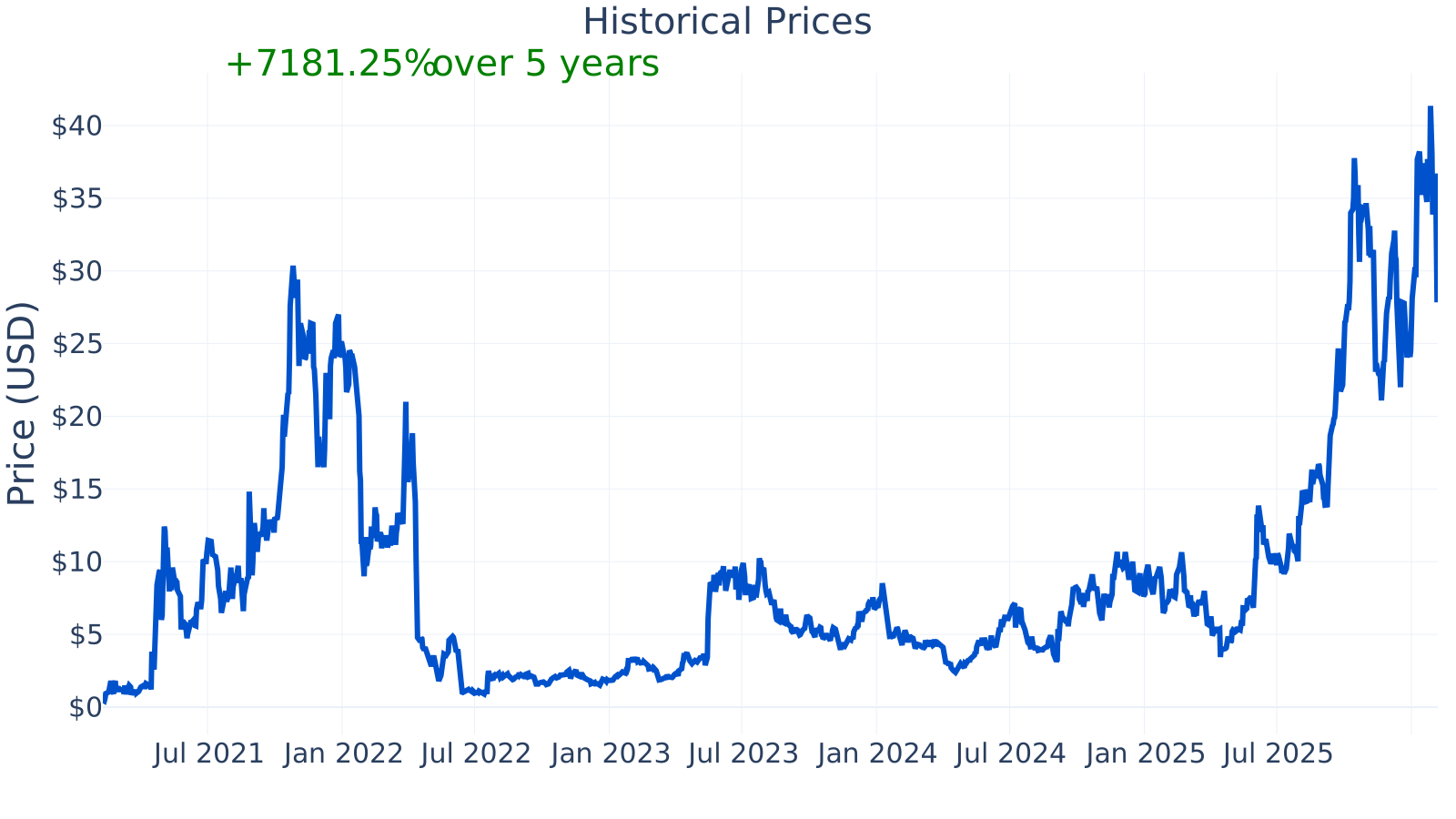
APLD’s market capitalization is about $9.8B. The stock’s beta (~7.18) indicates historically large price swings versus the broader market, which is consistent with the sizable moves visible in the price history since 2021.
The company’s profit margin is negative (about -47%) versus an industry median near +4.9%, highlighting that the business has not yet reached steady profitability. Meanwhile, year-over-year revenue growth is very high (about +250%) versus an industry median near +6%, reflecting rapid scaling from a smaller base.
Leverage is also elevated: debt-to-equity is about 180% compared with an industry median around 54%. In addition, free cash flow (TTM) is negative (~-$1.34B), which suggests substantial cash spending (often linked to expansion and/or working capital needs) relative to cash generated from operations.
Growth (High)
The broader market for high-density computing infrastructure has been expanding, driven by rising demand for energy-intensive computing and the need for specialized facilities. In that context, APLD’s strategy—developing purpose-built infrastructure and scaling capacity—fits a growth-oriented industry narrative. The company’s reported revenue trajectory over recent fiscal years is consistent with ramping new capacity and monetizing it.
Year-over-year revenue growth has been extremely high in multiple periods, although it also appears volatile (including periods of much lower growth). This pattern can occur when a company is transitioning between phases of new capacity coming online, customer ramp schedules, and changes in contract structure or utilization.
Free cash flow has been negative and has worsened materially in the most recent period shown (moving from tens of millions negative to hundreds of millions negative). For a long-build infrastructure model, negative free cash flow can be part of an expansion phase, but it also means the business may rely on financing (debt and/or equity) until cash generation improves.
Potential catalysts typically come from items such as additional capacity becoming operational, improved utilization of existing facilities, securing long-duration customer agreements, and demonstrating a path to stronger operating margins as scale increases. These are the types of operational milestones that can change how the business is perceived over time, but they are also execution-dependent.
Risks (Very High)
This article is for informational purposes only and does not constitute financial advice. Some content is AI-generated. See Disclaimer