Stock Analysis · Apple Inc (AAPL)
Overview
Apple Inc. is a global technology company best known for the iPhone, but its business is broader than smartphones. Apple designs and sells consumer devices (iPhone, Mac, iPad, and wearables like Apple Watch and AirPods) and complements them with a growing set of digital services. The company’s approach centers on combining hardware, software, and services into an integrated ecosystem that aims to keep devices and subscriptions working smoothly together.
In Apple’s reporting, revenue is primarily split between products (devices and accessories) and services (digital content, subscriptions, cloud, advertising, licensing, and payment-related offerings). The company’s largest product line has historically been iPhone, while services has been positioned as a key long-term growth area due to recurring revenue characteristics. Apple also sells through a mix of its own retail and online stores, carriers, resellers, and enterprise/education channels.
Main revenue categories (as disclosed in Apple’s annual reporting) are:
- iPhone
- Services
- Mac
- Wearables, Home and Accessories
- iPad
The company’s financial profile, shown below, reflects how revenue is translated into costs, operating expenses (including research and development), and profit over time.
Across the years shown, total revenue stays very large (roughly in the $380B–$416B range), while research and development spending rises steadily (from about $21.9B in 2021 to about $34.6B in 2025). Net income varies by year, reaching about $112.0B in 2025 in the figures shown.
Key Figures
| Metric | Value | Industry ⓘ |
|---|---|---|
| Date | Feb 08, 2026 | |
| Context | ||
| Sector | Technology | |
| Industry | Consumer Electronics | |
| Market Cap ⓘ | $4.09T | |
| Beta ⓘ | 1.11 | |
| Fundamental | ||
| P/E Ratio ⓘ | 35.21 | |
| Profit Margin ⓘ | 27.04% | |
| Revenue Growth ⓘ | 15.70% | |
| Debt to Equity ⓘ | 102.63% | |
| PEG ⓘ | 2.53 | |
| Free Cash Flow ⓘ | $123.32B | |
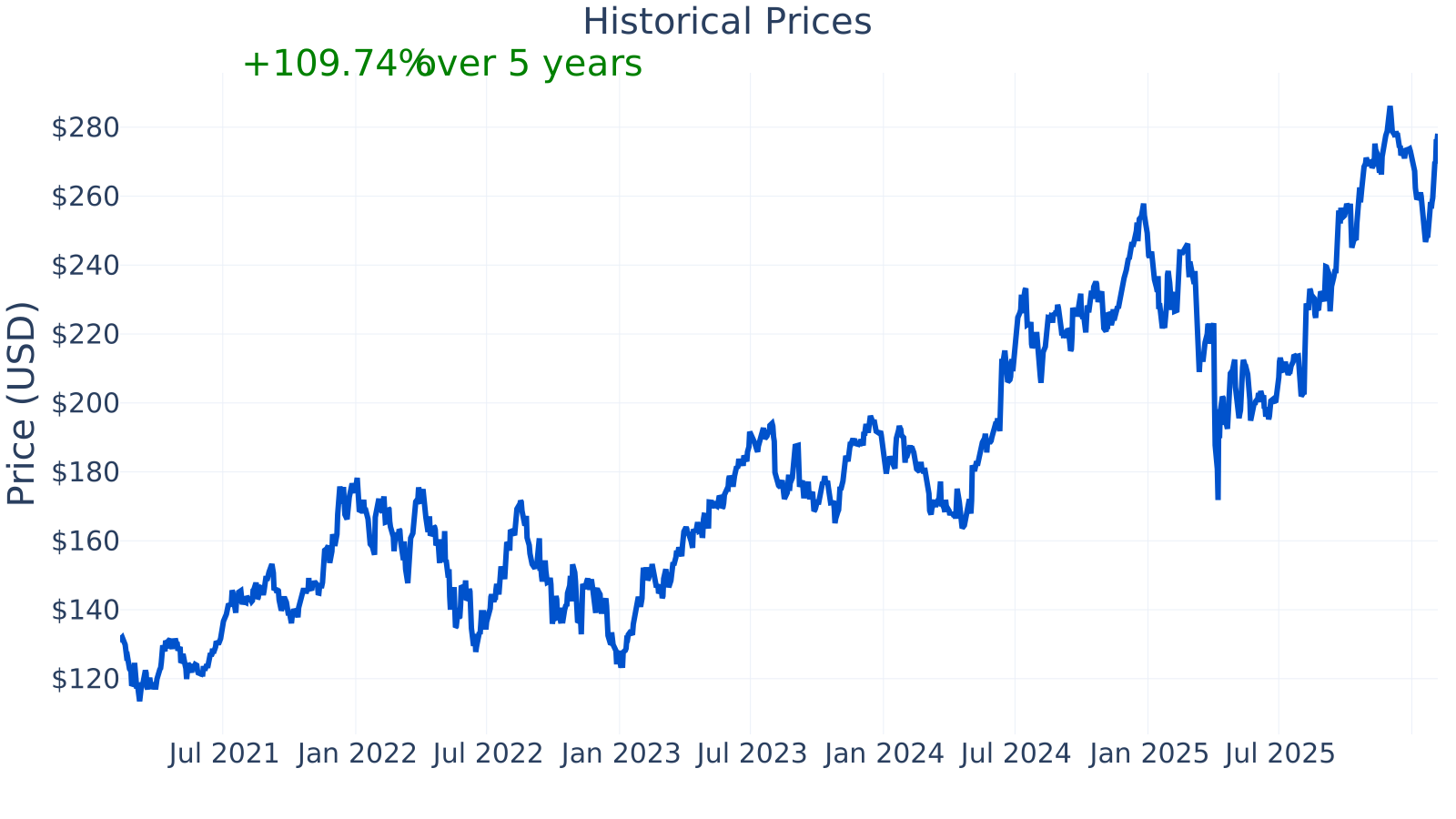
Apple’s market capitalization is about $4.09 trillion, reflecting its scale. The stock’s beta of ~1.11 suggests price movements have been slightly more volatile than the broader market on average. Current profitability is strong with a ~27.0% profit margin. The latest year-over-year revenue growth shown is ~15.7%. Leverage is meaningful with debt-to-equity of ~102.6%. The trailing free cash flow displayed is about $123.3B, and valuation metrics include a P/E of ~35.2 and a PEG of ~2.53.
Growth (Medium)
Apple operates in large, mature markets—smartphones, personal computing, and consumer electronics—where unit growth can be cyclical. In that context, Apple’s long-term growth strategy has leaned on (1) expanding its installed base of active devices, (2) increasing monetization through services tied to that device base, and (3) continuing to introduce new hardware features and product categories over time.
A practical way to view Apple’s growth is that product cycles can drive spikes and slowdowns, while services tends to be steadier because it is tied to ongoing usage and subscriptions. This mix can help balance periods when device upgrades slow. Apple’s scale and brand can also support premium pricing, which may matter as the consumer electronics industry remains highly competitive.
The year-over-year revenue growth shown is volatile: very high growth in 2021, a slowdown through 2022, several quarters of modestly negative growth during parts of 2023–early 2024, and then an improvement into positive territory in 2024–2025, reaching ~15.7% in the latest period displayed. This pattern is consistent with a business influenced by product timing, macro conditions, and comparison periods.
Free cash flow remains very large across the periods shown—roughly $90.5B (2021), $105.8B (2022), $97.5B (2023), $101.9B (2024), and $98.5B (2025) in the charted points—while the latest metric table shows $123.3B on a trailing basis. For long-term business durability, consistently high cash generation can matter because it helps fund research and development, capital returns, and strategic investments.
Risks (Medium)
This article is for informational purposes only and does not constitute financial advice. Some content is AI-generated. See Disclaimer