Stock Analysis · Appian Corp (APPN)
Overview
Appian Corp is a software company that helps organizations design, automate, and improve business processes. In simple terms, it provides a platform that lets companies build internal applications and workflows (for example: onboarding, claims processing, case management, approvals, and other “paperwork-heavy” operations) with an emphasis on speed and flexibility.
Appian generally sells its platform as a subscription (software delivered over the cloud) and also provides professional services to help customers implement and customize solutions. This mix is common in enterprise software: subscriptions aim to be recurring, while services can support adoption but tend to be lower-margin.
Main revenue sources (largest to smallest) are typically described in company filings as:
- Subscription revenue (recurring platform access; often the majority for software companies like Appian)
- Professional services revenue (implementation, training, and support services)
From a longer-term view, a key business question is whether subscription revenue keeps expanding faster than services, since recurring software revenue is usually more scalable.
Across 2021–2024, total revenue increased (about $369M to $617M), while operating losses narrowed (about -$87M to -$68M). Over the same span, gross profit rose (about $265M to $467M), indicating that the core product economics expanded with scale, even though operating expenses (notably R&D and sales/administration) remained substantial.
Key Figures
| Metric | Value | Industry ⓘ |
|---|---|---|
| Date | Feb 16, 2026 | |
| Context | ||
| Sector | Technology | |
| Industry | Software - Infrastructure | |
| Market Cap ⓘ | $1.69B | |
| Beta ⓘ | 0.93 | |
| Fundamental | ||
| P/E Ratio ⓘ | N/A | 25.13 |
| Profit Margin ⓘ | -1.06% | 6.91% |
| Revenue Growth ⓘ | 21.40% | 15.25% |
| Debt to Equity ⓘ | -631.60% | 19.82% |
| PEG ⓘ | N/A | |
| Free Cash Flow ⓘ | $72.65M | |
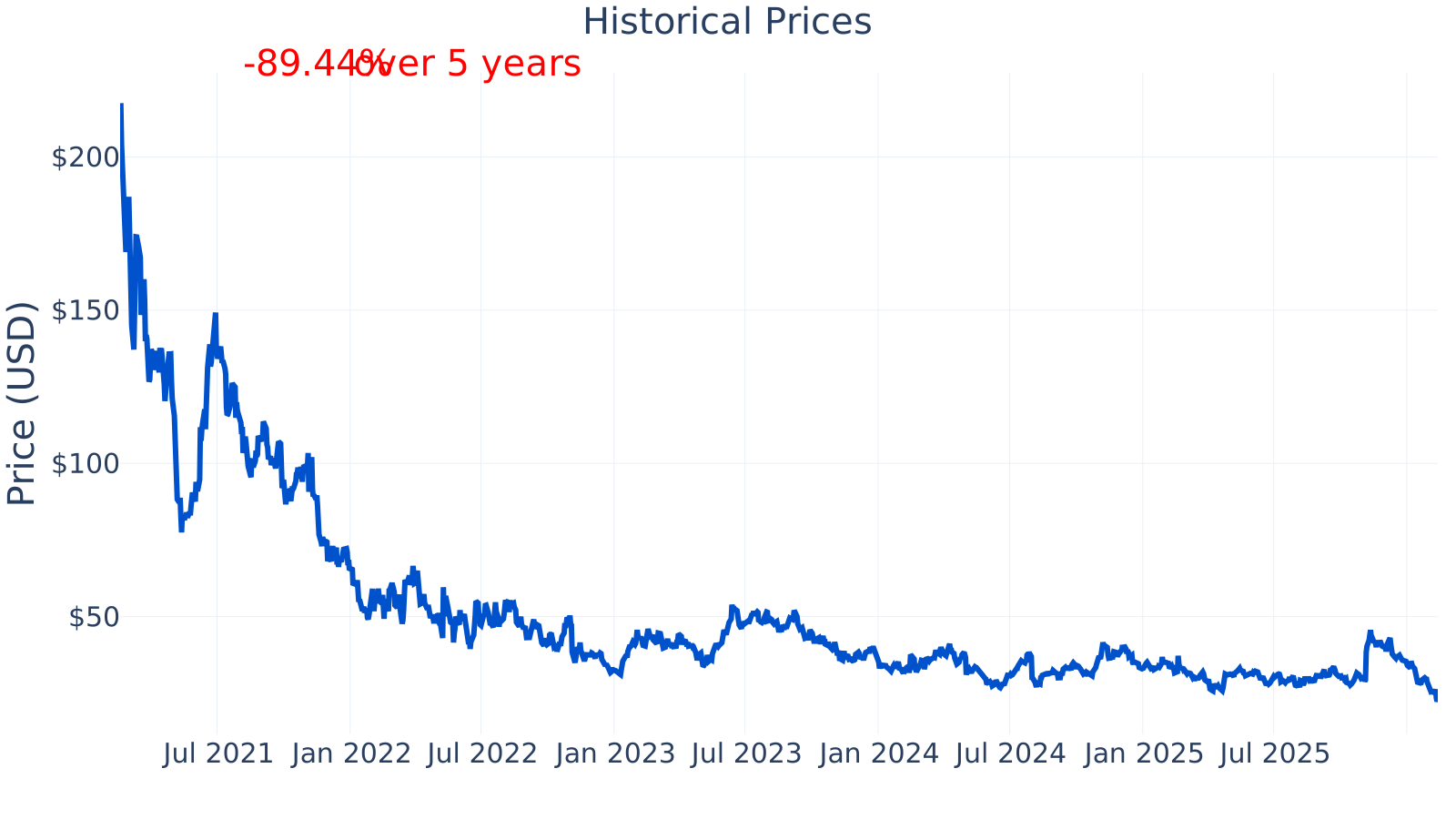
Appian’s market capitalization is about $1.69B and its beta is about 0.93, which suggests its shares have historically moved somewhat similarly to the broader market rather than being extremely volatile. Recent year-over-year revenue growth is ~21.4%, above the industry median (~15.3%), while the profit margin is slightly negative (~-1.1%) versus a positive industry median (~6.9%). Free cash flow over the trailing twelve months is shown as ~$72.6M, which can matter because cash generation can help fund operations without relying as much on external financing.
Growth (Medium)
Appian operates in enterprise software focused on process automation and application development. This area is supported by long-running business needs: organizations want to digitize manual work, reduce cycle times, and improve compliance and reporting. These needs exist across many industries (government, financial services, healthcare, and large enterprises), which can broaden the addressable market.
Strategy-wise, Appian’s model centers on expanding usage within existing customers (more applications and workflows built on the platform) and adding new customers that want to standardize process automation. For long-term growth, a common indicator to watch is whether subscription revenue expands steadily while customer retention remains strong (these details are typically discussed in the company’s filings).
Revenue growth has remained positive over the period shown, with a noticeable slowdown from the higher levels in 2021–2022 (often above 25–30%) to mid-teens levels through much of 2023–2024, followed by a re-acceleration in the most recent quarter displayed (about 21%). Sustaining growth above the industry median can be meaningful, but the direction over multiple quarters is important because enterprise software demand can fluctuate with IT budgets.
Free cash flow improved materially over time, moving from negative levels in 2021–2024 to positive in 2025 (about +$30.7M at the point shown, with the latest table showing ~$72.6M on a trailing basis). If this improvement proves durable, it can reduce financing pressure and support continued product investment.
Risks (High)
This article is for informational purposes only and does not constitute financial advice. Some content is AI-generated. See Disclaimer