Stock Analysis · Analog Devices Inc (ADI)
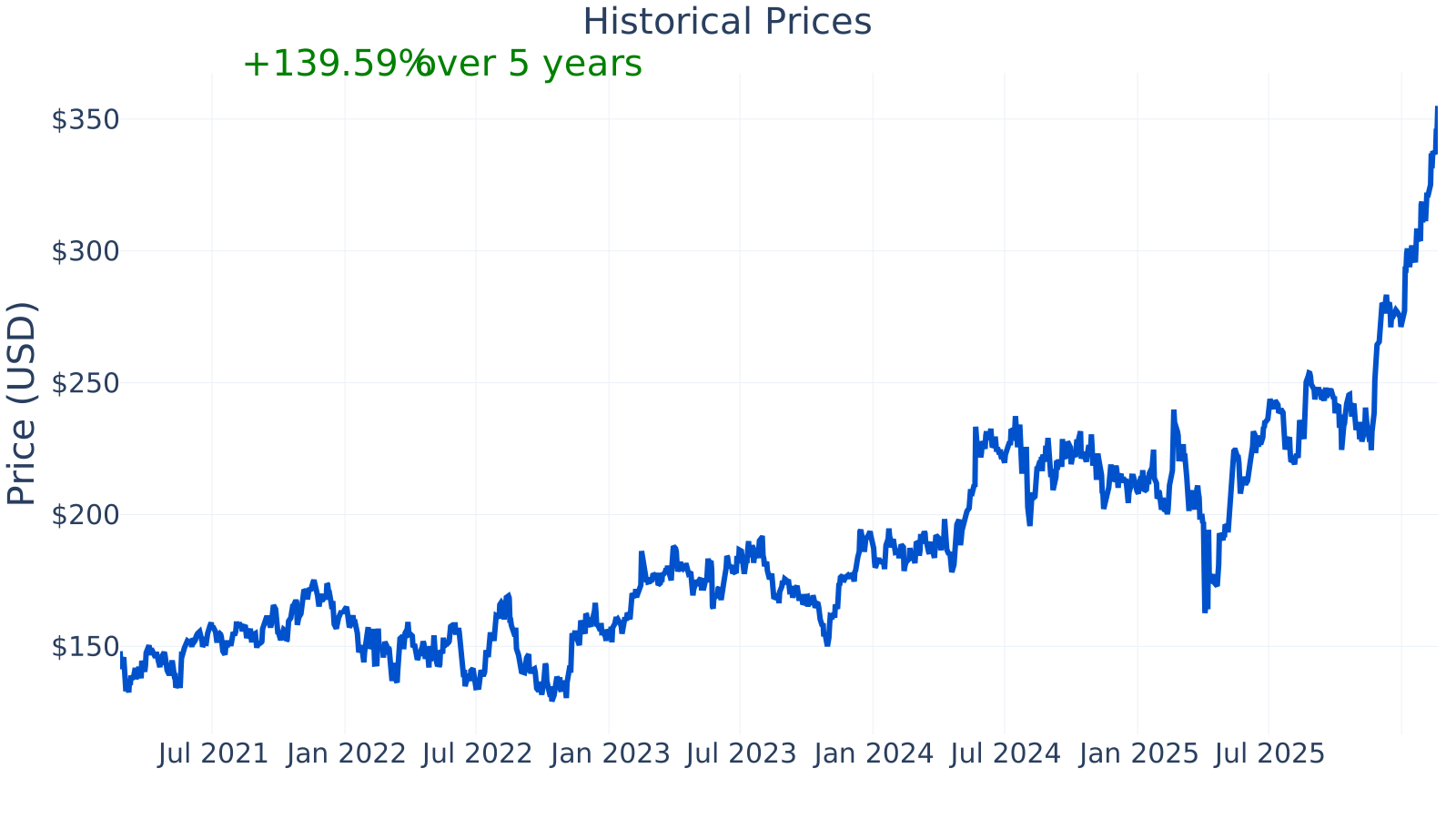
Overview
Analog Devices, Inc. (ADI) designs and sells “analog” and mixed-signal semiconductors—chips that help translate real-world signals (sound, temperature, pressure, movement, electricity) into digital data that computers can process, and then back again. In simple terms, ADI’s products sit at the boundary between the physical world and computing, helping machines measure, control, and communicate accurately and reliably.
ADI primarily sells into industrial and automotive applications, with additional exposure to communications and consumer markets. The company focuses on long product life cycles and high-reliability use cases (for example, factory equipment and vehicles), where customers value performance, durability, and long-term supply.
ADI reports revenue by end market. Based on the company’s annual reporting, its main sources of revenue are typically:
- Industrial (largest contributor)
- Automotive
- Communications
- Consumer (smallest contributor)
The company’s cost structure reflects a business that invests heavily in research and development to maintain product performance and expand its portfolio, while also managing manufacturing through a mix of internal production and external foundry partners (as described in its filings).
Over the periods shown, revenue moved with the semiconductor cycle (a strong period in 2022–2023, a dip in 2024, then a rebound in 2025). Research and development spending remained a major, recurring cost each year, reflecting continued investment even as revenue fluctuated.
Key Figures
| Metric | Value | Industry ⓘ |
|---|---|---|
| Date | Feb 23, 2026 | |
| Context | ||
| Sector | Technology | |
| Industry | Semiconductors | |
| Market Cap ⓘ | $173.84B | |
| Beta ⓘ | 1.03 | |
| Fundamental | ||
| P/E Ratio ⓘ | 78.20 | 47.43 |
| Profit Margin ⓘ | 23.02% | 10.84% |
| Revenue Growth ⓘ | 30.40% | 15.50% |
| Debt to Equity ⓘ | 25.70% | 25.70% |
| PEG ⓘ | 0.82 | |
| Free Cash Flow ⓘ | $4.56B | |
Analog Devices’ market capitalization is about $173.8B and the stock’s beta is about 1.03, which is close to the broader market in terms of typical day-to-day volatility. The company’s profit margin is ~23.0%, which is higher than the semiconductor industry median shown (~10.8%), suggesting relatively strong profitability versus many peers. The latest year-over-year revenue growth is ~30.4%, above the industry median displayed (~15.5%), consistent with a rebound phase after a weaker period in prior quarters. Debt-to-equity is about 25.7%, matching the industry median in the table.
Growth (Medium)
ADI operates in semiconductors, a sector with long-term demand drivers such as industrial automation, electrification, advanced driver-assistance systems, and the continued build-out of connected infrastructure. Unlike some chip companies that depend heavily on short-lived consumer gadget cycles, ADI’s exposure to industrial and automotive markets often involves longer qualification processes and longer product lifetimes, which can support more durable customer relationships over time.
That said, the company’s results still tend to follow industry “up and down” cycles. A useful way to see this is by looking at revenue growth over time: after exceptionally strong year-over-year growth in 2021–2022, growth turned negative through much of 2023–2024 before recovering into positive territory again.
The return to positive growth in the most recent periods (reaching roughly 30% year over year in the latest point shown) can be consistent with a cyclical recovery—often driven by customers resuming purchases after working through inventories. Whether that growth persists depends on end-market demand, customer inventory levels, and ADI’s ability to maintain share in key applications.
Cash generation is another long-term indicator because it can fund dividends, share repurchases, and reinvestment. ADI’s trailing twelve-month free cash flow in the period shown rises to about $4.56B, after lower levels around 2024–2025.
In plain terms, the combination of recovery in growth and higher recent free cash flow suggests improving operating conditions compared with the weaker part of the cycle, while still reflecting a business exposed to demand swings.
Risks (Medium)
The largest risk factor for ADI is cyclical demand. Even with a focus on industrial and automotive markets, customers can reduce orders during slowdowns and can also go through periods of “inventory correction,” where they work down existing stock rather than buying new chips. This can cause revenue and profit to fluctuate meaningfully from year to year.
Competition is another central risk. ADI competes with large, well-resourced semiconductor companies across many product categories. Major competitors commonly referenced in the analog semiconductor space include Texas Instruments, NXP Semiconductors, Infineon Technologies, STMicroelectronics, ON Semiconductor, and Microchip Technology. ADI is widely regarded (including in its own disclosures about competitive dynamics) as one of the key scale players in high-performance analog and mixed-signal solutions, but it is not the only leader—many end markets have multiple strong suppliers, and design wins can be competitive.
ADI’s competitive advantages are generally associated with high-performance product design, broad product breadth, deep customer relationships, and the costs and risks customers face when changing a validated component in industrial or automotive systems. These factors can support pricing and retention, but they do not remove competitive pressure, especially in more price-sensitive parts of the market.
Balance-sheet leverage is moderate in the context of this industry. Debt-to-equity has generally been in the ~17%–26% range across the timeline shown, with the latest value around 25.7%. The industry median shown in the same view is lower in the most recent point (about 21.0%), meaning ADI is somewhat above that benchmark at the end of the period.
Profitability is a relative strength, but it also moves with the cycle. ADI’s profit margin declines during weaker demand periods and improves during stronger ones. Even with that variability, the company’s margins are often above the industry median in the timeline shown, and the latest point is around 23.0% versus an industry median near 10.8%.
Additional risks described in company filings typically include supply chain disruptions (including reliance on third-party manufacturing for portions of production), customer concentration in certain end markets, product quality requirements (especially in automotive), intellectual property protection, and geopolitical/export-control constraints affecting global semiconductor supply and demand.
Valuation
One simple way investors compare valuation across companies is the price-to-earnings (P/E) ratio. ADI’s latest P/E shown in the key metrics is about 78.2, above the semiconductor industry median displayed (about 47.4). Historically in the charted period, ADI’s P/E moved from the 20s–40s range earlier in the timeline to much higher levels in parts of 2024–2025, reflecting a combination of stock price movements and changes in reported earnings across the cycle.
A higher P/E can be consistent with expectations of stronger future earnings, structurally higher margins, or greater perceived stability. It can also occur when earnings are temporarily depressed (which can happen in cyclical industries), making the P/E look elevated even if the business later recovers. For ADI, interpreting today’s valuation often requires weighing (1) the company’s above-median margins and recent recovery in growth against (2) the reality that semiconductor demand can swing and profitability can change significantly across years.
The PEG ratio shown (about 0.82) is a valuation metric that adjusts for growth expectations, but it is sensitive to how growth is estimated and can change quickly in cyclical businesses. As a result, it is typically most useful when viewed alongside business cycle context rather than in isolation.
Conclusion
Analog Devices is a large semiconductor company focused on analog and mixed-signal chips that enable measurement, control, and connectivity in real-world systems. Its business is anchored in industrial and automotive markets that often have longer product cycles and demanding performance requirements.
The financial profile shown includes relatively strong profitability versus the industry median and a recent rebound in year-over-year revenue growth, alongside a history of cyclical swings. Leverage appears moderate, with debt-to-equity near the industry median in the latest snapshot, though slightly above the industry benchmark at the end of the timeline shown.
On valuation, the current P/E presented is higher than the industry median and higher than many points in the company’s own recent history, which places more importance on the company sustaining earnings strength through the cycle. Overall, the long-term picture combines durable end-market positioning and healthy margins with industry cyclicality and competitive intensity that can materially affect results from year to year.
Sources:
- SEC EDGAR — Analog Devices, Inc. Form 10-K (Annual Report)
- SEC EDGAR — Analog Devices, Inc. Form 10-Q (Quarterly Reports)
- Analog Devices Investor Relations — Annual Report materials and shareholder information
- Analog Devices Investor Relations — Earnings releases and prepared remarks (company-hosted)
- Wikipedia — “Analog Devices” (company overview and history)
This article is for informational purposes only and does not constitute financial advice. Some content is AI-generated. See Disclaimer


