Stock Analysis · Amplitude Inc (AMPL)
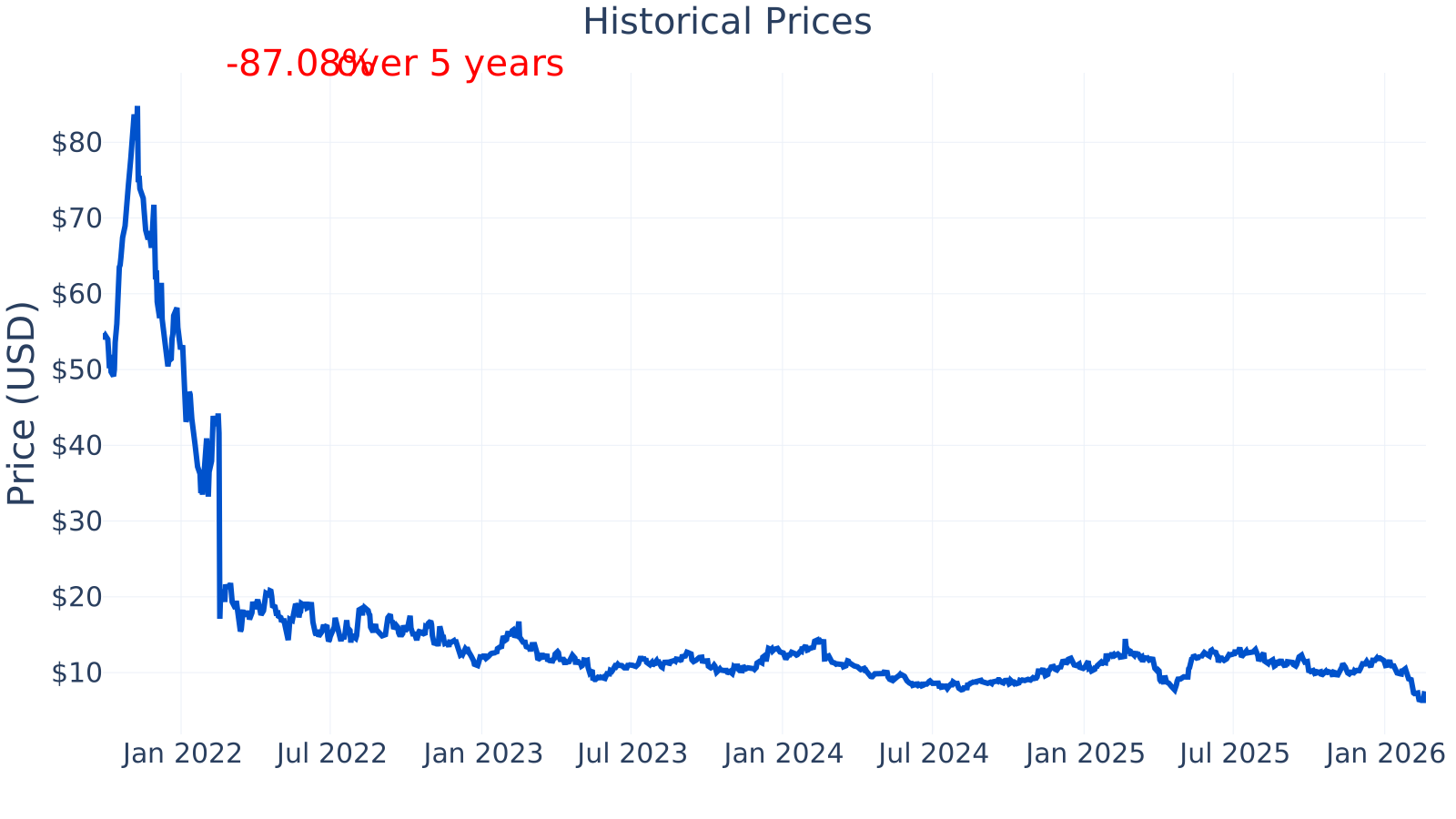
Overview
Amplitude Inc. (AMPL) is a software company that helps organizations understand how people use their digital products (websites and apps). Instead of focusing mainly on marketing spend, the platform is designed to show what users do inside a product—where they get stuck, what features they adopt, and what changes improve retention and engagement. This kind of “product analytics” is commonly used by software companies, e-commerce businesses, and any organization that operates digital experiences.
The company primarily earns revenue by selling subscriptions to its software platform (software-as-a-service). Customers typically pay recurring fees based on usage, features, or the size of the deployment, and the relationship tends to be ongoing as long as the customer continues to run and improve their product using the platform.
In its filings, Amplitude generally describes revenue as coming predominantly from subscription arrangements, with professional services (if offered) being a smaller component. A detailed percentage split is not always presented in a simple “by product line” format in every period, but the business model is centered on recurring subscription revenue.
Over the years shown, total revenue rises meaningfully (from about $167M in 2021 to about $343M in 2025), while operating losses remain sizable. Research and development and selling/general/administrative costs both represent major ongoing spending areas, which is typical for a software company investing in product capability and go-to-market.
Key Figures
| Metric | Value | Industry ⓘ |
|---|---|---|
| Date | Feb 23, 2026 | |
| Context | ||
| Sector | Technology | |
| Industry | Software - Application | |
| Market Cap ⓘ | $946.50M | |
| Beta ⓘ | 1.49 | |
| Fundamental | ||
| P/E Ratio ⓘ | N/A | 25.48 |
| Profit Margin ⓘ | -25.80% | 7.23% |
| Revenue Growth ⓘ | 17.00% | 15.70% |
| Debt to Equity ⓘ | 2.81% | 25.08% |
| PEG ⓘ | N/A | |
| Free Cash Flow ⓘ | $24.94M | |
Amplitude’s market capitalization is about $0.95B, placing it in the small-cap range. The stock’s beta of 1.49 indicates the share price has tended to move more than the overall market (higher volatility). Profitability remains a key gap: the profit margin is about -25.8%, compared with an industry median around +7.2%. On growth, the most recent year-over-year revenue growth shown is about 17.0%, slightly above the industry median near 15.7%. Leverage appears low: debt-to-equity is about 2.8%, far below the industry median around 25.1%. Free cash flow over the trailing twelve months is positive (about $24.9M), which can matter because it suggests the company’s operations can generate cash even while accounting earnings remain negative.
Growth (Medium)
Amplitude operates in the broader application software market and more specifically in product analytics and digital optimization. The long-term backdrop for this category is supported by ongoing shifts toward digital customer experiences, mobile usage, and subscription software business models—trends that generally increase the importance of measuring and improving product engagement.
That said, the company’s recent growth profile shows a clear slowdown compared with earlier periods. The year-over-year revenue growth rate declines from very high levels in 2021–2022 to single digits in parts of 2024, and then re-accelerates into mid-to-high teens by late 2025.
A practical catalyst for long-term growth would typically be wider adoption inside existing customers (expanding use cases or seats), moving upmarket to larger organizations, and continued product innovation that makes the platform “stickier” in day-to-day workflows. Another supportive element is the shift in free cash flow from negative to positive across the periods shown, which may improve the company’s ability to fund growth without relying as much on external financing.
Risks (High)
The biggest fundamental risk is profitability. Even as revenue increases over time, net losses remain large in the multi-year view, and profit margins are materially below the typical company in its industry group. This means the long-term outcome depends heavily on whether the company can grow efficiently and control operating costs while maintaining customer demand.
Competitive risk is also meaningful. Product analytics overlaps with broader analytics, customer data, and digital experience tooling. Some competitors offer adjacent functionality within larger platforms, which can make “platform bundling” a challenge for smaller standalone vendors. Amplitude’s competitive advantages are typically framed around specialization in product analytics, ease of use for product teams, and a platform designed for experimentation and behavioral insights; however, the category includes many capable alternatives and switching costs can vary by customer depending on implementation depth.
Financial risk from debt appears relatively limited based on the low debt-to-equity ratio, which is well below the industry median across the periods shown. Lower leverage can reduce the chance that interest costs or refinancing needs become a dominant problem during downturns.
Additional risks commonly discussed for software companies of this type include customer spending pressure during weak economic cycles, the need to keep pace with fast-moving data and privacy expectations, and the possibility that usage-based pricing structures can introduce variability if customers reduce product usage.
Valuation
Traditional P/E ratio comparisons are not very informative here because Amplitude has negative earnings (which often results in a non-meaningful or unavailable P/E). In the chart, the company P/E is not displayed (shown as 0.0), while the industry median P/E is shown as positive and variable over time.
In practice, valuation discussions for companies with negative earnings typically lean more on revenue-based measures, cash flow trends, and the path toward sustained profitability. With a market capitalization around $0.95B and continuing net losses alongside positive trailing free cash flow, the market’s pricing often reflects a mix of (1) expectations for continued growth and (2) expectations that operating margins improve over time. If revenue growth weakens again or costs remain elevated, valuation can be pressured even without high financial leverage.
Conclusion
Amplitude is a subscription software company focused on helping organizations understand and improve digital product experiences. Over the multi-year view shown, revenue has grown substantially, leverage is low, and free cash flow has turned positive. At the same time, profitability remains a central issue: operating losses persist and profit margins are significantly below the industry median, implying that the long-term narrative depends on sustained growth plus meaningful operating efficiency improvements.
For a long-term, fundamentals-focused view, the most important items to track over time are whether revenue growth holds up, whether operating losses narrow in a durable way, and whether positive free cash flow can be maintained while the company continues investing in its platform and customer acquisition.
Sources:
- SEC EDGAR — Amplitude, Inc. filings (Form 10-K, Form 10-Q)
- Amplitude, Inc. — Investor Relations materials and shareholder communications (company-published)
- Wikipedia — “Amplitude (company)” (basic company background)
This article is for informational purposes only and does not constitute financial advice. Some content is AI-generated. See Disclaimer


