Stock Analysis · American Eagle Outfitters Inc (AEO)
Overview
American Eagle Outfitters, Inc. (AEO) is an apparel retailer focused on casual clothing and accessories. The company operates primarily through two well-known brands: American Eagle (core apparel for teens and young adults) and Aerie (intimates, activewear, and related categories). Products are sold through a mix of company-operated stores and digital channels (e-commerce and apps), with operations centered in the United States but with an international presence through various arrangements described in company filings.
From a business model perspective, AEO generates revenue by designing or sourcing merchandise, marketing it under its brands, and selling it at retail prices. Like most apparel retailers, profitability depends heavily on merchandise demand, inventory discipline (not overbuying), and limiting discounting while controlling freight, product costs, and store/fulfillment expenses.
Based on the company’s reporting structure in its filings, revenue is mainly driven by:
- American Eagle brand (apparel and accessories)
- Aerie brand (intimates, apparel, and active-related categories)
- Digital sales (reported as a channel and intertwined with the brands, rather than a separate “third business”)
The exact percentages by brand and channel can vary by year and are detailed in the company’s annual report and segment disclosures.
Over the last several fiscal years shown, total revenue increased overall (about $5.0B to $5.5B), but operating income and net income moved more sharply up and down. That pattern is common in apparel retail: small changes in gross margin (often influenced by promotions and product costs) and expense levels can have an outsized impact on profits.
Key Figures
| Metric | Value | Industry ⓘ |
|---|---|---|
| Date | Mar 09, 2026 | |
| Context | ||
| Sector | Consumer Cyclical | |
| Industry | Apparel Retail | |
| Market Cap ⓘ | $3.13B | |
| Beta ⓘ | 1.35 | |
| Fundamental | ||
| P/E Ratio ⓘ | 16.34 | 14.87 |
| Profit Margin ⓘ | 3.49% | 8.32% |
| Revenue Growth ⓘ | 9.70% | 8.90% |
| Debt to Equity ⓘ | 102.46% | 92.83% |
| PEG ⓘ | 3.34 | |
| Free Cash Flow ⓘ | $25.30M | |
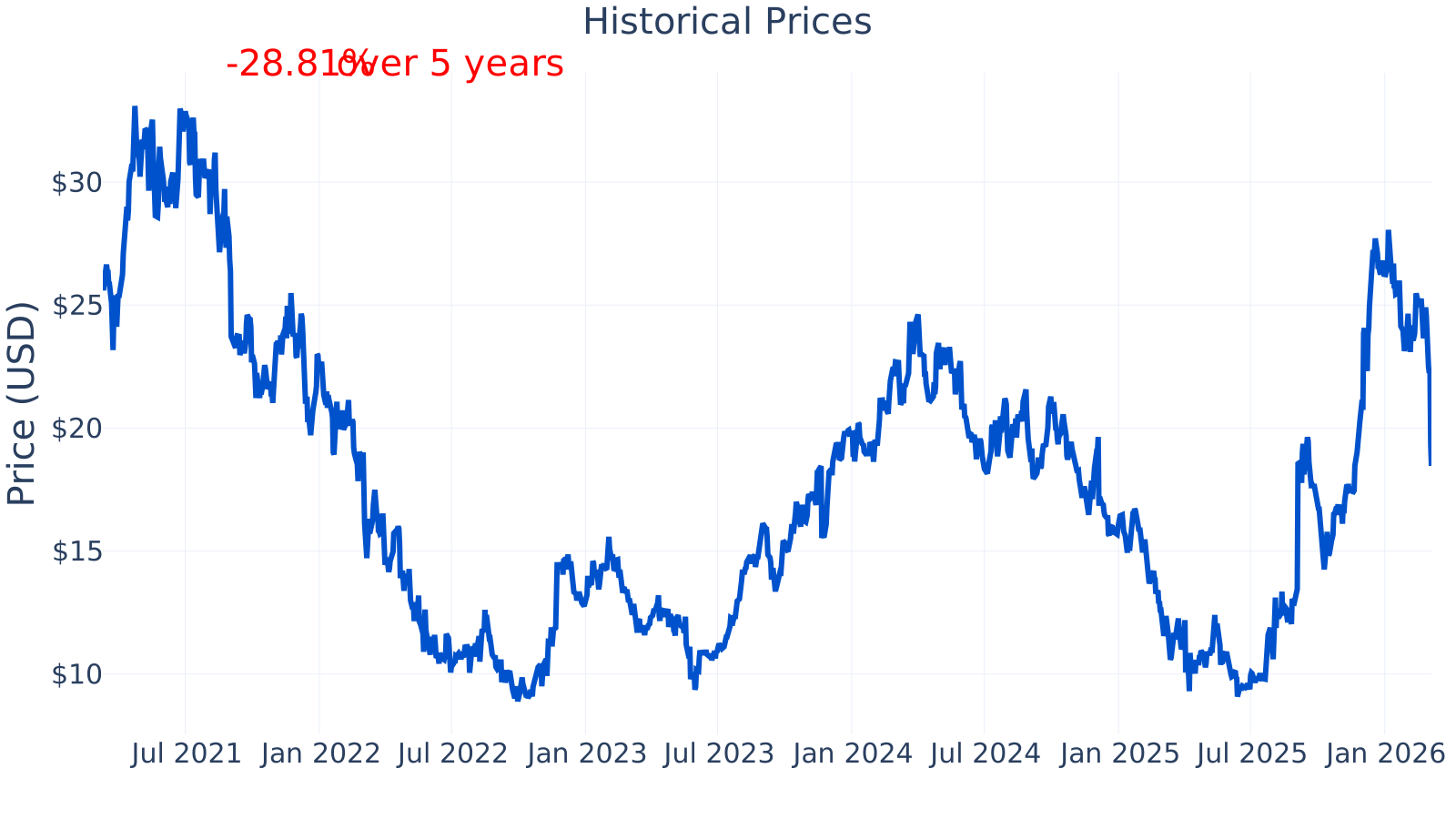
AEO’s market capitalization is about $3.1B. The stock’s beta of ~1.35 suggests it has tended to move more than the overall market, which is typical for consumer discretionary companies. The latest P/E ratio is ~16.3, slightly above the industry median shown (~14.9). Recent profit margin is ~3.5%, which is below the industry median shown (~8.3%), indicating that—at least in the most recent period—AEO converted a smaller share of sales into profit than many peers. Year-over-year revenue growth is about 9.7%, slightly above the industry median shown (~8.9%). Debt-to-equity is about 102%, modestly above the industry median shown (~93%). Trailing twelve-month free cash flow is about $25.3M, which is notably lower than the levels reached in some prior periods.
Growth (Medium)
AEO operates in apparel retail, a large but highly competitive industry that typically grows in line with consumer spending and population/income trends rather than delivering steady, high structural growth. Long-term growth tends to come from gaining market share, expanding a strong brand, improving product relevance, and executing well across stores and e-commerce.
The revenue growth trend shown is uneven: very strong growth in 2021 (helped by comparisons to weaker periods), followed by slower or negative growth in parts of 2022–2025, and then a re-acceleration to roughly 9.7% in the most recent point. For long-term analysis, the key takeaway is that growth appears cyclical rather than consistently compounding, so the company’s ability to manage inventory and keep brands relevant can matter as much as overall market conditions.
Free cash flow (cash left after operating needs and capital spending) increased substantially into early 2024 (peaking around $406M on the chart) but then declined sharply to about $25M most recently. In retail, swings like this can be driven by profitability changes and working-capital movements (especially inventory). For future growth, a major practical catalyst is often a return to more stable cash generation, because it can support reinvestment in stores and digital capabilities, balance-sheet flexibility, and shareholder distributions (where applicable and as disclosed by the company).
Strategically, AEO’s multi-brand approach (American Eagle and Aerie) and omnichannel model align with how consumers shop today. The durability of growth depends on whether the company can keep product assortments on-trend, maintain brand differentiation, and avoid margin erosion from heavy promotions.
Risks (High)
Apparel retail carries meaningful risks because demand can change quickly and shoppers are price-sensitive. AEO’s results can be affected by fashion misses, promotional pressure, and inventory missteps. In addition, costs such as labor, freight, and product input prices can pressure margins, especially when the company cannot fully pass costs through to consumers.
Debt-to-equity declined materially from 2021 levels (around 149%) to a low near early 2024 (around 68%), then moved back up to roughly 102% most recently—slightly above the peer median shown (~93%). This indicates leverage has fluctuated and is currently somewhat higher than the industry midpoint provided. Higher leverage can reduce flexibility during weaker demand periods, particularly if profits come under pressure.
Profit margin has also been volatile. It reached higher levels earlier in the period (for example, above 8% in early 2022 and around 6% in early 2025), but the latest value is about 3.5%, well below the peer median shown (~8.3%). Lower margins can result from increased discounting, higher costs, or deleverage on fixed expenses if sales soften—each of which can matter a lot in a business with significant operating costs.
Competition is intense. AEO competes with other mall-based and specialty apparel retailers, broadline retailers, and fast-fashion players, along with large sportswear and lifestyle brands selling direct-to-consumer. In this landscape, competitive advantages tend to be “soft” rather than structural: brand recognition, customer loyalty, strong merchandising, and a compelling value proposition. AEO is a recognized name in its categories, and Aerie is a differentiated concept within intimates/active; however, the company is not the dominant leader across the entire apparel retail market, and market share can shift quickly based on style and pricing.
Valuation
The chart shows AEO’s P/E ratio moving through a wide range over time, from single digits at some points (for example, around 6–10 during parts of 2022–mid 2025) to higher levels above 20 at other times. The latest P/E is about 16.3, which is modestly above the industry median shown (~14.9). In plain terms, the market is currently valuing AEO at a multiple that is near the peer group’s central tendency, not at an extreme premium or extreme discount based on this measure alone.
Whether that multiple looks demanding or conservative depends on durability of earnings and cash flow. Two context points from earlier sections matter here: (1) margins are currently below the peer median shown, and (2) trailing free cash flow has recently been much lower than it was at its peak. When profits and cash generation are more volatile, valuation can change quickly because the “E” in P/E (earnings) can rise or fall meaningfully from year to year.
Conclusion
American Eagle Outfitters is a well-established apparel retailer built around two major brands (American Eagle and Aerie) and a mix of stores and e-commerce. The business shows the typical strengths and challenges of apparel retail: it can grow when product and brand momentum are strong, but profitability and cash flow can swing due to promotions, inventory decisions, and shifting consumer demand.
Recent indicators are mixed. Revenue growth has improved to around 9.7% year over year, but profitability is currently thinner than the peer median shown, and trailing free cash flow is far below levels seen earlier in the period. Leverage has increased from its recent low and is now slightly above the peer median provided. On valuation, the current P/E is close to the industry midpoint, suggesting the market is not pricing the stock at an obvious extreme based on that single measure; the more important driver for long-term outcomes is whether the company can stabilize margins and cash generation across the cycle.
Sources:
- SEC EDGAR — American Eagle Outfitters, Inc. Form 10-K (Annual Report)
- SEC EDGAR — American Eagle Outfitters, Inc. Form 10-Q (Quarterly Reports)
- American Eagle Outfitters — Investor Relations (press releases and filings repository)
- Wikipedia — “American Eagle Outfitters” (general company background)
This article is for informational purposes only and does not constitute financial advice. Some content is AI-generated. See Disclaimer


