Stock Analysis · American Eagle Outfitters Inc (AEO)
Overview
American Eagle Outfitters Inc. (AEO) is an apparel retailer focused on casual clothing, accessories, and intimates. The company operates primarily through two brands: American Eagle (core denim and casual apparel) and Aerie (intimates, activewear, and loungewear). It sells products through a mix of physical stores and digital channels (e-commerce and mobile).
Revenue is mainly generated from selling merchandise directly to customers. Public filings typically describe performance through brand and channel mix; exact brand-level percentages can vary by period and are not always presented as fixed shares. In practical terms, the business is driven by these major revenue streams:
- American Eagle brand (apparel and accessories)
- Aerie brand (intimates/active, loungewear)
- Digital sales (online across both brands)
- Store sales (company-operated retail locations)
From an overall financial flow perspective, AEO’s results depend heavily on merchandise costs (product sourcing and inbound freight), then on operating expenses such as store labor, marketing, and corporate overhead.
Over the most recent four fiscal years shown, total revenue has been relatively stable to modestly higher (about $5.01B in FY2022 to $5.33B in FY2025), while profitability has fluctuated significantly. Net income dropped sharply in FY2023 (about $125M) compared with FY2022 (about $420M), then improved in FY2025 (about $329M). This pattern is consistent with an apparel retailer’s sensitivity to promotions, inventory levels, and cost pressures.
Key Figures
| Metric | Value | Industry ⓘ |
|---|---|---|
| Date | Feb 08, 2026 | |
| Context | ||
| Sector | Consumer Cyclical | |
| Industry | Apparel Retail | |
| Market Cap ⓘ | $4.03B | |
| Beta ⓘ | 1.38 | |
| Fundamental | ||
| P/E Ratio ⓘ | 21.03 | 17.99 |
| Profit Margin ⓘ | 3.90% | 8.42% |
| Revenue Growth ⓘ | 5.70% | 7.30% |
| Debt to Equity ⓘ | 121.28% | 104.73% |
| PEG ⓘ | 38.27 | |
| Free Cash Flow ⓘ | $289.51M | |
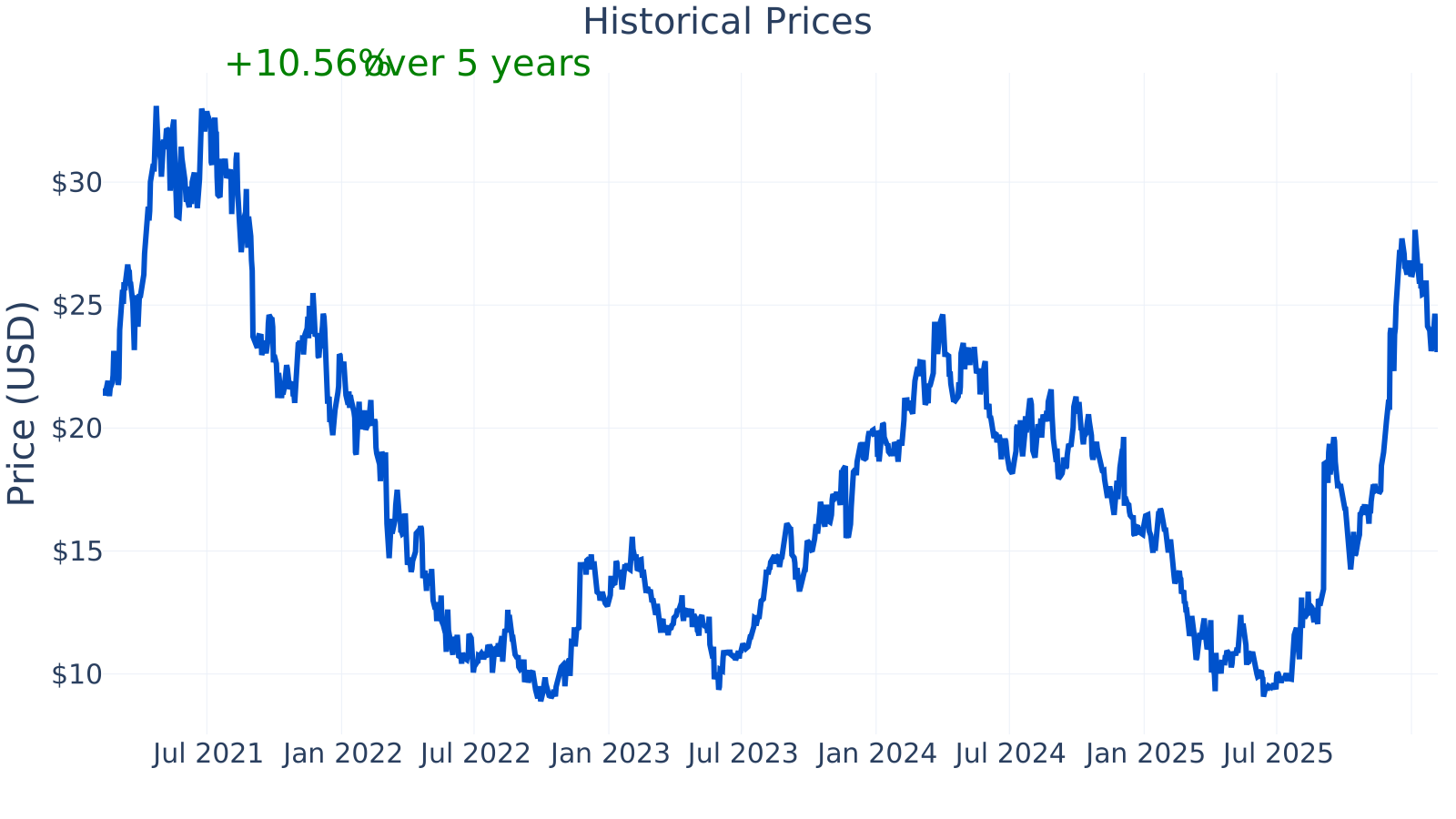
AEO’s market capitalization is about $4.0B, and the stock’s beta of 1.38 suggests it has historically moved more than the broader market (higher ups and downs). The latest P/E ratio is 21.0 versus an industry median near 18.0. Profitability is currently lower than the industry median, with a 3.9% profit margin versus an industry median near 8.4%. Recent year-over-year revenue growth is about 5.7% (industry median about 7.3%). Debt-to-equity is about 121% (industry median about 105%), and trailing twelve-month free cash flow is about $289.5M.
Growth (Medium)
AEO operates in apparel retail, a large but mature category where long-term growth is often driven less by overall industry expansion and more by brand relevance, product cycles, marketing effectiveness, and execution (inventory discipline and pricing). Digital commerce is an important structural trend for the sector, but it is also highly competitive and can increase price transparency and promotion intensity.
The company’s brand portfolio supports a clear growth logic: American Eagle targets broad casual demand (with denim as an important category), while Aerie participates in intimates and activewear—areas that have shown durable consumer interest over the last decade. For future growth, what tends to matter most is whether AEO can keep product assortments on-trend, maintain healthy inventory levels, and avoid margin erosion from excessive discounting.
Recent quarterly year-over-year revenue growth has been uneven, moving between modest positives and negatives over time, with the latest point at roughly +5.7%. That pattern highlights a business that can return to growth, but may not compound smoothly each year—often typical for fashion-driven retail.
Free cash flow expanded meaningfully from about $69.8M (FY2022) to about $406.3M (FY2024), then moderated to about $254.3M (FY2025). This suggests the company has demonstrated an ability to generate cash, but also that cash generation can swing with working capital needs (especially inventory) and profitability cycles. Potential catalysts over time usually include improved merchandise margins (less discounting), better inventory turns, and sustained brand momentum—particularly if one brand meaningfully outgrows the rest of the portfolio.
Risks (High)
This article is for informational purposes only and does not constitute financial advice. Some content is AI-generated. See Disclaimer


