Stock Analysis · American Axle & Manufacturing (AXL)
Overview
American Axle & Manufacturing Holdings, Inc. (AAM) is an automotive supplier that designs, engineers, and manufactures driveline and metal-forming technologies used in vehicles. In simple terms, it makes key parts that help transmit power from the engine or motor to the wheels (including axles and related systems), along with other precision components made through forging and machining processes. Its customers are primarily automakers (original equipment manufacturers, or OEMs), so its business activity is closely tied to how many vehicles those customers produce and which platforms AAM is selected to supply.
Revenue is primarily generated from supplying components and systems to OEMs under long-term supply arrangements. In its SEC reporting, AAM’s business is commonly discussed through major product/technology areas rather than consumer-facing brands. A simplified view of revenue drivers typically includes:
- Driveline systems and components (including axles and related driveline hardware for light trucks, SUVs, passenger cars, and some commercial applications)
- Metal forming and related components (forged and machined parts used across various vehicle systems)
- Electrification-focused content (e.g., components and systems designed for hybrid and electric vehicle architectures, where applicable)
Exact percentage splits can change over time and depend on how the company groups products in its filings; the most reliable breakdown is in the company’s latest Form 10-K/10-Q segment and customer disclosures.
Across the years shown, total revenue moved from about $5.16B (2021) up to $6.12B (2024) before declining to about $5.84B (2025). Costs to produce goods remained the largest expense line, and interest expense stayed sizable (roughly ~$175M–$202M per year), which helps explain why net income has been volatile even when operating income remained positive.
Key Figures
| Metric | Value | Industry ⓘ |
|---|---|---|
| Date | Feb 17, 2026 | |
| Context | ||
| Sector | Consumer Cyclical | |
| Industry | Auto Parts | |
| Market Cap ⓘ | $2.12B | |
| Beta ⓘ | 1.59 | |
| Fundamental | ||
| P/E Ratio ⓘ | 24.32 | 24.32 |
| Profit Margin ⓘ | 0.72% | 3.56% |
| Revenue Growth ⓘ | N/A | 4.95% |
| Debt to Equity ⓘ | 21.12% | 66.38% |
| PEG ⓘ | -1.17 | |
| Free Cash Flow ⓘ | $155.10M | |
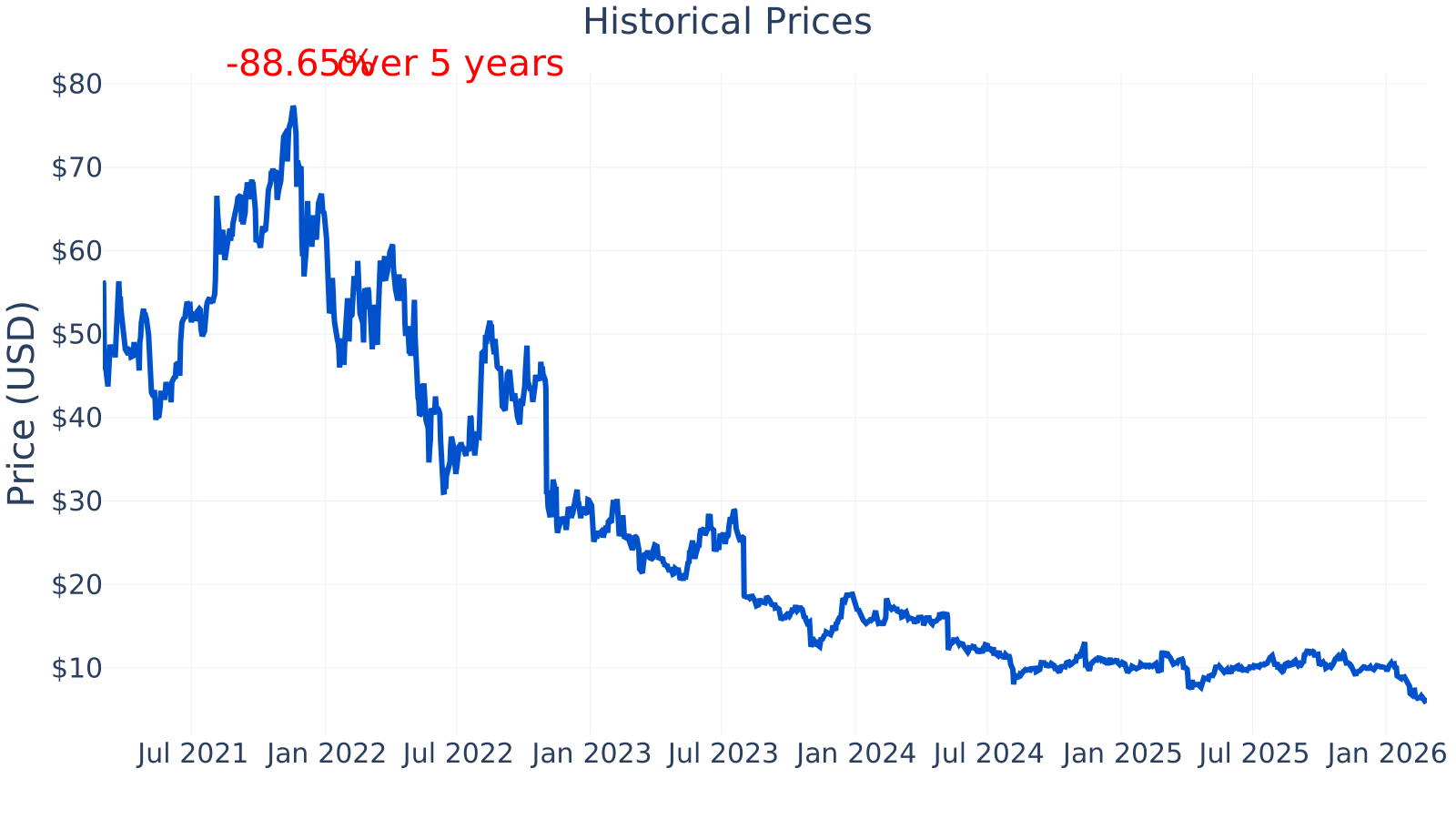
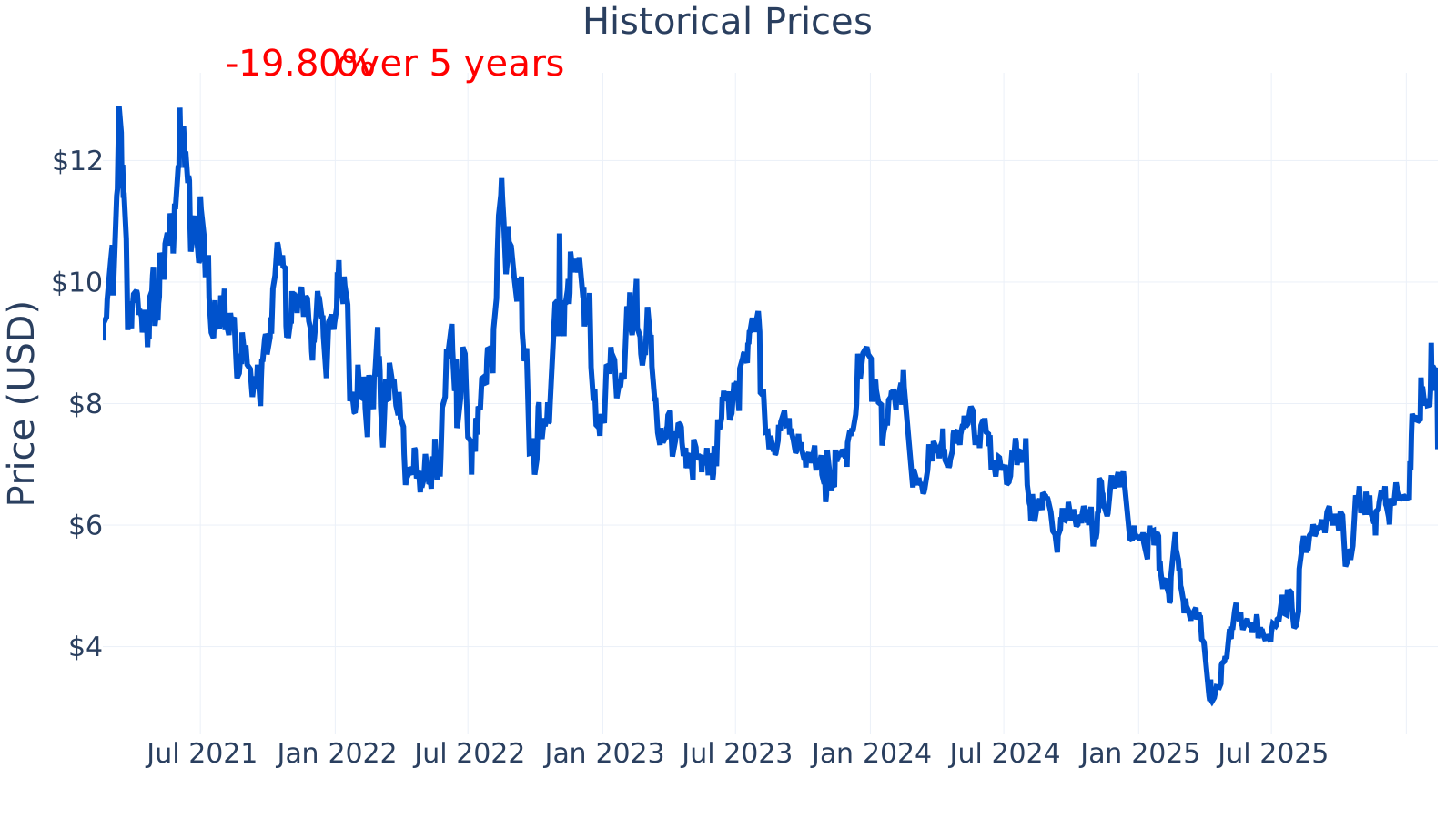
At the latest point shown, the company’s market capitalization is about $2.12B. The stock’s beta of 1.59 indicates it has historically moved more than the broader market (higher volatility). The P/E ratio is ~24.3, in line with the industry median shown. Profitability is relatively thin: the latest profit margin is ~0.72% versus an industry median around 3.57%. Year-over-year revenue growth is shown as 0% versus an industry median near 4.95%. On leverage, the latest debt-to-equity is ~21%, below the industry median (~66%). Trailing twelve-month free cash flow is about $155.1M.
Growth (medium)
The auto parts industry tends to grow with global vehicle production, model refresh cycles, and changes in vehicle technology. AAM’s end markets include light trucks and SUVs—categories that have been important in North America for many years—while longer-term growth opportunities depend on content per vehicle (how much AAM supplies per platform) and its ability to win programs in newer powertrain architectures.
Strategically, suppliers like AAM are positioned between two big forces: (1) automakers constantly working on cost, weight, and efficiency improvements for vehicles, and (2) the multi-year shift toward electrified powertrains. For a driveline-focused supplier, electrification can be both an opportunity (new product content on EV and hybrid platforms) and a challenge (some traditional drivetrain components may be reduced or redesigned). The long-term growth profile therefore depends less on overall car demand and more on AAM’s program wins, customer concentration, and how its product portfolio matches the direction of OEM platforms.
The revenue growth pattern shown is uneven. There were periods of solid growth (for example, several quarters in 2022 and early 2024 show positive year-over-year increases), followed by contraction through much of 2025 and then a return toward roughly flat growth by late 2025. This kind of variability is common for automotive suppliers because production schedules, pricing, and customer launch timing can move results quarter to quarter.
Free cash flow remained positive over the period shown but trended down from about $308.8M (2021) to $183.7M (2024), then improved to about $221.1M (2025) (with the latest metric table showing $155.1M on a trailing basis). For long-term business resilience, sustained positive free cash flow can matter because it is one way a company can fund investment needs, pay down obligations, and navigate industry downturns without relying as much on external financing.
Risks (high)
This article is for informational purposes only and does not constitute financial advice. Some content is AI-generated. See Disclaimer