Stock Analysis · Amazon.com Inc (AMZN)
Overview
Amazon.com Inc. is a global technology company best known for online retail, but it also operates a large cloud computing platform (Amazon Web Services, or AWS), a fast-growing advertising business, and a broad set of subscription and digital services. In simple terms, Amazon combines a shopping marketplace, a logistics network (warehouses and delivery), and technology infrastructure that supports both its own operations and millions of third-party businesses.
Amazon’s revenue is commonly discussed in a few major “buckets” (the company reports these categories in its annual filings). In recent years, the largest sources have typically been:
- Online stores (products sold directly by Amazon)
- Third-party seller services (fees for marketplace selling, fulfillment, and related services)
- AWS (cloud computing services such as computing power, storage, and databases)
- Advertising services (ads shown across Amazon properties)
- Subscription services (e.g., Prime memberships and digital subscriptions)
- Physical stores (e.g., grocery and other in-person retail formats)
- Other (smaller lines that vary over time)
Across the business as a whole, Amazon has been increasing revenue over time while also improving profitability after a weaker period in 2022. From 2021 to 2025 (annual figures shown below), total revenue rises from about $470B to about $717B, while net income moves from about $33B (2021) to a loss in 2022, then rebounds to about $78B by 2025. This pattern reflects how Amazon can produce very different profit levels depending on cost structure, investment pace, and operating efficiency.
One notable feature is the scale of ongoing investment. Research and development expense increases from roughly $56B (2021) to about $109B (2025), indicating continued spending on technology, infrastructure, and new capabilities even as profits improve.
Key Figures
| Metric | Value | Industry ⓘ |
|---|---|---|
| Date | Feb 08, 2026 | |
| Context | ||
| Sector | Consumer Cyclical | |
| Industry | Internet Retail | |
| Market Cap ⓘ | $2.26T | |
| Beta ⓘ | 1.39 | |
| Fundamental | ||
| P/E Ratio ⓘ | 29.33 | 34.01 |
| Profit Margin ⓘ | 10.83% | 6.32% |
| Revenue Growth ⓘ | 13.60% | 11.35% |
| Debt to Equity ⓘ | 37.22% | 34.80% |
| PEG ⓘ | 1.59 | |
| Free Cash Flow ⓘ | $7.70B | |
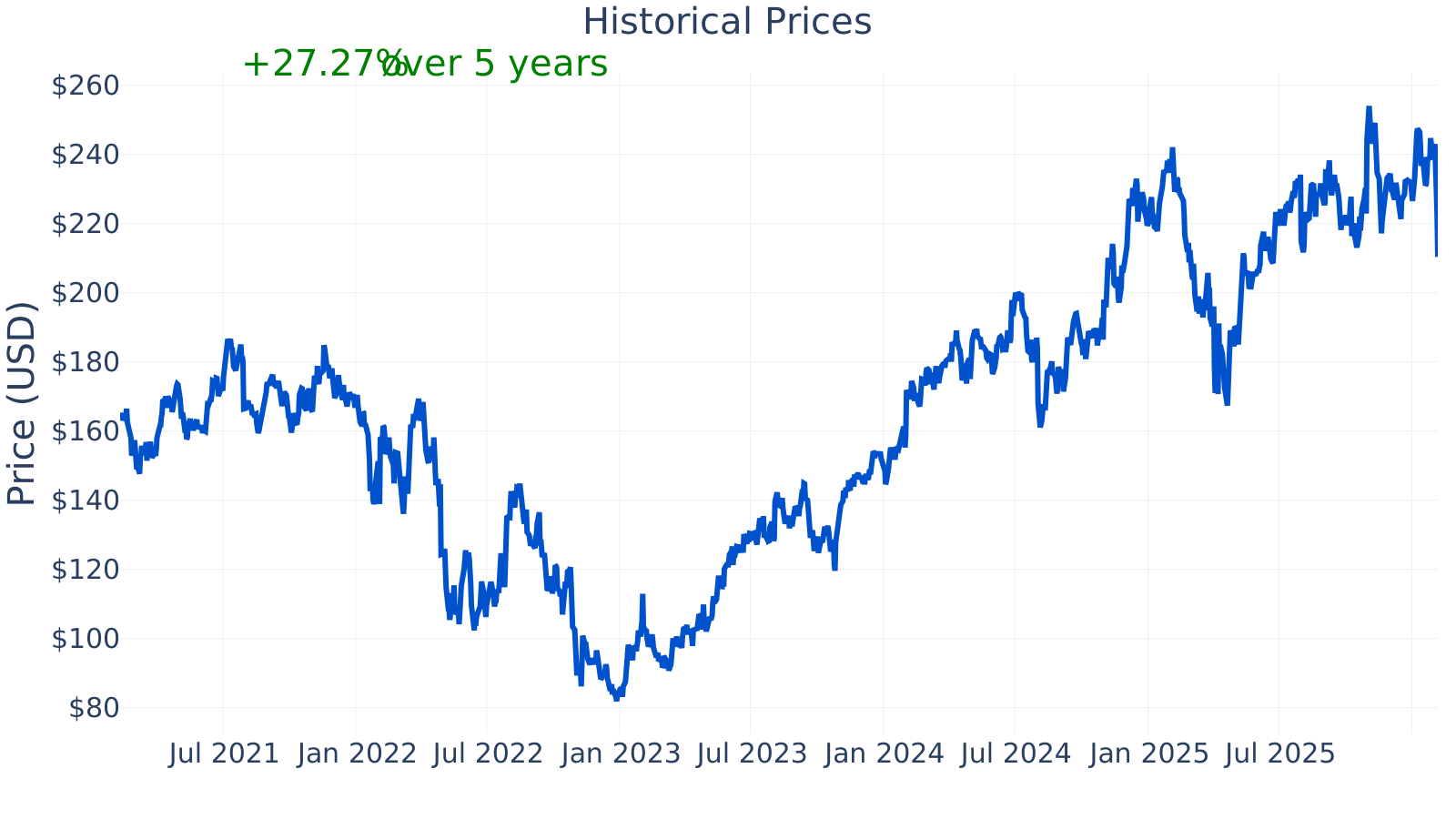
Amazon’s market capitalization is about $2.26T, reflecting its position among the largest public companies. The stock’s beta of ~1.39 suggests it has tended to move more than the broader market (higher day-to-day and month-to-month swings). The latest profit margin is ~10.83%, which is higher than the industry median shown here (~6.32%), and revenue growth year-over-year is about 13.6% versus an industry median of about 11.35%. Debt-to-equity is about 37%, close to the industry median (~34.8%). Free cash flow over the trailing twelve months is about $7.7B, which is positive, though Amazon’s cash generation has historically fluctuated with large investment cycles.
Growth (medium)
Amazon operates in several areas that have long-term tailwinds. E-commerce remains a large and still-evolving channel for retail, with ongoing shifts toward faster delivery, wider selection, and marketplace models where third-party merchants sell alongside first-party inventory. Cloud computing is also a multi-year trend as organizations continue moving workloads from on-premises data centers to cloud platforms, while also adopting data and AI-related services that can increase cloud usage.
Strategically, Amazon’s model is built around reinforcing loops: a broad product selection attracts shoppers; a large customer base attracts third-party sellers; higher volume supports investment in fulfillment speed and cost efficiency; and these capabilities can improve customer experience while supporting additional revenue streams such as advertising and subscriptions. AWS adds a different growth engine that is less tied to consumer spending and more tied to enterprise technology demand.
Recent year-over-year revenue growth trends shown above are far lower than the unusually high growth rates seen in 2021 (when growth peaked above 40% in the period shown), but they appear more stable in the low-to-mid teens more recently, ending around 13.6% in the latest point displayed.
Free cash flow has been volatile over the period shown: positive in 2021, sharply negative in 2022, still negative in 2023, and then strongly positive in 2024 before moderating in 2025. For long-term business analysis, this matters because Amazon frequently cycles between heavy investment phases (which can depress free cash flow) and periods where prior investments begin to produce stronger cash generation.
Risks (medium)
This article is for informational purposes only and does not constitute financial advice. Some content is AI-generated. See Disclaimer