Stock Analysis · Alphabet Inc (GOOGL)
Overview
Alphabet Inc. is the parent company of Google and several other businesses. Its best-known products help people find information (Google Search), watch videos (YouTube), navigate (Google Maps), communicate (Gmail), and use smartphones (Android). Alphabet also sells business technology services through Google Cloud (computing power, data tools, and AI services), and it operates hardware and subscription products such as Pixel devices and YouTube subscriptions. Some projects sit under “Other Bets,” which include earlier-stage initiatives that are generally much smaller than the Google-branded businesses.
Alphabet reports revenue primarily through “Google Services,” “Google Cloud,” and “Other Bets” in its filings. In recent years, the majority of revenue has come from advertising tied to Search, YouTube, and Google’s network of partner sites and apps, with Cloud as a meaningful secondary driver and Other Bets remaining relatively small.
Main sources of revenue (largest to smallest, based on Alphabet’s segment reporting in its annual filings):
- Google Services (largest): advertising (Search and other, YouTube ads, and Google Network ads), plus platform/device and subscription revenue
- Google Cloud: cloud infrastructure and platform services, collaboration tools, and related enterprise offerings
- Other Bets (smallest): earlier-stage businesses that are not part of Google Services or Google Cloud
The business model is largely built on scale: large user reach and engagement, tools for advertisers, and infrastructure (data centers and specialized chips) that supports both consumer products and enterprise cloud services.
Across the years shown, revenue rises from about $257.6B (2021) to about $403.0B (2025), while profitability also expands: operating income increases from about $91.1B (2021) to about $158.8B (2025), and net income increases from about $76.0B (2021) to about $132.2B (2025). Research & development spending is consistently large and grows over time (about $31.6B in 2021 to about $61.1B in 2025), highlighting ongoing investment in new products and AI-related capabilities.
Key Figures
| Metric | Value | Industry ⓘ |
|---|---|---|
| Date | Feb 23, 2026 | |
| Context | ||
| Sector | Communication Services | |
| Industry | Internet Content & Information | |
| Market Cap ⓘ | $3.81T | |
| Beta ⓘ | 1.09 | |
| Fundamental | ||
| P/E Ratio ⓘ | 29.16 | 15.68 |
| Profit Margin ⓘ | 32.81% | 9.94% |
| Revenue Growth ⓘ | 18.00% | 6.80% |
| Debt to Equity ⓘ | 17.35% | 5.95% |
| PEG ⓘ | 1.67 | |
| Free Cash Flow ⓘ | $73.27B | |
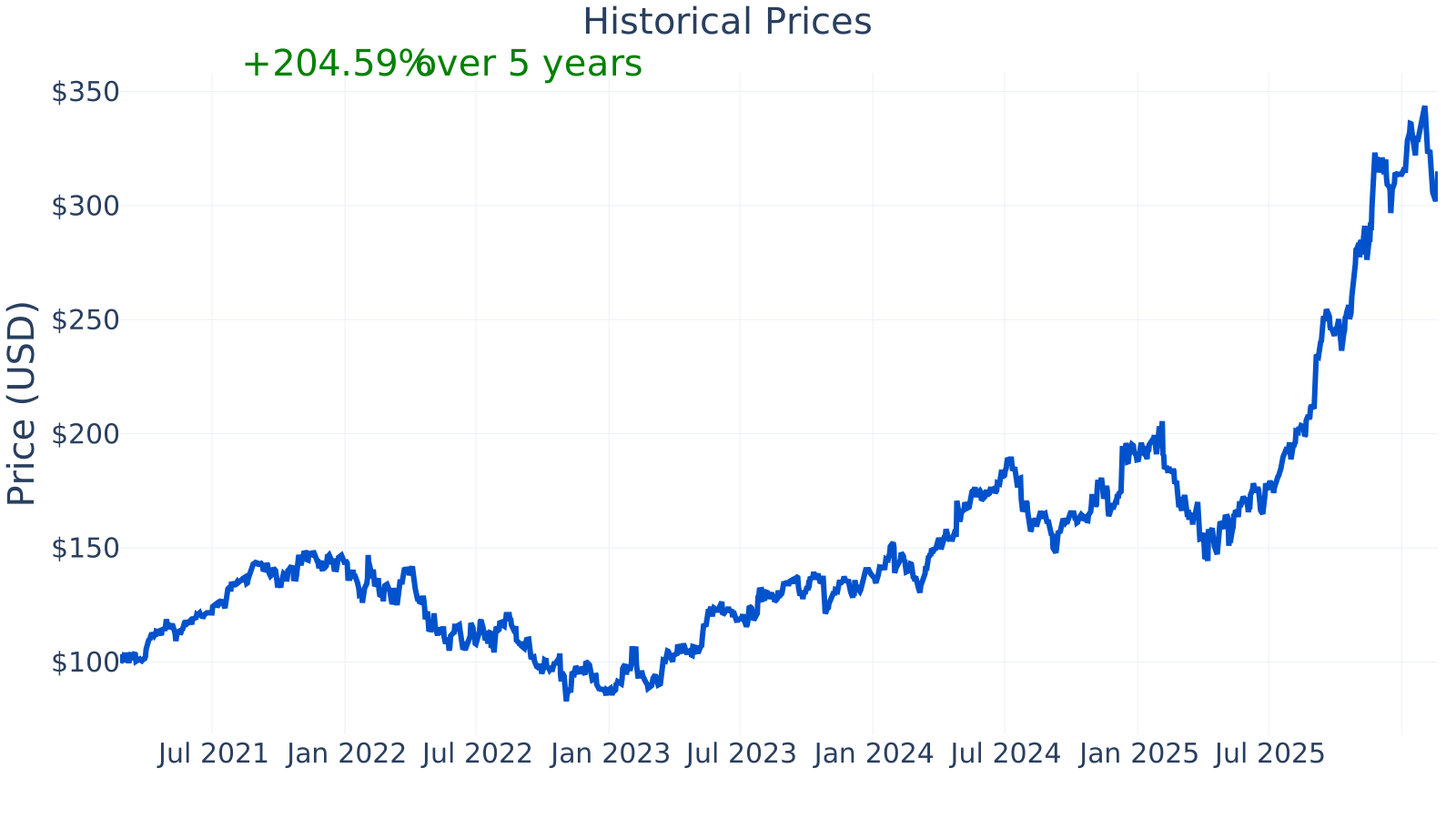
Alphabet’s market capitalization is about $3.81T and its beta is about 1.09, which indicates the stock has historically moved somewhat in line with the broader market (slightly more volatile than a beta of 1.0). The profit margin is about 32.8%, which is well above the industry median shown (about 9.9%). Year-over-year revenue growth is about 18.1% versus an industry median of about 6.8%. Debt-to-equity is about 17.3% compared with an industry median of about 6.0%. Free cash flow over the trailing twelve months is about $73.3B.
Growth (medium)
Alphabet operates in large, long-running markets: digital advertising, online video, mobile software ecosystems, and cloud computing. These areas have continued to evolve as consumer behavior shifts toward streaming, mobile usage, and AI-assisted services. Within this context, Alphabet’s strategy has two major pillars: (1) defend and extend its core advertising businesses by improving the usefulness of Search and YouTube for users and advertisers, and (2) expand non-advertising revenue streams, especially Google Cloud.
A key long-term theme is the integration of AI into products and infrastructure. Alphabet develops AI models and also builds and operates the computing systems required to train and run them at scale. In practice, this can support growth in several ways: improving ad targeting and measurement tools, enhancing user experiences in Search and YouTube, and increasing the value of Cloud services for enterprise customers that want AI capabilities without building everything themselves.
The year-over-year revenue growth rate shows cycles: very high growth in 2021, a sharp slowdown into late 2022 and early 2023, and then a steady re-acceleration through 2024 and 2025. The latest point shown is about 18.1%, which is above the industry median shown (about 6.8%). This pattern is consistent with advertising being economically sensitive (slowing when budgets tighten) while also benefiting from product improvements and broader digital ad demand over time.
Free cash flow is substantial and generally higher over the period shown (about $50.7B in 2021, reaching about $74.9B in 2025, with the most recent trailing figure around $73.3B). For a business like Alphabet, sustained free cash flow matters because it helps fund large data center and AI infrastructure needs, ongoing research, and flexibility for shareholder returns (such as repurchases) while still investing in future products.
Risks (medium)
This article is for informational purposes only and does not constitute financial advice. Some content is AI-generated. See Disclaimer