Stock Analysis · Allison Transmission Holdings Inc (ALSN)
Overview
Allison Transmission Holdings Inc designs and manufactures propulsion solutions, best known for automatic transmissions used in medium- and heavy-duty commercial vehicles. In simple terms, it sells the systems that help buses, trucks, and other work vehicles move efficiently and reliably. The company also supports a large installed base through parts and service, which tends to be steadier than new vehicle production.
Based on the company’s public filings, revenue is primarily generated from selling new transmissions and related propulsion systems to vehicle makers (original equipment), plus an ongoing stream from parts, service, and support. Allison also has activities tied to defense and specialty applications (for example, certain military or off-highway uses), which can behave differently from the broader commercial truck cycle.
Main sources of revenue (high level):
- Original equipment (new vehicle builds): sales of transmissions/propulsion systems to OEM customers (typically the largest portion).
- Service parts, support equipment, and other: replacement parts and service-related revenue tied to the installed base.
- Other end markets: including defense and specialty/off-highway applications (varies by period).
The company’s recent annual financial profile shows expanding revenue and profitability over the last several years, suggesting a combination of volume, pricing/mix, and operating discipline.
From 2021 to 2024, total revenue increased (about $2.4B to $3.2B), while operating income rose (about $0.69B to $0.99B). Interest expense declined over the same period (about $116M to $89M), which can reduce pressure on net income when debt costs fall or debt is reduced/refinanced.
Key Figures
| Metric | Value | Industry ⓘ |
|---|---|---|
| Date | Feb 23, 2026 | |
| Context | ||
| Sector | Consumer Cyclical | |
| Industry | Auto Parts | |
| Market Cap ⓘ | $9.94B | |
| Beta ⓘ | 0.98 | |
| Fundamental | ||
| P/E Ratio ⓘ | 14.58 | 24.32 |
| Profit Margin ⓘ | 22.78% | 3.40% |
| Revenue Growth ⓘ | 20.40% | 5.00% |
| Debt to Equity ⓘ | 130.26% | 71.77% |
| PEG ⓘ | 0.62 | |
| Free Cash Flow ⓘ | $685.00M | |
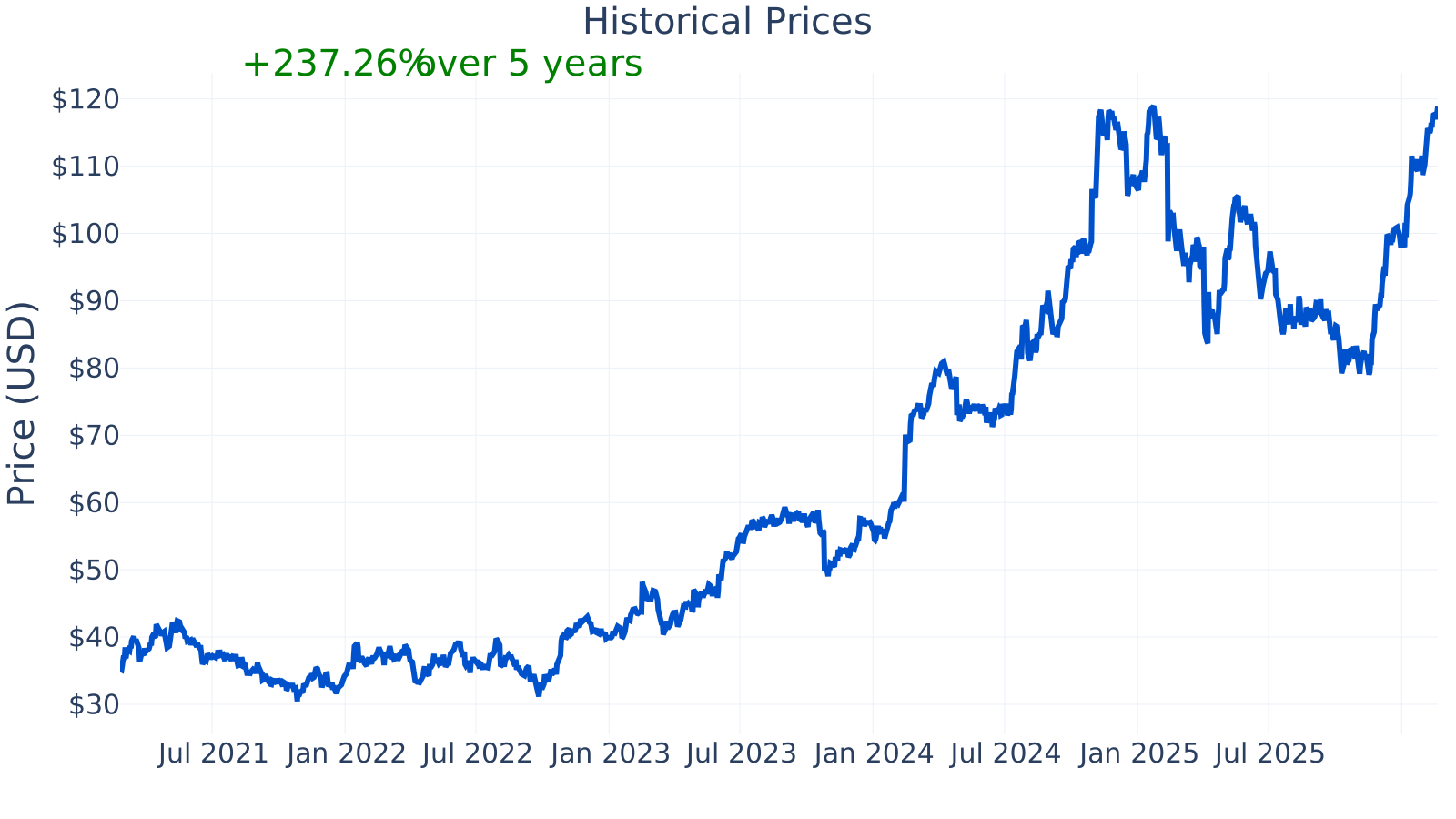
The latest snapshot shows a market capitalization of about $9.9B and a beta near 1.0, meaning the stock has tended to move roughly in line with the broader market. The P/E ratio is ~14.6, below the industry median shown (~24.3). Profitability stands out: profit margin ~22.8% versus an industry median near 3.4%. Recent year-over-year revenue growth is ~20.4%, also above the industry median shown (~5.0%). Leverage is higher than the peer median: debt-to-equity ~130% versus an industry median near 71.8%. Trailing twelve-month free cash flow is about $685M.
Growth (Medium)
Allison operates in markets tied to commercial vehicle production and fleet maintenance. That mix typically combines cyclical elements (new truck and bus builds can rise and fall with the economy) with more recurring characteristics (parts and service tied to vehicles already on the road). A long-lived installed base can help smooth results because vehicles require maintenance over many years.
From a strategy standpoint, the company’s emphasis on maintaining a strong position in fully automatic transmissions for certain commercial applications, while also investing in next-generation propulsion solutions, is designed to remain relevant as vehicle technology evolves. In filings, the company has discussed developing products that can support electrification trends (for example, electric axles and hybrid-capable solutions) and expanding in certain on-highway and off-highway applications. Whether these efforts translate into sustained growth depends on adoption rates, customer decisions, and competition.
Revenue growth has been positive for much of the period shown, but it is not steady quarter to quarter. The most recent points show slowing and then negative year-over-year growth (down about 2.9%, then about 0.2%, then about 15.9% at the latest point), highlighting sensitivity to demand cycles and timing effects.
Free cash flow over the trailing twelve months increased from roughly $426M (2021) to about $652M (2024) and remained around $651M (early 2025), indicating the business has recently been generating substantial cash after operating needs and capital spending. For a manufacturing business, consistent free cash flow can matter because it can support debt service, reinvestment, and shareholder return programs (subject to management decisions and covenants).
Risks (Medium)
This article is for informational purposes only and does not constitute financial advice. Some content is AI-generated. See Disclaimer