Stock Analysis · Allient Inc (ALNT)
Overview
Allient Inc (ALNT) is a technology-focused manufacturer that designs and produces motion control and power-related components used inside other equipment. In simple terms, its products help machines move precisely (for example, by controlling position, speed, torque) and help manage electrical power where reliability and efficiency matter. These types of components are typically used in industrial automation, robotics-related systems, medical devices, aerospace and defense applications, and other specialized equipment built by Allient’s customers.
Allient’s revenue generally comes from selling engineered components and subsystems rather than consumer products. Because it operates in “electronic components,” demand tends to be linked to customers’ production volumes and capital spending cycles (how much manufacturers invest in equipment), which can rise and fall with the economy and specific end-markets.
Based on how the company describes its business in its official filings, revenue is largely generated from product categories such as motion control and power solutions. Exact revenue percentages by product line or end market may be disclosed in annual filings depending on the reporting period and segment detail.
Across the years shown, total revenue increased from about $404M (2021) to about $554M (2025). Profitability moved around more than revenue: net income was about $24M (2021), dipped to about $13M (2024), and recovered to about $22M (2025). Interest expense rose notably over the period (about $3.2M in 2021 versus about $27.8M in 2025), which helps explain why net income did not rise in line with operating income.
Key Figures
| Metric | Value | Industry ⓘ |
|---|---|---|
| Date | Mar 16, 2026 | |
| Context | ||
| Sector | Technology | |
| Industry | Electronic Components | |
| Market Cap ⓘ | $1.06B | |
| Beta ⓘ | 1.52 | |
| Fundamental | ||
| P/E Ratio ⓘ | 55.66 | 39.72 |
| Profit Margin ⓘ | 3.97% | 6.11% |
| Revenue Growth ⓘ | 17.50% | 17.40% |
| Debt to Equity ⓘ | 65.29% | 41.32% |
| PEG ⓘ | N/A | |
| Free Cash Flow ⓘ | $81.83M | |
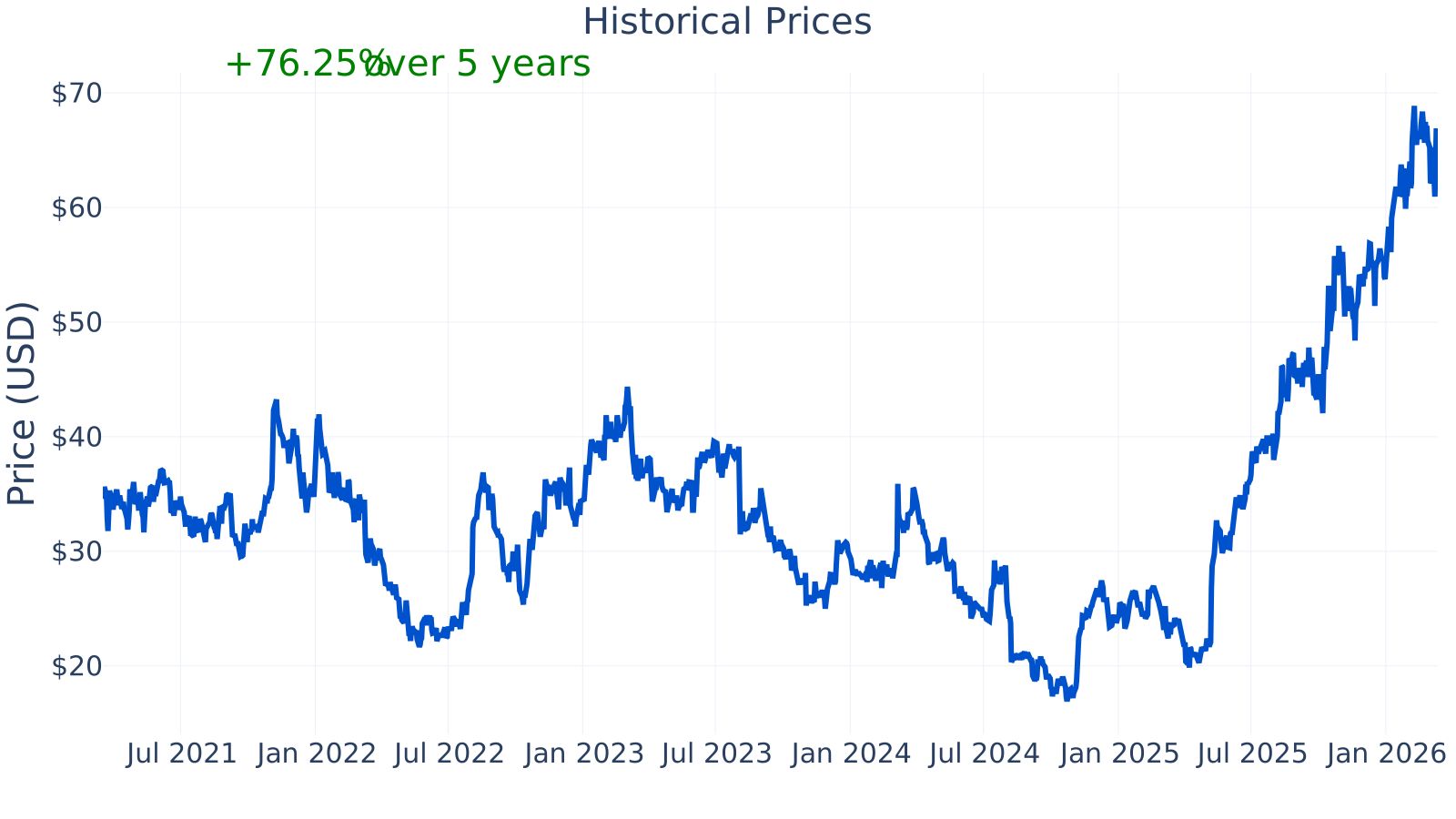
Allient’s market capitalization is about $1.06B, placing it in the small-cap range. The stock’s beta of about 1.52 suggests it has historically moved more than the broader market (higher volatility). The P/E ratio is about 55.7 versus an industry median near 39.7, while profit margin is about 4.0% versus an industry median near 6.1%. Revenue growth year-over-year is about 17.5%, roughly in line with the industry median (about 17.4%). Debt-to-equity is about 65% versus an industry median near 41%, indicating more leverage than many peers. Trailing twelve-month free cash flow is about $81.8M, which can support reinvestment, debt service, or other corporate needs.
Growth (Medium)
Allient operates in markets that are often associated with long-term themes such as factory automation, more advanced motion systems, and higher demand for precision control in medical and aerospace/defense equipment. These themes can be supportive over time, but the company’s results can still be cyclical because customers may delay equipment purchases during weaker economic periods.
The company’s year-over-year revenue growth has been uneven. It was strong in parts of 2022 and early 2023, then turned negative through much of 2024, and returned to positive territory during 2025 (ending around 17.5% year-over-year). This pattern is consistent with a business that can benefit from multi-year demand drivers but still experiences short down-cycles.
Free cash flow improved meaningfully from earlier periods. After being negative around 2022, it turned positive and rose to roughly the high tens of millions by the most recent trailing period shown (about $81.8M). For a manufacturing and engineering business, sustained positive free cash flow can be an important support for long-term flexibility, especially when balancing investment needs and debt obligations.
Potential catalysts typically come from (1) recoveries in industrial demand, (2) new program wins in higher-reliability end markets (such as aerospace/defense or medical), and (3) operating improvements that convert revenue into steadier margins and cash generation. Whether these play out depends on execution and end-market conditions rather than a single, predictable event.
Risks (High)
Allient’s key risks start with end-market cyclicality. When industrial customers slow capital spending, component orders can drop quickly. Another central risk is profitability sensitivity: small changes in pricing, product mix, or factory utilization can have a noticeable effect on margins.
Profit margin has been below the industry median for most of the period shown and ended around 4.0% versus an industry median near 6.1%. The history shows a decline from around 6% in 2021 to lower levels in 2024, followed by improvement into 2025. This suggests profitability has been recovering but remains an area where the company appears to lag many peers.
Leverage and financing costs are also important. Higher debt can amplify outcomes in both directions: it can help fund growth, but it can also increase required interest payments and reduce flexibility during downturns.
Debt-to-equity declined over time (from levels above 100% during 2022–2023 to about 65% by the end of 2025), but it is still above the industry median (about 41%). In parallel, interest expense in the income statement rose substantially over the years shown, which can weigh on net income even when operating performance improves.
Competition is a persistent risk in electronic components and motion control, where customers can qualify multiple suppliers and push for pricing concessions. Allient’s competitive position is generally tied to engineering know-how, application-specific design, reliability requirements, and long customer relationships. However, it is not typically characterized as the dominant market leader across the broad motion control universe; it competes against a mix of specialized component makers and larger diversified industrial/automation suppliers. In many customer programs, scale, breadth of product portfolio, and global manufacturing footprint can matter, areas where larger competitors may have advantages.
Valuation
Valuation is often discussed using ratios that compare the stock price to company earnings. A higher P/E ratio can indicate that the market expects stronger future growth or improving profitability, but it can also mean less room for error if results disappoint.
The most recent P/E ratio is about 55.7, which is above the industry median of about 39.7. Historically, the company’s P/E varied widely, spending long stretches in the high teens to 30s before moving higher in 2025. A rising P/E can happen when the share price increases faster than earnings, or when earnings temporarily compress. Given the company’s relatively modest profit margin (around 4%) and higher leverage than the industry median, this higher-than-median P/E suggests the current market valuation is assuming improvement in earnings power and/or business momentum relative to recent profitability.
Conclusion
Allient is a specialized components manufacturer serving markets where precision motion and power management matter, with revenue that has grown over the multi-year period shown but with noticeable cyclicality. Recent trends show a return to positive revenue growth and a meaningful improvement in free cash flow, which strengthens the operating picture.
At the same time, the company’s profit margin remains below the industry median and the balance sheet uses more debt than many peers, even though leverage has been trending down. Interest costs have also become more significant over time. With the stock trading at a P/E above the industry median, the market appears to be pricing in continued operational progress.
Sources:
- SEC EDGAR — Allient Inc. Form 10-K (Annual Report)
- SEC EDGAR — Allient Inc. Form 10-Q (Quarterly Report)
- SEC EDGAR — Allient Inc. Form 8-K (Current Report)
- Allient Investor Relations — Press Releases
This article is for informational purposes only and does not constitute financial advice. Some content is AI-generated. See Disclaimer


