Stock Analysis · Allient Inc (ALNT)
Overview
Allient Inc. (ALNT) is a motion and control technology company. In simple terms, it designs and manufactures components that help machines move precisely and efficiently. Its products are used in applications such as industrial automation, robotics-related equipment, medical devices, aerospace/defense systems, and other specialized machinery where controlled motion is essential.
Allient’s business model is primarily product-based: it earns revenue by selling engineered components and subsystems. These offerings often combine hardware (like motors and gears) with related control and sensing elements, and the company also supports customers with application engineering and customization for specific end uses.
Public filings describe the company as operating across multiple product families within motion and control. A simple way to think about the revenue drivers is:
- Precision motion components (for example: motors, gearing, and integrated motion solutions)
- Control, sensing, and power-related elements (supporting accurate control of motion in equipment)
- Engineered solutions and services (customization and application support tied to product sales)
Percentages by revenue source can vary by reporting period and how the company groups products in its filings; the most reliable breakdown is the segment and product disclosures in Allient’s annual report (Form 10‑K).
Over the last several years shown, total revenue rose from about $404M (2021) to about $579M (2023), then declined to about $530M (2024). Over the same period, interest expense increased noticeably (from about $3.2M in 2021 to about $13.3M in 2024), which can reduce how much of the operating profit ultimately remains as net income.
Key Figures
| Metric | Value | Industry ⓘ |
|---|---|---|
| Date | Feb 08, 2026 | |
| Context | ||
| Sector | Technology | |
| Industry | Electronic Components | |
| Market Cap ⓘ | $1.11B | |
| Beta ⓘ | 1.53 | |
| Fundamental | ||
| P/E Ratio ⓘ | 58.70 | 41.23 |
| Profit Margin ⓘ | 3.50% | 6.11% |
| Revenue Growth ⓘ | 10.80% | 13.80% |
| Debt to Equity ⓘ | 72.60% | 39.00% |
| PEG ⓘ | N/A | |
| Free Cash Flow ⓘ | $47.64M | |
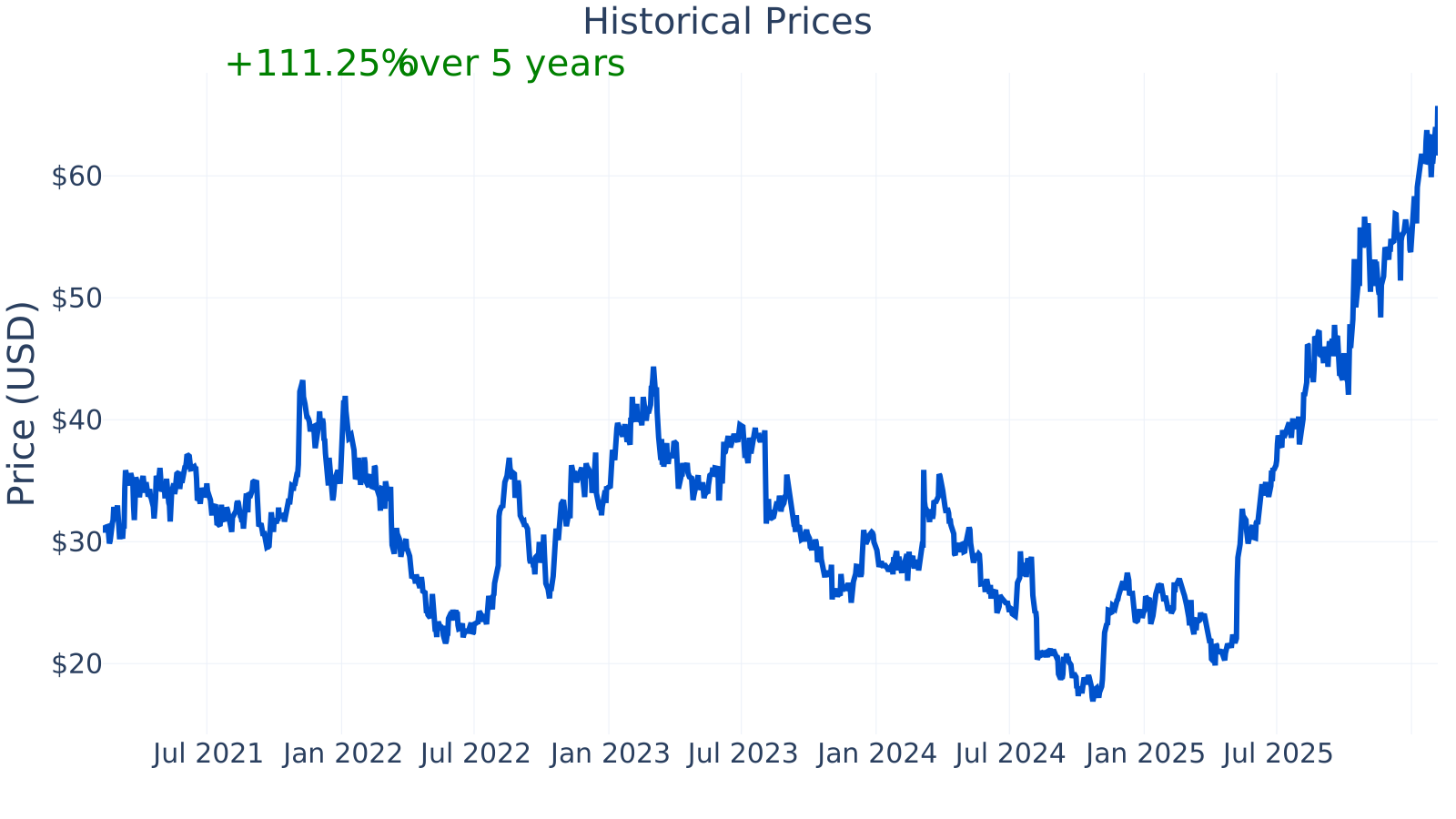
Allient’s market capitalization is about $1.11B, and the stock’s beta of about 1.53 indicates it has tended to move more than the overall market. The P/E ratio is about 58.7 versus an industry median around 41.2, while the profit margin is about 3.5% versus an industry median around 6.1%. Year-over-year revenue growth is about 10.8% versus an industry median around 13.8%. Debt-to-equity is about 72.6% versus an industry median around 39.0%. Trailing twelve-month free cash flow is about $47.6M.
Growth (Medium)
Allient participates in markets that are often supported by long-term themes such as factory automation, electrification, and the broader need for more precise and energy-efficient motion in industrial and specialized equipment. These end markets can be cyclical (they can slow during weaker industrial demand), but the underlying need for automation and precision motion tends to be structural over multi-year periods.
The company’s strategy—selling engineered motion components and integrated solutions—can fit well with customers that want performance, reliability, and customization rather than only the lowest-cost part. In practice, this can help with customer stickiness when components are designed into a machine platform, although it does not eliminate competition.
The year-over-year revenue pattern shows strength through 2022 and into 2023, followed by a downturn during 2024 (several quarters of negative year-over-year comparisons) and then a return to positive growth by the most recent period shown (about 10.8%). This mix suggests a business that can grow but may experience meaningful swings with customer demand cycles.
Free cash flow (a rough measure of cash generated after operating needs and capital spending) improved significantly compared with earlier periods shown: it moved from negative in 2022 to positive levels in 2023, and then to roughly the high-$30M to high-$40M range in 2024–2025. Consistent free cash flow can matter over the long run because it can support debt reduction, reinvestment in engineering, and resilience during slower demand periods.
Risks (High)
This article is for informational purposes only and does not constitute financial advice. Some content is AI-generated. See Disclaimer


