Stock Analysis · Allegro Microsystems Inc (ALGM)
Overview
Allegro Microsystems, Inc. is a semiconductor company that designs and sells sensor and power integrated circuits. In simple terms, it makes chips that help electronic systems sense motion/position/current and control electric power efficiently. These components are commonly used in automobiles (for example, to improve efficiency and safety features) and in industrial equipment (to monitor and control motors and power systems).
Allegro’s business is typically described by end markets (where its chips are used) and by product families (types of chips). Based on how the company describes its operations in filings, the two most important end markets are usually:
- Automotive (the largest contributor in most periods)
- Industrial and other
Within those markets, revenue is primarily generated from selling semiconductor products such as magnetic sensors and power ICs (including motor-control and current-sensing solutions). Exact percentage splits can vary by fiscal year and are best read directly from the company’s latest annual report segment disclosures.
One useful way to understand the business is to look at how revenue has recently translated into gross profit and expenses. Over the last several fiscal years, revenue rose from about $591M (FY2021) to about $1.05B (FY2024), followed by a decline to about $725M (FY2025). Over the same period, research and development spending stayed substantial (roughly $109M–$180M annually in the figures shown), reflecting an ongoing focus on new products.
The recent picture shows a sharp change from strong profitability in FY2022–FY2024 to a loss in FY2025: revenue and gross profit contracted meaningfully, while operating expenses stayed large. That combination pushed operating income and net income negative in FY2025, highlighting how sensitive results can be to demand cycles in semiconductors.
Key Figures
| Metric | Value | Industry ⓘ |
|---|---|---|
| Date | Feb 07, 2026 | |
| Context | ||
| Sector | Technology | |
| Industry | Semiconductors | |
| Market Cap ⓘ | $7.70B | |
| Beta ⓘ | 1.64 | |
| Fundamental | ||
| P/E Ratio ⓘ | N/A | 45.89 |
| Profit Margin ⓘ | -1.57% | 9.42% |
| Revenue Growth ⓘ | 28.90% | 13.10% |
| Debt to Equity ⓘ | 33.47% | 25.62% |
| PEG ⓘ | N/A | |
| Free Cash Flow ⓘ | $121.16M | |
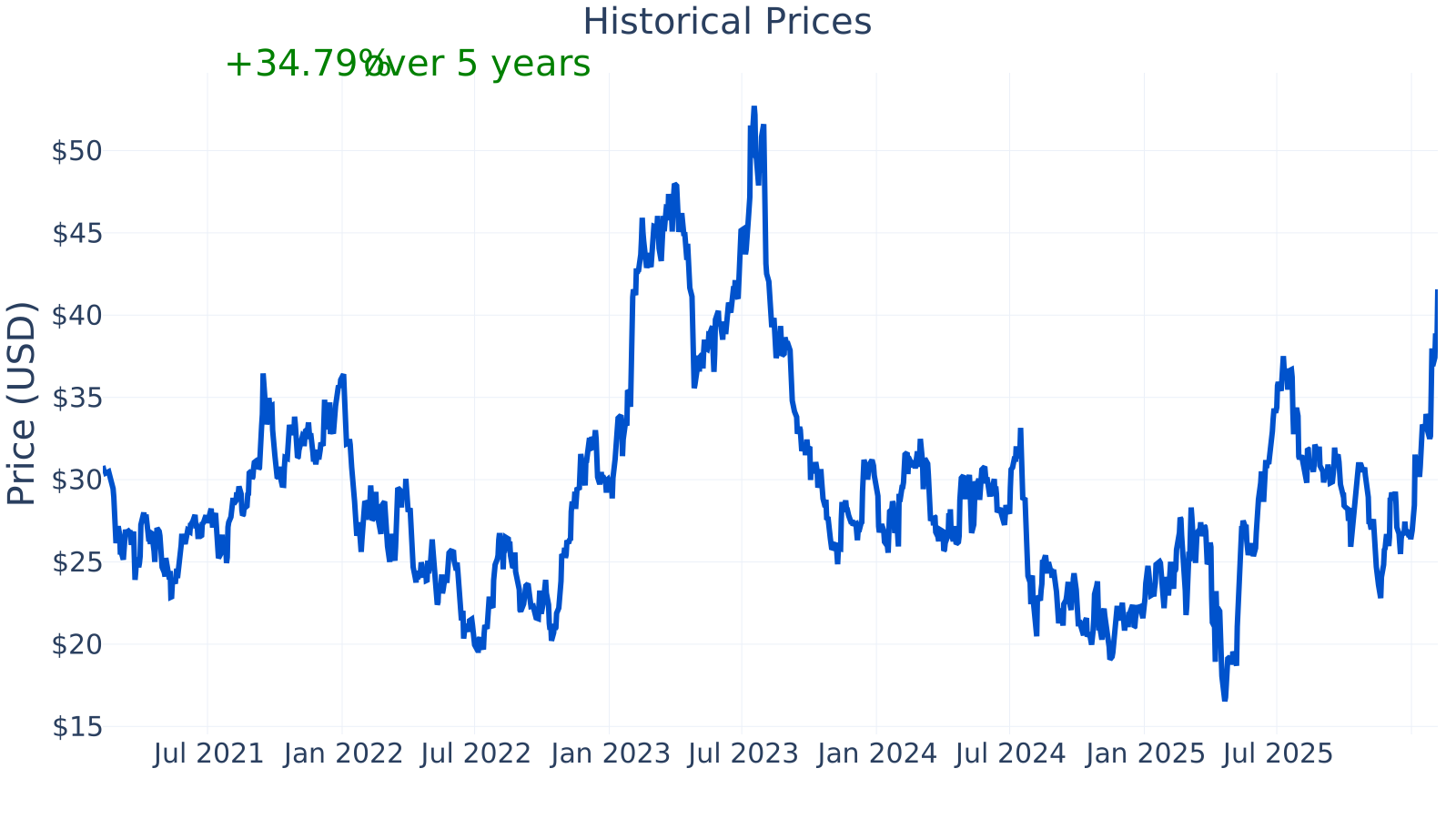
Allegro’s market capitalization is about $7.7B, placing it in the mid-cap range. The stock’s beta of 1.64 indicates it has tended to move more than the overall market (higher volatility). The latest profit margin is about -1.6% versus an industry median near 9.4%, reflecting a period of weaker profitability. At the same time, the latest year-over-year revenue growth is about 28.9% (industry median ~13.1%), suggesting a rebound from a softer period. Leverage, measured by debt-to-equity of ~33%, is somewhat above the industry median (~25.6%). Trailing twelve-month free cash flow is about $121M, which indicates the core business has recently generated cash even amid profit pressure.
Growth (Medium)
Allegro operates in semiconductors, an industry known for long-term demand growth but also pronounced cycles. The company is positioned in areas that are often associated with structural trends, especially vehicle electrification and the broader move toward more sensors and power management in cars and industrial systems. In practice, that can mean more content per vehicle (more chips used in each car) and more sophisticated control in industrial equipment.
A practical way to view the growth story is to separate long-term drivers from near-term volatility. The long-term drivers come from increased electronics intensity (especially in automotive) and continued demand for efficient power control. The near-term variability comes from inventory corrections and changes in production volumes at customers.
The revenue growth pattern reflects this cyclicality: earlier periods show strong growth, then a notable downturn in 2024, followed by a return to positive growth in 2025, ending at roughly +28.9% year-over-year in the most recent point shown. This “down-then-up” shape is consistent with a semiconductor cycle rather than a straight-line trend.
Free cash flow has also fluctuated: it increased through 2023, then dropped sharply in 2024 and into 2025 before the latest trailing figure shows about $121M. For long-term evaluation, this matters because consistent cash generation can support investment in research and development and provide flexibility during down cycles.
Potential catalysts (in a factual, non-predictive sense) typically come from (1) normalization after an industry downturn, (2) new product ramps, and (3) customer production trends in automotive and industrial markets. Whether those translate into sustained growth depends on execution, competitive positioning, and overall end-market demand.
Risks (High)
This article is for informational purposes only and does not constitute financial advice. Some content is AI-generated. See Disclaimer