Stock Analysis · Alkami Technology Inc (ALKT)
Overview
Alkami Technology, Inc. is a software company focused on digital banking. Its platform is used by financial institutions (such as banks and credit unions) to provide consumer and business customers with modern online and mobile banking experiences. In simple terms, Alkami sells the software and related services that help financial institutions let customers check balances, move money, pay bills, manage cards, and handle other everyday banking tasks through digital channels.
The business model is primarily software-as-a-service (SaaS), meaning customers typically pay recurring fees to use the platform, with additional revenue tied to implementation and ongoing services. Over time, SaaS models tend to emphasize recurring revenue and customer retention, while profitability depends on scaling revenue faster than operating costs.
Main sources of revenue (high-level categories described in company filings; exact percentages can vary by period):
- Subscription / platform revenue (recurring): fees for access to Alkami’s digital banking platform and related modules.
- Services and implementation revenue: onboarding, configuration, integration work, and ongoing professional services tied to customer deployments.
From 2021 to 2024, total revenue rose from about $152.2M to $333.8M, while gross profit expanded from about $83.8M to $196.6M. Over the same period, operating expenses (notably research & development and selling/general/administrative costs) remained large, which helps explain why net income stayed negative even as revenue grew.
Key Figures
| Metric | Value | Industry ⓘ |
|---|---|---|
| Date | Feb 08, 2026 | |
| Context | ||
| Sector | Technology | |
| Industry | Software - Application | |
| Market Cap ⓘ | $1.83B | |
| Beta ⓘ | 0.53 | |
| Fundamental | ||
| P/E Ratio ⓘ | N/A | 27.79 |
| Profit Margin ⓘ | -10.63% | 6.02% |
| Revenue Growth ⓘ | 31.50% | 15.80% |
| Debt to Equity ⓘ | 108.09% | 25.15% |
| PEG ⓘ | N/A | |
| Free Cash Flow ⓘ | $29.45M | |
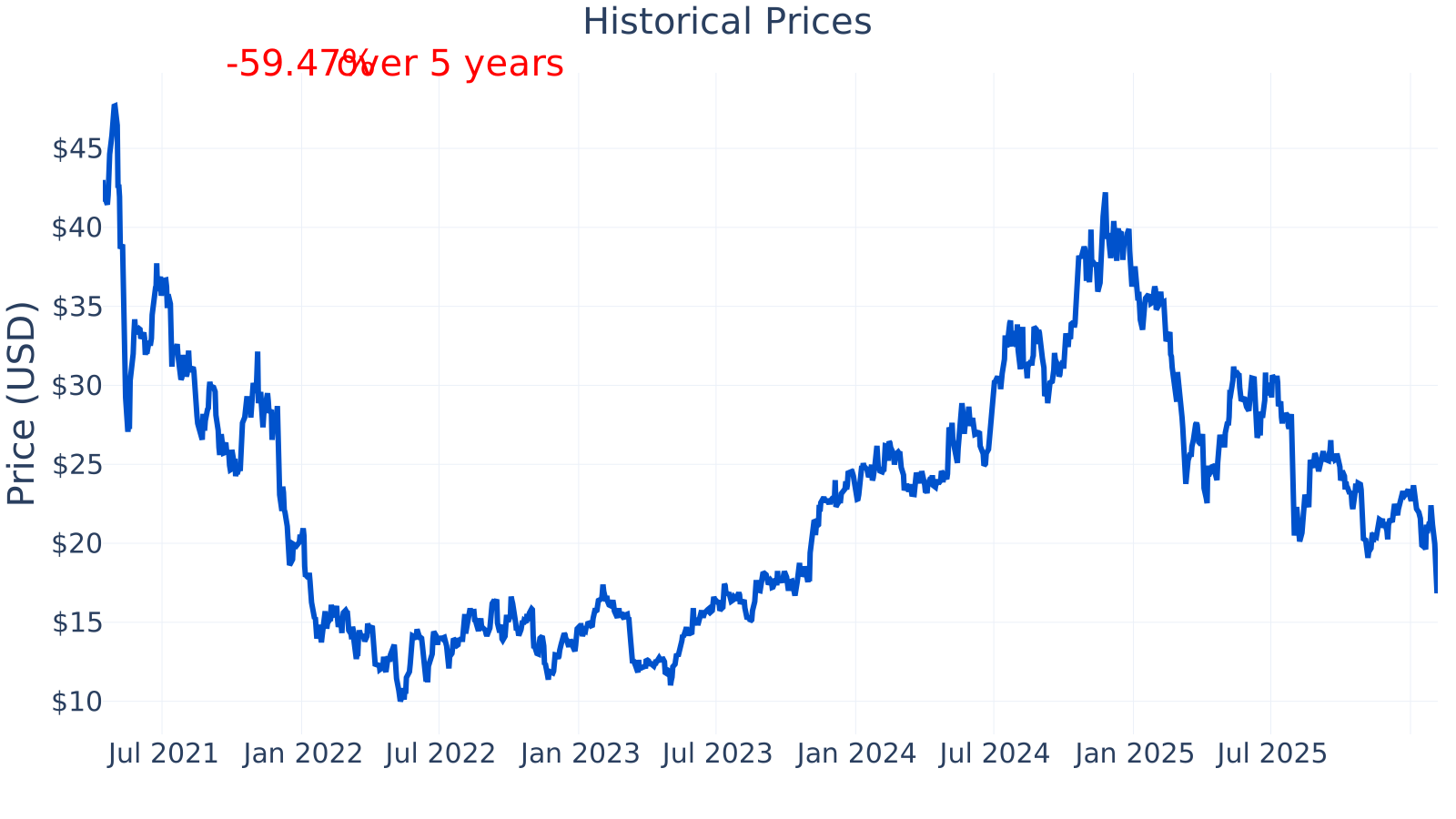
Alkami’s market capitalization is about $1.83B, and the stock’s beta of 0.53 indicates it has historically moved less than the overall market on average (though this does not prevent meaningful drawdowns). The company’s profit margin is about -10.63% versus an industry median near +6.03%, reflecting that Alkami is still operating at a loss. Growth has been faster than the industry median, with year-over-year revenue growth around 31.5% versus an industry median near 15.8%. Debt-to-equity is about 108%, well above the industry median near 25%, which can matter when evaluating financial flexibility. Free cash flow over the trailing twelve months is about $29.4M, a notable point because free cash flow can support operations without relying as much on external financing.
Growth (medium)
Digital banking remains a structurally growing area as banks and credit unions continue modernizing customer-facing systems and shifting more activity to mobile and online channels. This environment generally supports vendors that can deliver secure, reliable, frequently updated software—especially if they can add new features and expand relationships with existing institutions.
Alkami’s recent growth profile has been strong in the context of its software application peer group. Revenue growth has consistently stayed in the mid-to-high double digits over multiple quarters, suggesting continued demand and/or successful expansion within its customer base.
The revenue growth trend shows sustained expansion, with many quarters around the 25%–38% range and the latest shown value near 31.5%. Compared with an industry median around 15.8%, this indicates the company has been growing materially faster than many peers, even as growth rates naturally fluctuate quarter to quarter.
A practical long-term catalyst for a SaaS business like this is the ability to convert scale into improving cash generation. Alkami’s free cash flow trend shows a shift from negative to positive over time, which can be an important milestone if it proves durable.
The trailing twelve-month free cash flow improved from roughly -$33.6M (2021) and -$40.1M (2023) to about +$5.3M (2025-03) and most recently about +$29.4M. If this improvement is supported by underlying operating performance (and not just temporary working-capital effects), it can strengthen the company’s ability to fund product development and customer acquisition internally.
Risks (high)
This article is for informational purposes only and does not constitute financial advice. Some content is AI-generated. See Disclaimer