Stock Analysis · Alarm.com Holdings Inc (ALRM)
Overview
Alarm.com Holdings Inc. provides a cloud software platform that helps service providers (such as security and smart-home dealers) monitor and manage connected systems for homes and small-to-mid-sized commercial buildings. In simple terms, it is the “behind-the-scenes” software that powers services like intrusion monitoring, video monitoring, access control, energy management, and automation through mobile apps and web dashboards.
The company’s business model is largely built around recurring software and service revenue that is tied to connected customers, plus revenue from selling related hardware (for example, video cameras and other connected devices) through its channel partners. Because it primarily sells through service providers rather than directly to consumers, its growth depends on how successfully those partners add and retain end customers and attach more services per customer over time.
Based on the company’s reporting in its filings, revenue is commonly discussed in two main buckets (with additional detail varying by period):
- SaaS and license revenue (typically recurring, subscription-like revenue tied to active connections and software features)
- Hardware and other revenue (sales of devices and related items, which tends to be more variable)
Exact percentages can shift year to year and are best read directly from the latest Form 10-K revenue note and segment/disaggregation tables.
The multi-year income flow shows revenue rising from about $749M (2021) to about $1.01B (2025), with gross profit also expanding over that period. Research and development remains a meaningful ongoing expense (hundreds of millions of dollars annually), which is consistent with a software platform company that needs to keep adding features, integrations, and security updates.
Key Figures
| Metric | Value | Industry ⓘ |
|---|---|---|
| Date | Feb 23, 2026 | |
| Context | ||
| Sector | Technology | |
| Industry | Software - Application | |
| Market Cap ⓘ | $2.28B | |
| Beta ⓘ | 0.80 | |
| Fundamental | ||
| P/E Ratio ⓘ | 19.32 | 25.48 |
| Profit Margin ⓘ | 13.11% | 7.23% |
| Revenue Growth ⓘ | 8.00% | 15.70% |
| Debt to Equity ⓘ | 133.61% | 25.08% |
| PEG ⓘ | 1.54 | |
| Free Cash Flow ⓘ | $136.02M | |
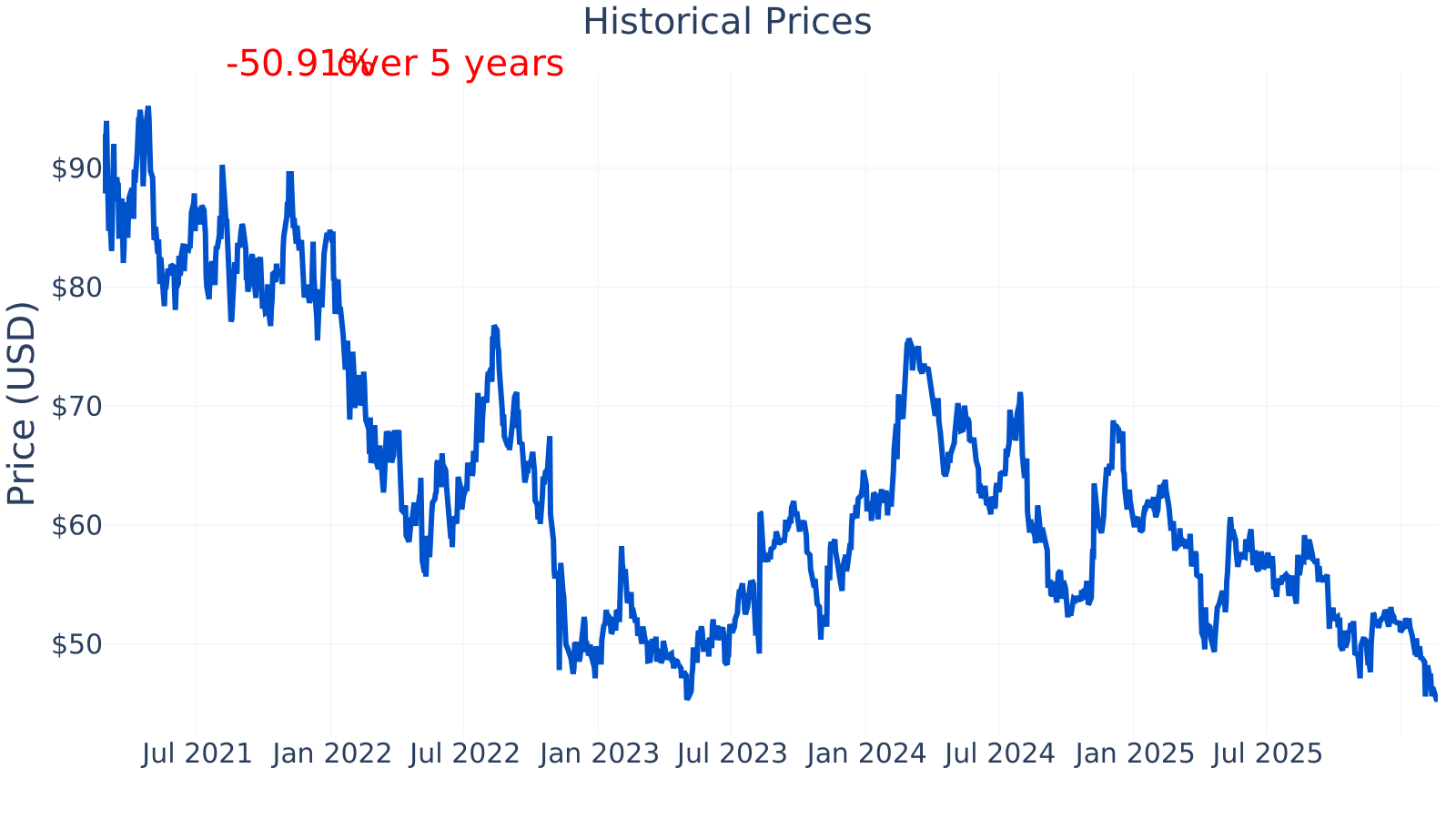
At a market capitalization of about $2.28B, Alarm.com is a mid-cap company. Its beta of ~0.80 suggests the stock has historically moved less than the broader market on average (though any single stock can still be volatile). The company’s profit margin is ~13.1%, which is higher than the industry median (~7.2%) shown here, indicating stronger profitability than many peers in the broader application software group. Growth is positive but more moderate recently: revenue growth of ~8.0% year over year versus an industry median near 15.7%. Free cash flow over the last twelve months is about $136M, showing the business has been generating cash after operating needs and capital spending. One notable point is balance sheet leverage: debt-to-equity of ~134% versus an industry median around 25%, which stands out and deserves attention in a long-term context.
Growth (Medium)
Alarm.com operates in the broader connected property and building management ecosystem, where demand is supported by long-running trends: more connected devices, increasing interest in remote monitoring and automation, and the expansion of video and intelligent analytics in security workflows. These trends can support steady adoption over time, but the pace can vary with housing activity, small business formation, and consumer spending on discretionary home upgrades.
A key part of the company’s growth logic is “land and expand” through service providers: a household or business might start with basic security monitoring, then add cameras, video storage, smart locks, energy management, or other add-on services. This kind of expansion can matter because software features and monitoring services tend to be more recurring than hardware purchases.
The year-over-year revenue growth rate was higher earlier in the period shown (including periods above 20% and even above 30%), then moderated considerably in 2023, and more recently has stabilized mostly in the mid-to-high single digits (roughly 4% to 9% across recent quarters). That pattern points to a business that is still expanding, but with a more mature growth profile than during earlier scaling phases.
Free cash flow has been positive across the timeline shown and improved meaningfully in 2024–2025 versus 2022–2023. Positive and improving free cash flow can be important for long-term durability because it can help fund product development, acquisitions, and balance-sheet flexibility without relying as heavily on outside financing.
Potential catalysts (in a neutral, factual sense) typically come from execution rather than single events: increased adoption of video services, higher attachment of paid software features per connected customer, expansion of commercial offerings (such as access control and video for small and mid-sized businesses), and successful integrations with third-party devices and ecosystems—all areas that companies in this space often highlight in their product and platform updates.
Risks (Medium-High)
This article is for informational purposes only and does not constitute financial advice. Some content is AI-generated. See Disclaimer


