Stock Analysis · Akamai Technologies Inc (AKAM)
Overview
Akamai Technologies Inc is a technology company that helps businesses run fast, reliable, and secure online services. In simple terms, it provides a large, distributed network and software that can (1) speed up the delivery of websites, videos, and apps to users around the world, and (2) protect those digital services from attacks and fraud. This kind of infrastructure matters because many companies depend on always-on internet performance and security for revenue, customer experience, and brand reputation.
Akamai’s business is commonly described through two main activities: delivering content and applications efficiently (often grouped under “delivery” or “compute/edge” capabilities) and cybersecurity (protecting websites, APIs, and applications from threats). Akamai’s approach is built around operating a global platform close to end users, which can reduce delays and help absorb large traffic volumes and attacks.
Revenue is generally reported across major product groupings in company filings. In broad terms, the main sources are:
- Security solutions (web and API protection, DDoS mitigation, bot and account protection, and related services)
- Delivery solutions (content delivery and performance for websites, software downloads, and video)
- Compute / edge cloud-related services (running workloads closer to users, often packaged with delivery capabilities)
Percentages can vary by year and by how the company groups products in its filings. For the most reliable breakdown and definitions, the company’s annual report (Form 10‑K) is the best reference point.
Across the years shown, total revenue rises steadily (from about $3.46B to about $4.21B), while net income trends downward overall (from about $652M to about $452M). Operating expenses also increase over time, and research & development spending grows, which can support future products but can also pressure near-term profitability.
Key Figures
| Metric | Value | Industry ⓘ |
|---|---|---|
| Date | Feb 23, 2026 | |
| Context | ||
| Sector | Technology | |
| Industry | Software - Infrastructure | |
| Market Cap ⓘ | $13.55B | |
| Beta ⓘ | 0.72 | |
| Fundamental | ||
| P/E Ratio ⓘ | 27.62 | 24.87 |
| Profit Margin ⓘ | 10.74% | 6.79% |
| Revenue Growth ⓘ | 7.40% | 15.30% |
| Debt to Equity ⓘ | 114.02% | 26.59% |
| PEG ⓘ | 0.67 | |
| Free Cash Flow ⓘ | $699.26M | |
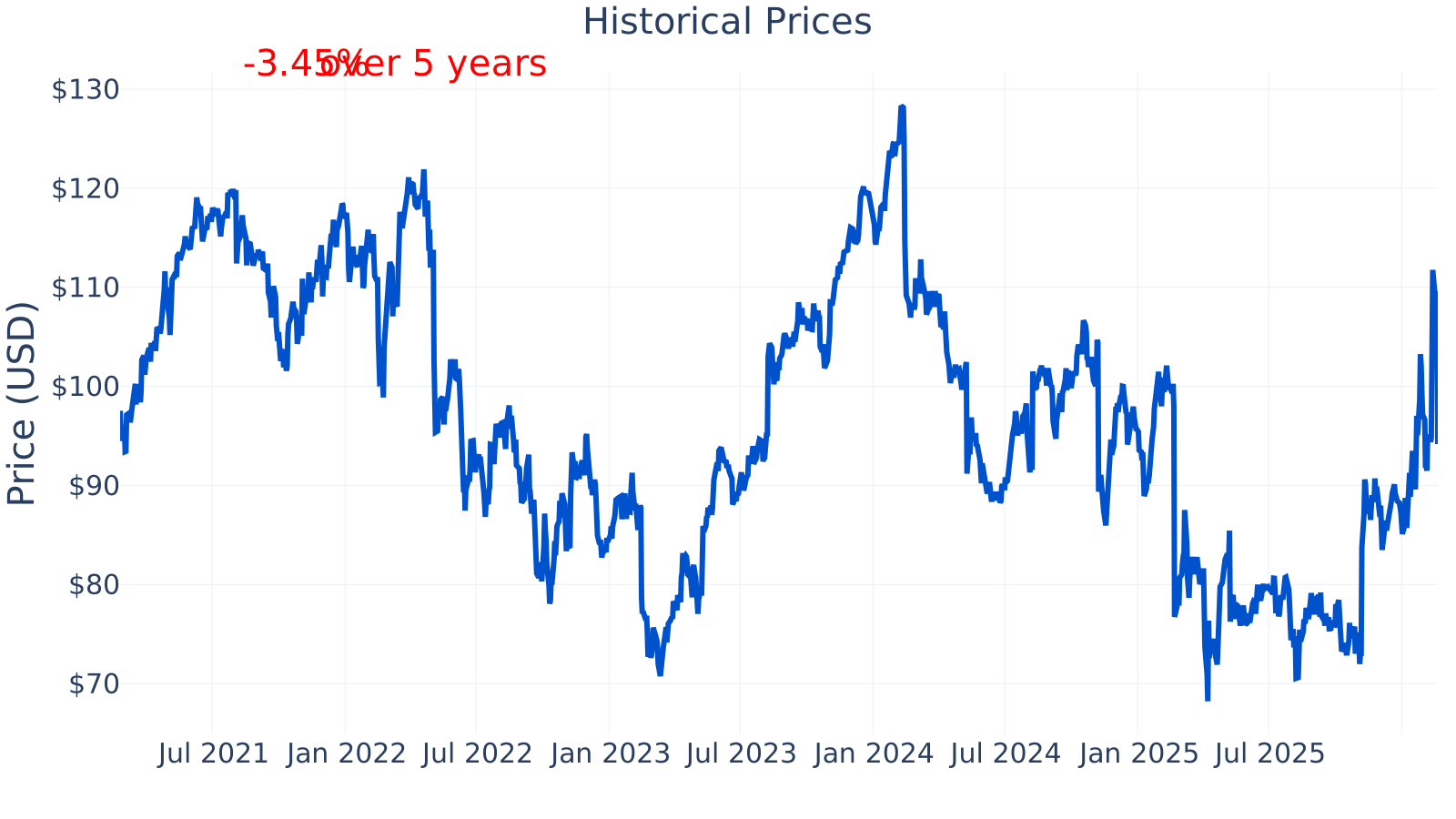
Akamai’s market capitalization is about $13.5B, and its beta (~0.72) suggests the stock has historically moved less than the broader market on average (though individual periods can differ). The company’s P/E ratio (~27.6) is slightly above the industry median (~24.9). Profitability is positive, with a profit margin of ~10.7%, above the industry median (~6.8%). Recent year-over-year revenue growth is ~7.4%, below the industry median (~15.3%). Debt relative to equity is higher than the industry median (~114% vs. ~26.6%). Trailing twelve-month free cash flow is about $699M.
Growth (Medium)
Akamai operates in markets supported by long-running trends: more digital activity (apps, video, online transactions), more reliance on APIs and cloud-based services, and increasing cybersecurity threats. These trends can support continued demand for both performance infrastructure and security protection, especially for companies that run customer-facing services where downtime and breaches are costly.
The company’s strategy centers on expanding beyond traditional content delivery into a broader set of security and “edge” capabilities (running and protecting applications closer to users). Conceptually, this can make sense for future growth because performance and security are often purchased together for the same applications and traffic flows, potentially increasing the value of the overall platform per customer.
Revenue growth varies by quarter over the period shown, moving from low single digits at times to peaks near ~9–10%. The most recent point shown is ~7.4% year-over-year. This profile indicates growth, but not consistently at the higher rates seen in parts of the broader software infrastructure industry.
Free cash flow remains substantial over time (roughly $560M–$865M across the years shown), with the latest around $699M. Consistent cash generation can matter for long-term business flexibility because it can be used for reinvestment, debt management, and shareholder returns (depending on management decisions and market conditions).
Risks (Medium)
This article is for informational purposes only and does not constitute financial advice. Some content is AI-generated. See Disclaimer