Stock Analysis · Advance Auto Parts Inc (AAP)
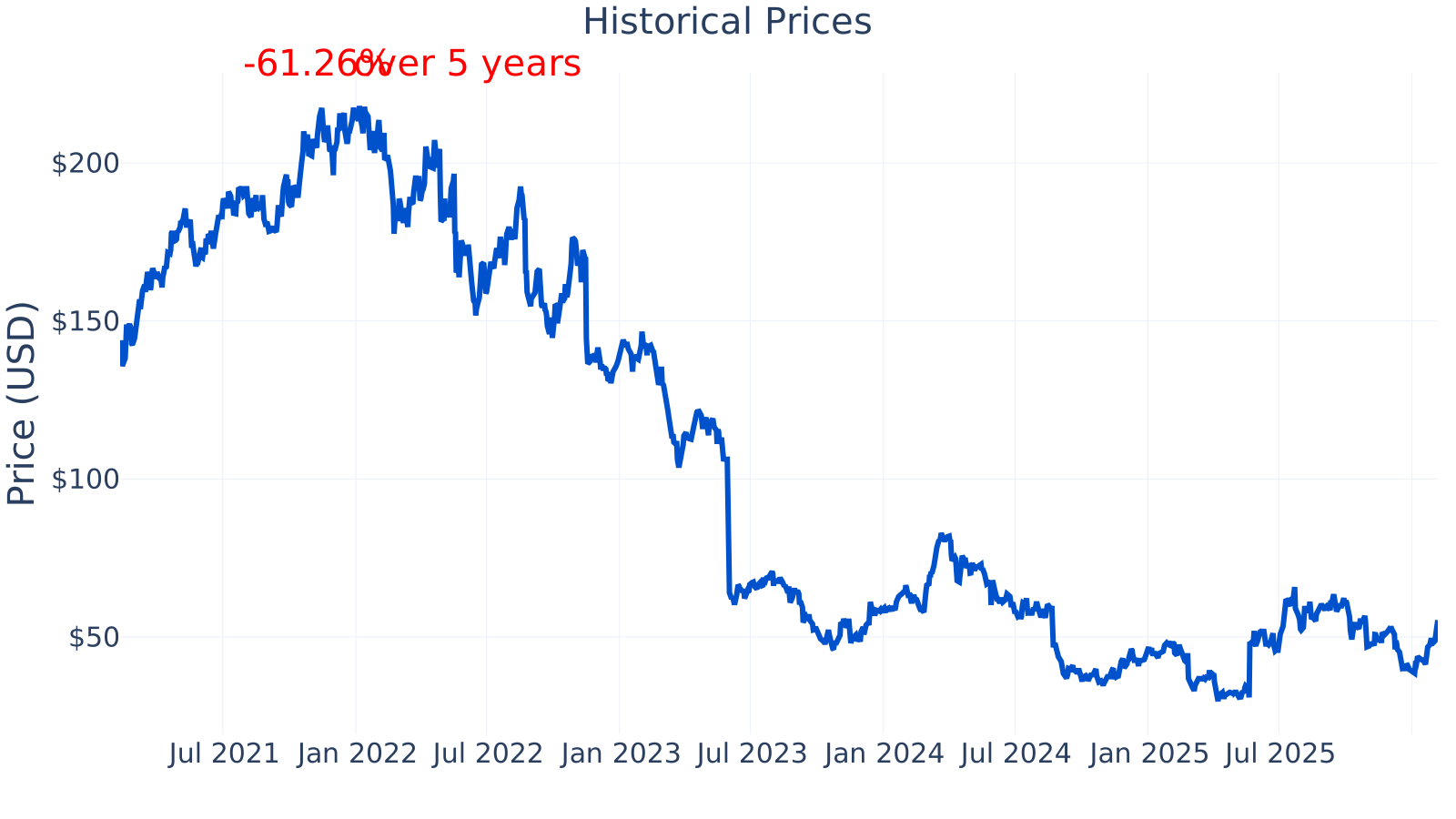
Overview
Advance Auto Parts, Inc. (AAP) is an automotive aftermarket parts retailer and distributor. In simple terms, it sells replacement parts, maintenance items, tools, and related products used to keep cars on the road. The company serves two main customer groups: everyday vehicle owners who shop in stores or online (“do-it-yourself”), and professional repair shops that need parts delivered quickly (“do-it-for-me”).
The business model relies on a large network of retail locations, distribution centers, and delivery capability to supply commonly needed parts (like batteries, brakes, filters, and fluids) as well as more specialized components. Demand is tied to how long people keep their vehicles, how many miles they drive, and how frequently repairs are needed.
Public filings typically describe revenue by customer channel (retail vs. professional) and by geography, but precise percentages can change over time and are not always consistently presented as a simple split in the same way each period. At a high level, the main revenue sources are:
- Professional (repair shops / commercial customers): recurring orders, speed of delivery and availability are critical
- Retail (individual consumers): in-store and online purchases for maintenance and repairs
- Other / ancillary: smaller items such as services and miscellaneous categories reported in filings
The company’s recent financial mix shows a notable compression in profitability: revenue fell from about $11.0B (2021) to about $9.1B (2024), while operating results moved from positive to negative over the same period (details below).
Across 2021–2024, total revenue declined and the cost structure became less favorable. Gross profit fell (about $4.92B → $3.41B), and operating income moved from about +$820M (2021) to about -$687M (2024), ending in a net loss in 2024 (about -$336M). This indicates that recent challenges were not only about sales volume, but also about margins and operating efficiency.
Key Figures
| Metric | Value | Industry ⓘ |
|---|---|---|
| Date | Feb 08, 2026 | |
| Context | ||
| Sector | Consumer Cyclical | |
| Industry | Auto Parts | |
| Market Cap ⓘ | $3.32B | |
| Beta ⓘ | 1.17 | |
| Fundamental | ||
| P/E Ratio ⓘ | N/A | 25.56 |
| Profit Margin ⓘ | -4.37% | 3.38% |
| Revenue Growth ⓘ | -5.20% | 4.95% |
| Debt to Equity ⓘ | 239.68% | 66.87% |
| PEG ⓘ | 1.55 | |
| Free Cash Flow ⓘ | -$401.39M | |
Advance Auto Parts’ market capitalization is about $3.32B, placing it as a mid-sized public company. The stock’s beta (~1.17) suggests it has tended to move somewhat more than the broader market.
On operating performance, two figures stand out versus the auto parts industry median (as defined by the peer set shown in the table):
- Profit margin: about -4.37% for the company versus an industry median near +3.38%, showing the company is currently under-earning peers.
- Revenue growth (YoY): about -5.2% versus an industry median near +4.95%, indicating weaker recent sales momentum than typical competitors.
Financial flexibility is also a key theme: debt-to-equity ~240% versus an industry median near 67%, and free cash flow (TTM) around -$401M, meaning cash generated after operating needs and capital spending has been negative recently.
Growth (medium)
The auto parts aftermarket is generally supported by long-lived trends: vehicles stay on the road for many years, and an aging fleet can increase the need for maintenance and repairs. This makes the industry less dependent on new car sales than many people assume. That said, individual companies can still struggle if they face execution issues (inventory availability, pricing, customer service, delivery speed to repair shops, and cost control).
The recent revenue pattern has been negative, with several quarters showing year-over-year declines. The latest value shown is around -6% to -8% range in recent periods, contrasting with a positive industry median in the table. For long-term outcomes, a key question is whether revenue stabilizes through better in-stock levels, improved service to professional customers, and more consistent promotional and pricing discipline.
Free cash flow has been volatile over the last several years, shifting from strongly positive levels earlier in the period to negative recently (about -$401M on a trailing basis per the table). For a retailer/distributor, sustained negative free cash flow can limit options (investment, debt reduction, and resilience during weaker demand periods). A practical catalyst to watch over time is whether the business can return to consistently positive free cash flow through margin recovery and tighter working-capital management (especially inventory).
Risks (high)
This article is for informational purposes only and does not constitute financial advice. Some content is AI-generated. See Disclaimer


