Stock Analysis · Adobe Systems Incorporated (ADBE)
Overview
Adobe Systems Incorporated is a software company best known for tools used to create, edit, manage, and deliver digital content. Its products are widely used by creative professionals (designers, photographers, video editors), businesses (marketing teams and customer-experience teams), and knowledge workers (documents, forms, and digital signatures). Adobe primarily sells its software through subscriptions, which tends to create recurring revenue because customers pay monthly or annually to keep using the products.
Adobe organizes its business into three main segments, each built around software platforms that can be used across many industries:
- Digital Media (Creative Cloud and Document Cloud): tools for content creation (for example, design, photo, video) and for documents and e-signatures.
- Digital Experience: software that helps organizations manage and optimize customer experiences (analytics, marketing workflows, personalization, commerce, and related tools).
- Publishing and Advertising: legacy products and smaller offerings compared with the two segments above.
Across these segments, Adobe’s revenue is largely subscription-based. In its annual reporting, Adobe breaks down revenue by how it is sold (for example, subscription versus other types) and by segment; the exact percentages can vary by fiscal year, but subscriptions are typically the dominant share for the company.
Over the period shown, total revenue rises from about $15.8B (FY2021) to about $23.8B (FY2025). A large portion of revenue remains as gross profit (high-level indicator of software economics), while operating income also grows (about $5.8B to $8.9B). Research and development spending increases as well (about $2.5B to $4.3B), suggesting continued investment in new products and features.
Key Figures
| Metric | Value | Industry ⓘ |
|---|---|---|
| Date | Feb 07, 2026 | |
| Context | ||
| Sector | Technology | |
| Industry | Software - Application | |
| Market Cap ⓘ | $112.34B | |
| Beta ⓘ | 1.51 | |
| Fundamental | ||
| P/E Ratio ⓘ | 16.08 | 27.79 |
| Profit Margin ⓘ | 30.00% | 6.02% |
| Revenue Growth ⓘ | 10.50% | 15.80% |
| Debt to Equity ⓘ | 57.20% | 25.15% |
| PEG ⓘ | 0.76 | |
| Free Cash Flow ⓘ | $9.85B | |
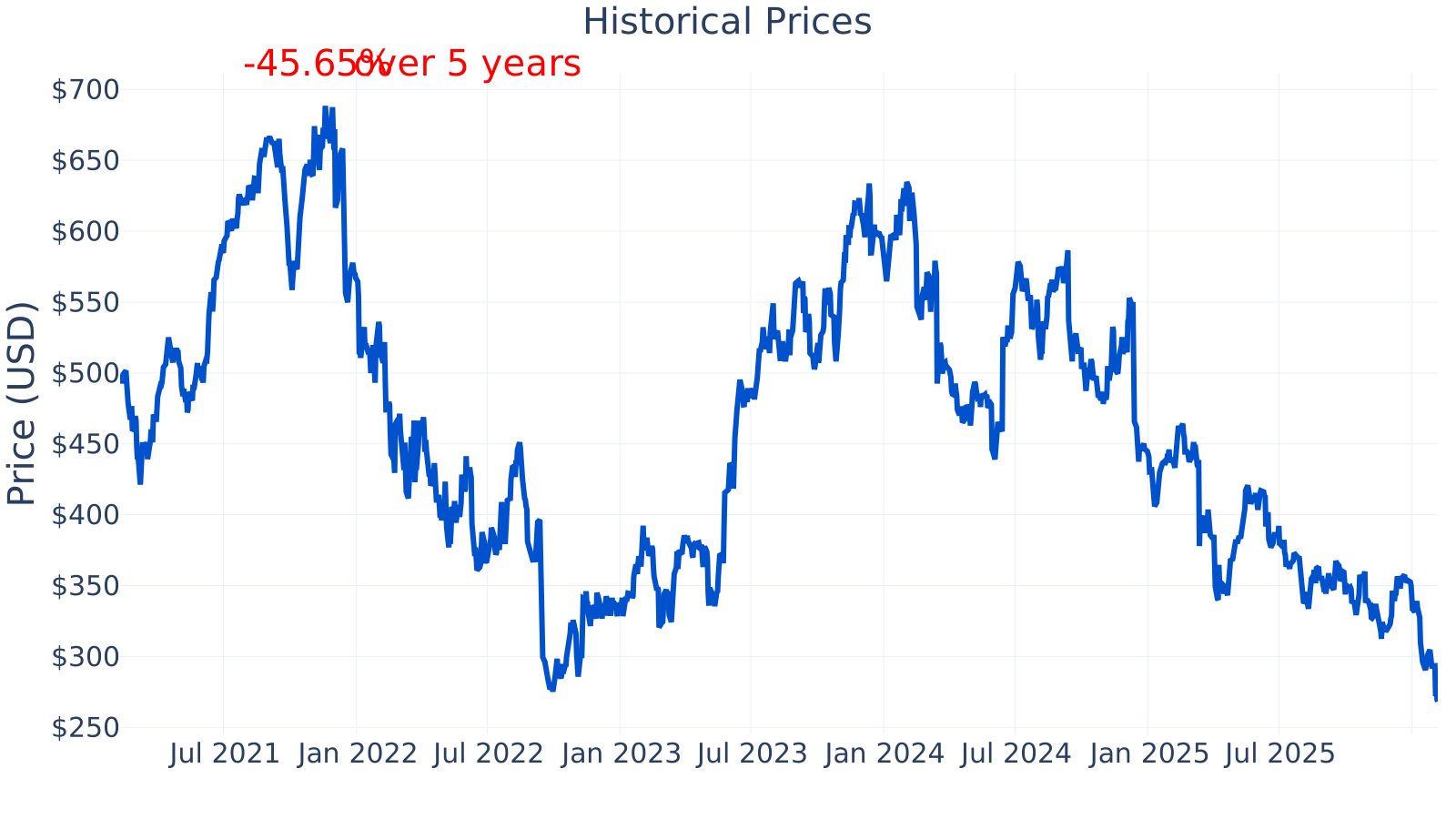
At the latest point shown, Adobe’s market capitalization is about $112.3B and its beta (~1.52) indicates the stock has tended to move more than the broader market. The company shows a profit margin of ~30%, which is far above the industry median shown (~6%), reflecting strong profitability. Year-over-year revenue growth is about 10.5%, below the industry median listed (~15.8%), which can be consistent with a large, mature software platform growing at a steadier pace. Debt-to-equity is about 57%, higher than the industry median shown (~25%), while free cash flow over the trailing twelve months is about $9.85B, highlighting meaningful cash generation.
Growth (Medium)
Adobe operates in large markets that have benefited from long-term trends: ongoing digitization of work, steady growth in digital content creation, and increased use of electronic documents and e-signatures. In addition, businesses continue to shift marketing and customer engagement toward digital channels, which supports demand for customer-experience software. These are established markets rather than brand-new categories, so growth often depends on adding features, expanding into adjacent use cases, and increasing adoption within existing customers.
Adobe’s strategy has historically centered on turning widely used software into subscription platforms (rather than one-time licenses). This model can support growth through recurring renewals, frequent product updates, and bundling across products. Another recurring theme in Adobe’s filings is continuing investment in product development (including AI-enabled features) and expanding offerings for both individual creators and enterprises.
The year-over-year revenue growth trend shown moves from higher rates earlier in the period (above 20% in 2021) toward a more stable range around roughly 9%–12% in later periods, including about 10%–11% in 2024–2025. This pattern can be consistent with a company that has reached a larger scale, where maintaining double-digit growth becomes harder over time.
Free cash flow increases overall across the period shown: about $5.79B (2021), $6.85B (2022), $7.32B (2023), a dip to $6.45B (2024), and then a rise to about $9.18B (2025). For long-term business durability, rising cash generation can matter because it can fund product development, acquisitions, and share repurchases, while also helping the company manage debt.
Risks (Medium-High)
This article is for informational purposes only and does not constitute financial advice. Some content is AI-generated. See Disclaimer