Stock Analysis · ADTRAN Inc (ADTN)
Overview
ADTRAN Inc. (ADTN) is a communications-equipment company that designs and sells hardware and software used to build and operate broadband networks. In simple terms, it helps internet service providers, telecom operators, utilities, municipalities, and enterprises deliver high-speed internet over fiber and other access technologies. Its portfolio typically includes fiber access equipment (used to connect neighborhoods and buildings), customer-premises devices (equipment installed at the customer location), and network software/tools that help monitor and manage these systems.
In its SEC filings, ADTRAN describes its business around broadband access and optical networking solutions, with customers largely being service providers and organizations upgrading network capacity to handle higher data usage. Revenue is generally generated from product sales (equipment and related software) and, to a smaller extent, services such as support and maintenance. ADTRAN has also operated with an international footprint, which can add geographic diversification but also foreign-exchange and execution complexity.
Main revenue sources (high-level, based on how the company describes its business in filings):
- Network equipment and related software (broadband access and optical/networking solutions)
- Support and services (maintenance, support, and related service activities)
ADTRAN’s filings should be consulted for the latest segment/customer mix detail (including any percentage breakdowns) because this mix can shift with large customer orders and industry cycles.
Across recent years, revenue has fluctuated, and profitability has been pressured by a combination of cost of revenue and operating expenses (notably R&D and selling/general/administrative spending). Net losses were especially large in 2023–2024, with improvement (but still negative net income) shown in 2025.
Key Figures
| Metric | Value | Industry ⓘ |
|---|---|---|
| Date | Mar 30, 2026 | |
| Context | ||
| Sector | Technology | |
| Industry | Communication Equipment | |
| Market Cap ⓘ | $1.04B | |
| Beta ⓘ | 1.40 | |
| Fundamental | ||
| P/E Ratio ⓘ | N/A | 43.82 |
| Profit Margin ⓘ | -4.21% | 3.27% |
| Revenue Growth ⓘ | 20.10% | 16.60% |
| Debt to Equity ⓘ | 168.03% | 78.48% |
| PEG ⓘ | 1.86 | |
| Free Cash Flow ⓘ | $88.88M | |
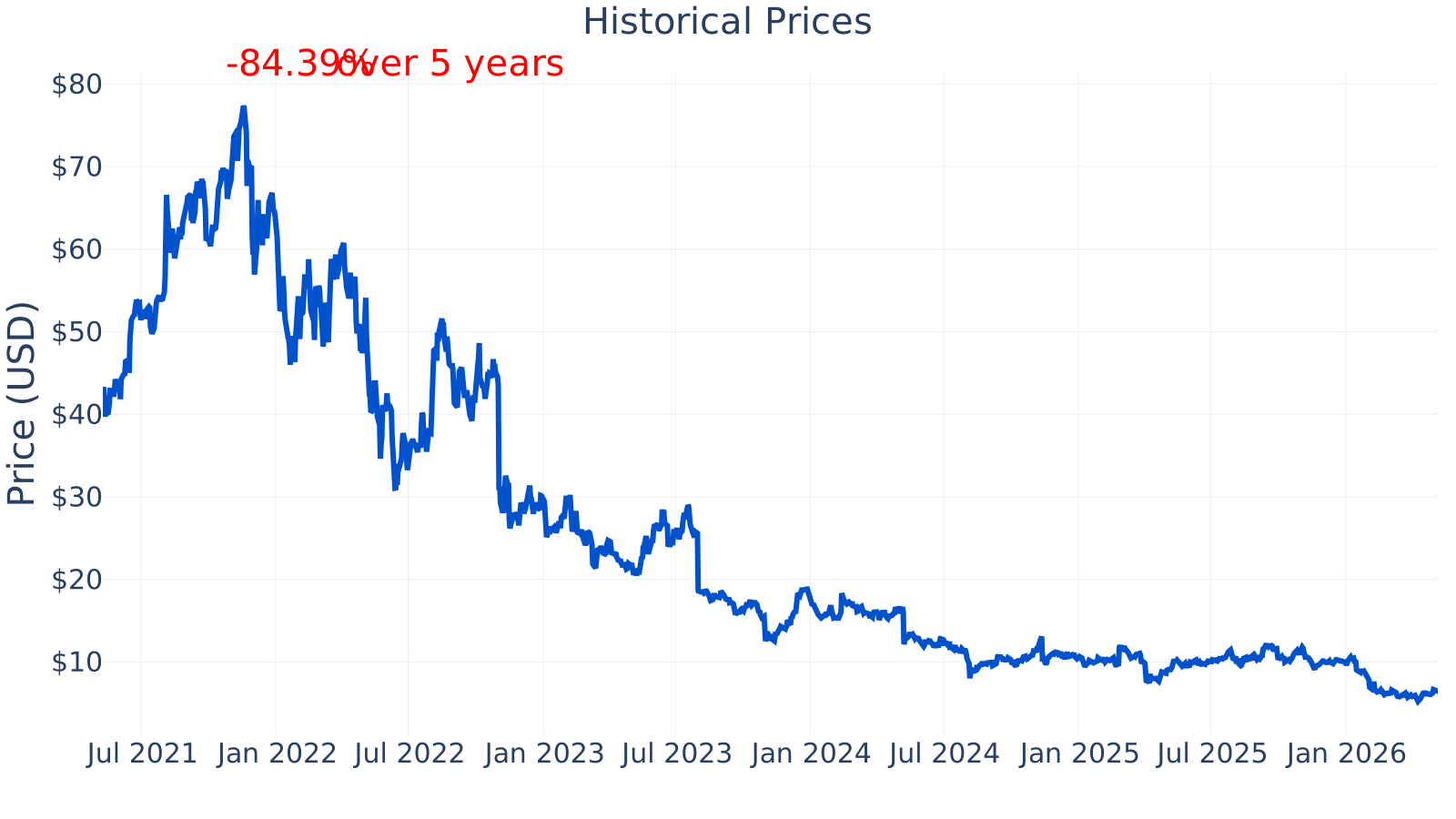
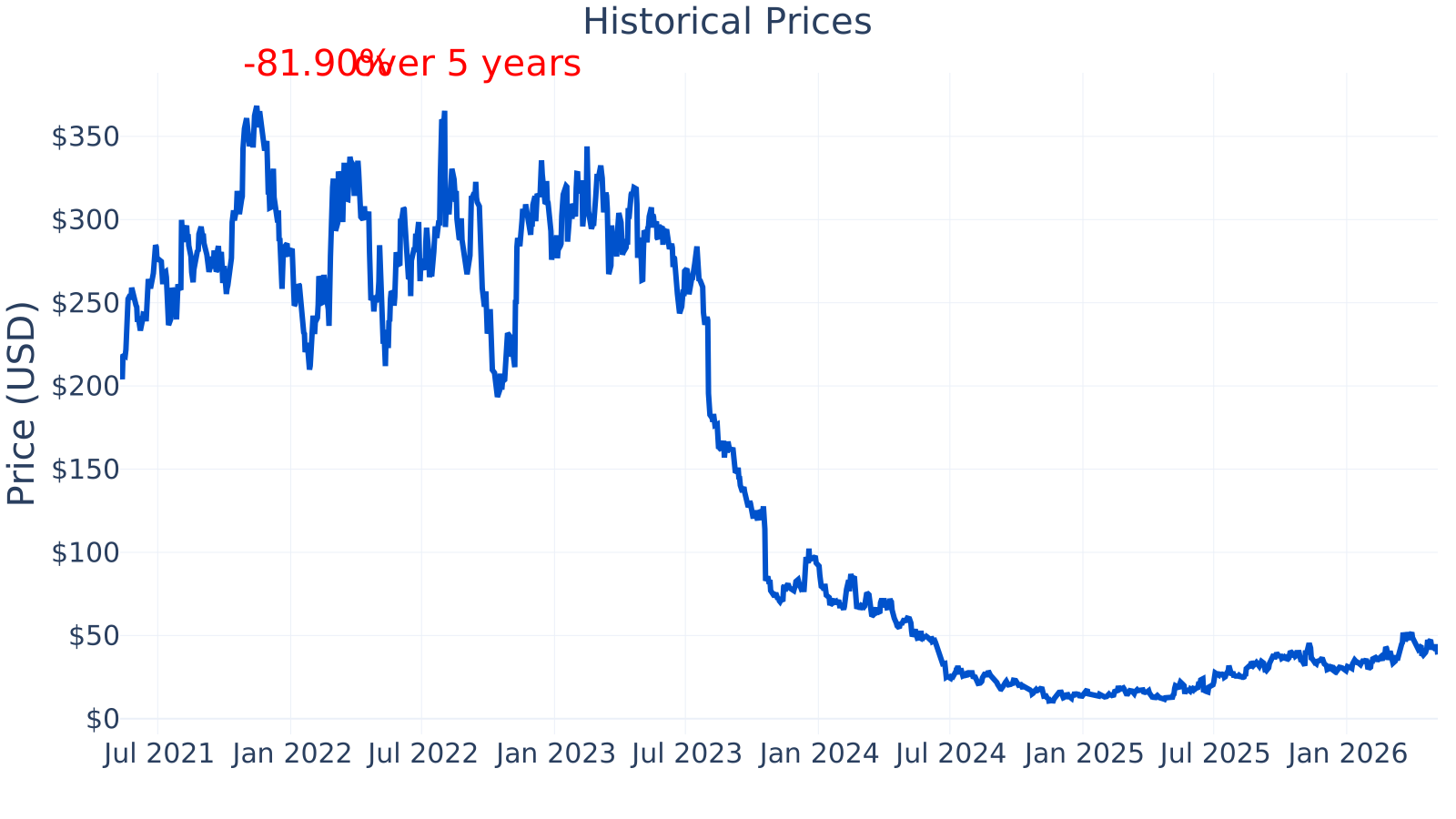
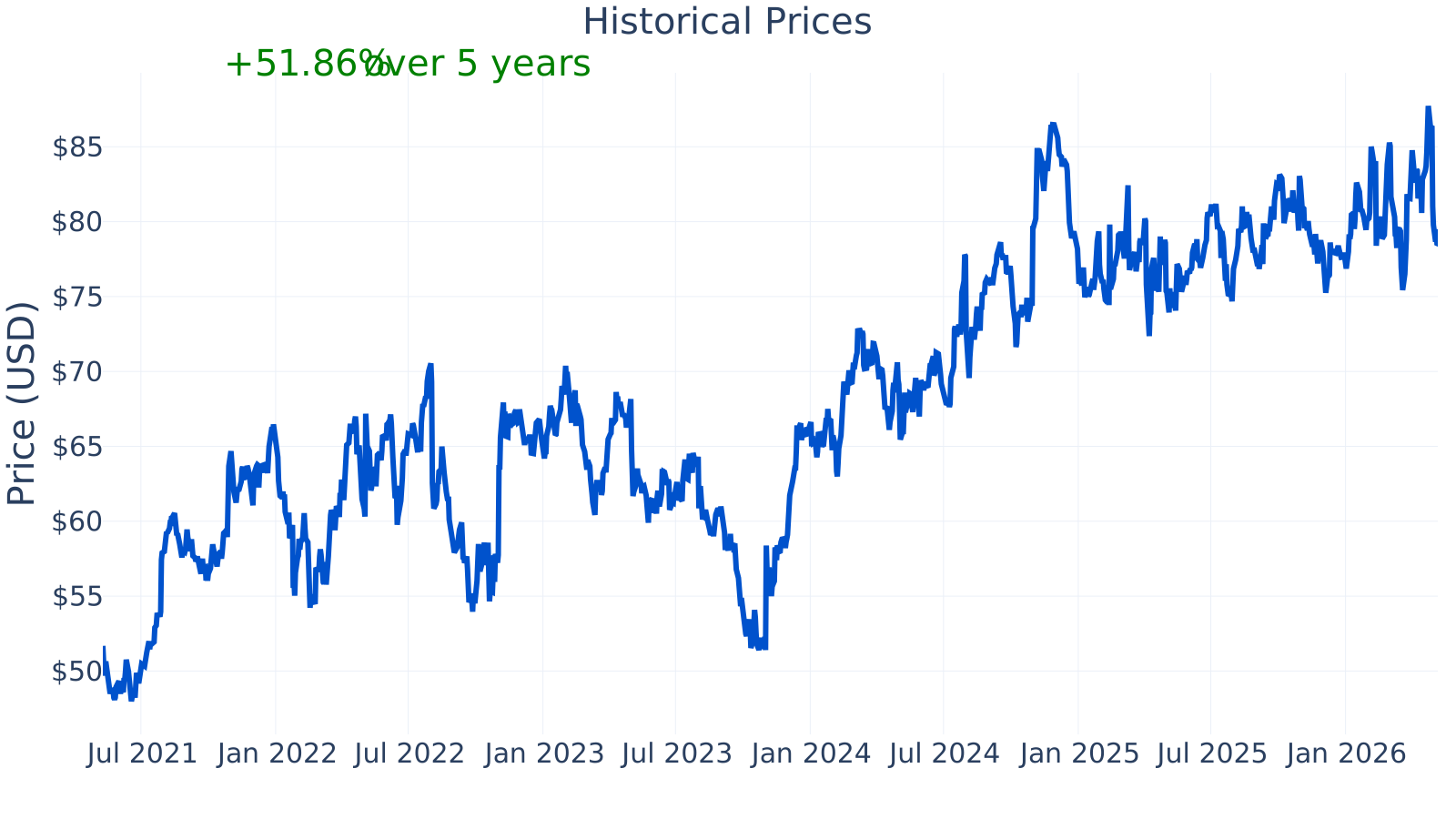
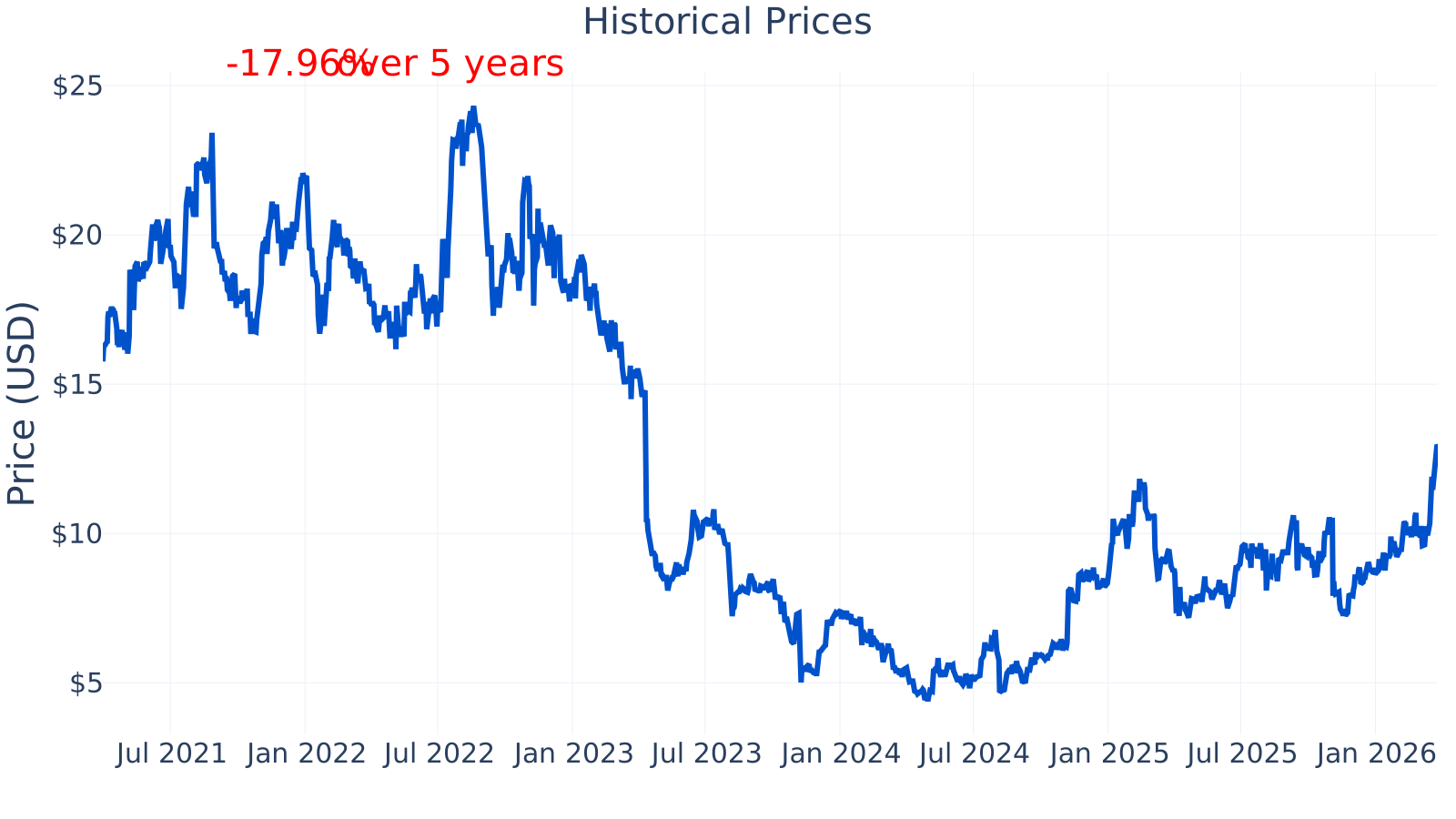
ADTRAN’s market capitalization is about $1.04B, and the stock has had relatively high volatility with a beta of ~1.40 (meaning it has often moved more than the overall market). Profitability is currently negative, with a profit margin of about -4.2% versus an industry median near +3.3%. Revenue growth year-over-year is about +20.1%, modestly above the industry median near +16.6%. Leverage is elevated: debt-to-equity is ~168% versus an industry median around 78%. Free cash flow over the trailing twelve months is positive at roughly $88.9M, and the PEG ratio is ~1.86 (a metric that combines valuation and growth expectations, but can be unstable when earnings are volatile).
Growth (Medium)
ADTRAN operates in the broadband access and communications equipment market, which is tied to long-term demand for faster and more reliable connectivity. Structural drivers include fiber network buildouts, upgrades to support higher bandwidth usage, and continued investment by service providers to expand coverage and improve performance. However, this industry is also cyclical: spending can rise and fall based on customer capital expenditure budgets, inventory levels, and funding programs.
ADTRAN’s year-over-year revenue growth has been uneven over time, with very strong growth during parts of 2022–2023 (likely reflecting a surge off a lower base and/or major customer activity) followed by declines in 2023–2024, and then a return to positive growth through 2025 (ending near +20%). For long-term business momentum, the key question is whether growth stabilizes at a sustainable rate rather than swinging sharply between expansion and contraction.
Cash generation has also shifted notably. Free cash flow was negative across several periods (including a large outflow around 2023), then improved to positive territory by 2025 (about $52.5M at 2025-03-31 on the chart, and $88.9M in the latest metric snapshot). Sustained positive free cash flow can matter because it provides flexibility to invest in products, manage debt, and withstand weaker demand periods. The recent improvement is a constructive operational signal, but its durability depends on margins, working capital needs, and customer ordering patterns.
Potential catalysts (described at a high level, consistent with how communications-equipment demand typically evolves) include broader fiber deployment cycles, normalization of customer inventory levels after supply chain disruptions, and product refresh cycles where operators upgrade access platforms and customer devices. In filings, management discussion around backlog, customer concentration, and demand conditions can help clarify whether near-term improvements are likely to persist.
Risks (High)
ADTRAN’s risk profile is meaningfully influenced by profitability pressure, leverage, and the spending cyclicality of its customers. The company’s profit margin remains negative (even though it has improved from the very large losses seen in 2024), which indicates that execution on cost structure, pricing, and product mix remains important. In communications equipment, competitive pricing, rapid technology shifts, and large-customer purchasing decisions can quickly impact results.
Debt has increased substantially over time. The debt-to-equity ratio rose from very low levels in 2021 to roughly 168% most recently, above the industry median (about 78%). Higher leverage can amplify outcomes: it may help fund operations and investment, but it can also reduce flexibility during downturns and increase sensitivity to interest costs and refinancing conditions.
Profitability has been the most visible challenge. ADTRAN’s profit margin deteriorated sharply into 2024 (deeply negative on the chart), then improved through 2025 but remained around -4.2% most recently, compared with a positive industry median. This gap suggests the company has had to manage higher costs, lower pricing, restructuring/transition effects, or other profitability headwinds relative to peers.
Competitive positioning in communications equipment is typically shaped by product performance, interoperability, installed base, customer relationships, and the ability to deliver at scale. ADTRAN competes with other broadband access and networking vendors; competitive intensity can be high because many buyers are sophisticated operators that negotiate aggressively. The company does not appear to be the overall “leader” of the entire communications-equipment industry (a broad category), and results may be more dependent on specific niches, customer wins, and execution than on dominant market share.
Other common risks disclosed in filings for companies in this space can include customer concentration (large orders from a small number of service providers), supply chain and component availability, warranty/quality issues, cybersecurity and software reliability, and regulatory or funding-program timing (when applicable). Readers looking for the most concrete, company-specific items should prioritize the “Risk Factors” section in the latest annual report on Form 10-K.
Valuation
The P/E ratio chart does not show meaningful values for ADTRAN across much of the period (displayed as 0 due to non-meaningful P/E when earnings are negative or extremely volatile). This is consistent with the company reporting net losses in recent years, which makes earnings-based valuation metrics less informative. In such situations, valuation discussions often lean more on cash flow behavior, balance-sheet strength, and whether profitability is trending toward sustained positive levels.
From the latest snapshot, the industry median P/E is around 43.8, but ADTRAN’s own P/E is not listed in the table, aligning with the idea that earnings are not yet stable/positive enough for a standard comparison. With profitability still negative and leverage elevated, the market price tends to embed uncertainty about how quickly margins normalize and whether revenue growth can continue without sacrificing returns. The company’s recent return to positive free cash flow is an important contextual datapoint, but long-term valuation typically depends on whether that cash generation can persist through industry cycles.
Conclusion
ADTRAN is a broadband access and communications-equipment provider tied to long-term connectivity needs, including ongoing fiber deployment and network upgrades. The business has shown a return to positive year-over-year revenue growth and improved free cash flow more recently, suggesting operational momentum has strengthened versus the weaker period seen in 2023–2024.
At the same time, the company’s fundamentals show notable pressure points: profitability is still negative, and debt relative to equity is high compared with the industry median. Those factors can increase sensitivity to demand slowdowns, competitive pricing, and execution issues. For long-term analysis, the most decisive items to monitor in future filings are the path to sustained positive margins, consistency of free cash flow, and whether leverage declines or remains elevated.
Sources:
- SEC EDGAR — ADTRAN, Inc. filings (Form 10-K, Form 10-Q)
- ADTRAN Investor Relations — Press releases and SEC filing copies (company-hosted)
- Wikipedia — “ADTRAN” (general background)
This article is for informational purposes only and does not constitute financial advice. Some content is AI-generated. See Disclaimer