Stock Analysis · ACI Worldwide Inc (ACIW)
Overview
ACI Worldwide Inc. is a payments software company. In simple terms, it builds and runs the technology that helps banks, merchants, and billers (companies that send bills) move money electronically. Its products are used for card payments, account-to-account transfers, fraud monitoring, and bill payment processing. The company operates globally and typically sells long-term software and service contracts to large organizations that need high reliability, security, and compliance.
From a business-model perspective, ACI generally earns money in two broad ways: (1) recurring revenue tied to running payment systems and ongoing support, and (2) more variable revenue tied to software licenses, implementations, and professional services. A common long-term goal for software companies like ACI is to increase the share of predictable, recurring revenue over time (for example, through cloud-delivered offerings and managed services), because it tends to be more stable than one-time license work.
Main revenue sources (high-level categories commonly used for this type of company; exact percentages can vary by reporting period and are typically detailed in filings):
- Recurring software and services (maintenance/support, SaaS/managed services, transaction-related fees)
- Software licenses (including term licenses where applicable)
- Professional services (implementation, customization, consulting)
Over the 2021–2024 period shown, total revenue increased (about $1.37B to about $1.59B). Operating income also rose (about $220M to about $323M), while interest expense remained meaningful (tens of millions annually), which highlights why balance-sheet leverage and refinancing terms can matter for overall profitability.
Key Figures
| Metric | Value | Industry ⓘ |
|---|---|---|
| Date | Feb 08, 2026 | |
| Context | ||
| Sector | Technology | |
| Industry | Software - Infrastructure | |
| Market Cap ⓘ | $4.36B | |
| Beta ⓘ | 1.06 | |
| Fundamental | ||
| P/E Ratio ⓘ | 17.12 | 25.66 |
| Profit Margin ⓘ | 15.07% | 6.68% |
| Revenue Growth ⓘ | 6.80% | 15.20% |
| Debt to Equity ⓘ | 61.87% | 19.82% |
| PEG ⓘ | -3.24 | |
| Free Cash Flow ⓘ | $300.73M | |
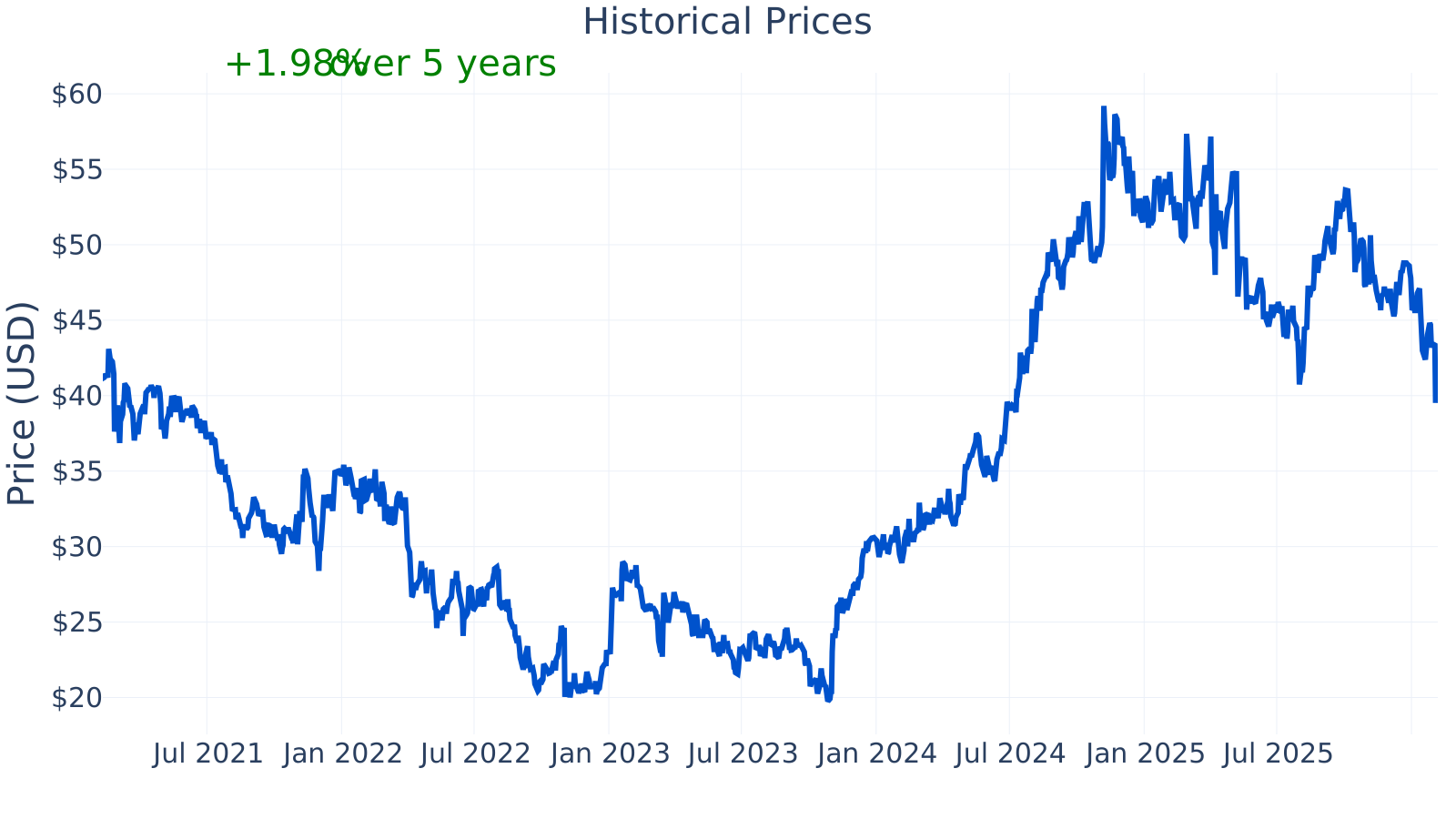
At the latest snapshot, ACI Worldwide’s market capitalization is about $4.36B and its beta is ~1.06 (historically close to overall market volatility). The P/E ratio is about 17.1 versus an industry median near 25.7, while profit margin is about 15.1% versus an industry median near 6.7%. Revenue growth year-over-year is about 6.8%, below the industry median near 15.2%. Debt-to-equity is about 61.9%, higher than the industry median near 19.8%. Free cash flow over the trailing twelve months is about $301M.
Growth (medium)
ACI operates in the digital payments and financial infrastructure space, an area supported by long-running trends: consumers shifting from cash to electronic payments, merchants expanding e-commerce and omnichannel checkout, and banks modernizing core payment systems while facing rising fraud and compliance demands. These are structural forces that can persist over many years because they are tied to how money moves through the economy and how institutions manage risk.
A key question for long-term business momentum is whether ACI can keep expanding recurring, “run-the-platform” style revenue and deepen relationships with large customers. Payment infrastructure tends to have high switching costs (because it is mission-critical and heavily integrated), so vendors can benefit when they become embedded in a customer’s operations. At the same time, sales cycles are often long and implementations can be complex, so growth can look uneven from quarter to quarter.
Year-over-year revenue growth has been volatile, including periods of decline and periods above 20%. More recently, growth appears positive but uneven (for example, around mid-to-high single digits in the latest points shown). This pattern can be consistent with a mix of recurring revenue plus project-based work and timing effects in implementations and licensing.
Free cash flow over the trailing twelve months improved from the 2022–2023 levels to roughly $312M by early 2025 (with the latest shown near $301M). For a software and services business, sustained free cash flow can support debt reduction, share repurchases, and reinvestment in product development—though how it is used depends on management priorities and debt obligations.
Risks (medium-high)
This article is for informational purposes only and does not constitute financial advice. Some content is AI-generated. See Disclaimer